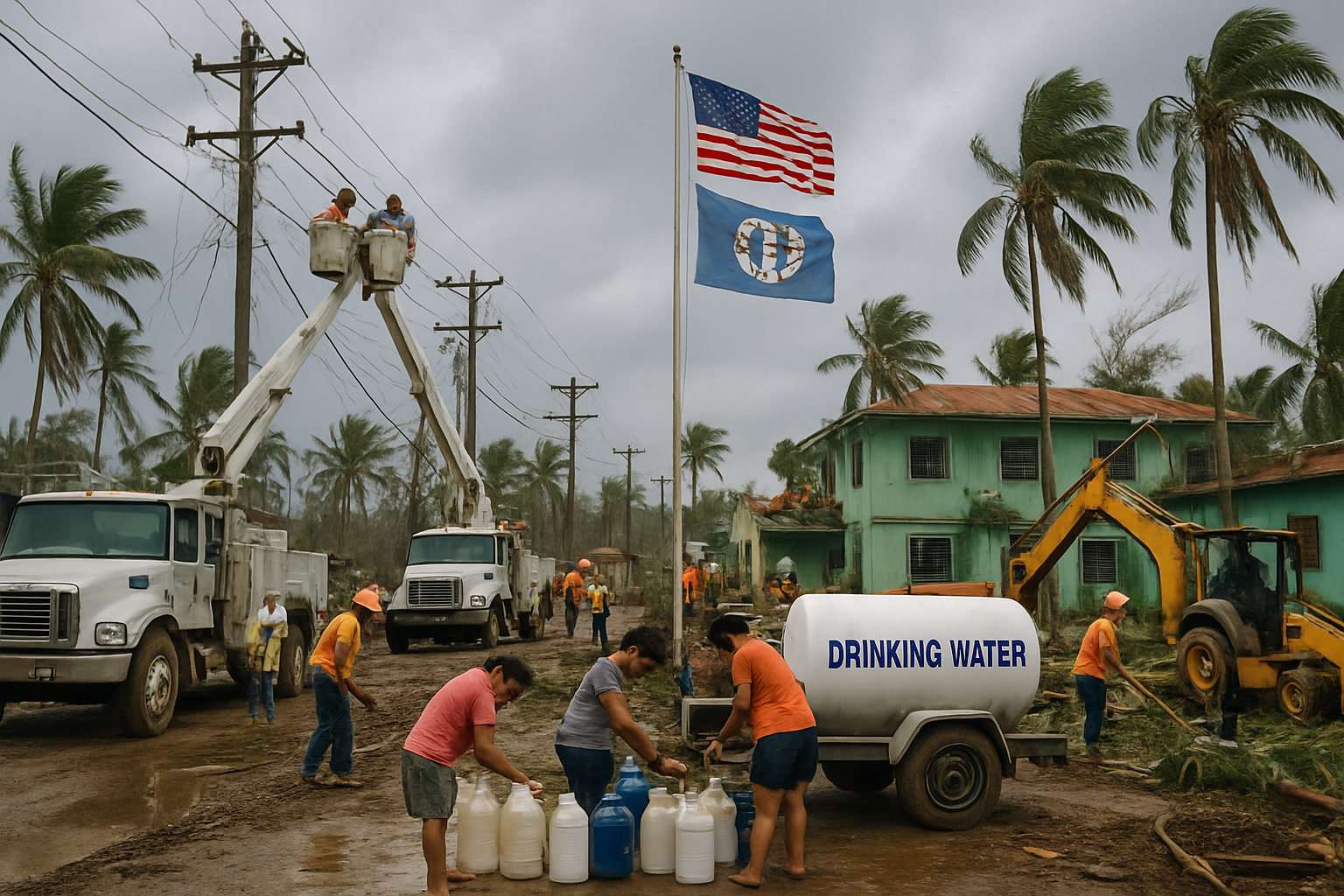
One week after Super Typhoon Sinlaku devastated the Commonwealth of the Northern Mariana Islands, recovery efforts are accelerating despite most residents still lacking running water and electrical power, with emergency services working around the clock to restore basic utilities and provide humanitarian assistance.
The Commonwealth Utilities Corporation (CUC) has opened public water filling stations in four Saipan villages, operating daily from 8 a.m. to 11 p.m. with administrative personnel staffing the stations so water crews can focus on critical infrastructure repairs. The initiative comes as most homes remain without running water one week after the super typhoon struck the Pacific territory.
Federal Aid on the Horizon
Hope for substantial federal assistance emerged as CNMI Department of Labor Secretary Leila Staffler confirmed that the Northern Marianas stands to receive disaster unemployment assistance following President Trump's expected approval of Governor David M. Apatang's major disaster declaration request.
"Yes, there will be disaster unemployment. But I cannot tell you the details yet — we're waiting for the FEMA designation. As soon as we get that, then I can respond,"
— Leila Staffler, CNMI Department of Labor Secretary
Delegate Kimberlyn King-Hinds has strongly endorsed the governor's request in her own letter to President Trump, emphasizing that Super Typhoon Sinlaku "inflicted widespread and severe damage across the CNMI, significantly affecting critical infrastructure, housing, public utilities, and the local economy." She specifically supports the governor's request for 100% federal cost share for all eligible emergency and permanent work.
International Relief Operations
International relief organization Samaritan's Purse has mounted a major emergency response to support communities on Saipan and neighboring islands, representing one of the largest humanitarian deployments to the region in recent years. The organization's intervention highlights the scale of need across the Commonwealth following the strongest storm to hit the territory since October 2025.
The relief effort comes as residents face mounting daily challenges that extend far beyond infrastructure damage. Long lines at the territory's few functioning laundromats have become a symbol of post-typhoon hardships, with many residents forced to wait hours to wash clothes as most homes remain without power or water service.
Community Resilience Under Pressure
Local officials acknowledge the psychological toll on residents, many of whom are experiencing their second or third major typhoon in recent years. The pattern reflects broader climate trends that have seen 24 consecutive months of global temperatures exceeding 1.5°C above pre-industrial levels—the longest sustained warming streak in recorded human history.
"We are all victims of this typhoon. We suffered the same. There's no exemption. We all faced the impact. We need to hold hands with each other,"
— Local community leader
The stress of extended recovery periods has prompted calls for enhanced mental health support services as residents cope with the cumulative effects of repeated extreme weather events. The current situation demonstrates what climate scientists describe as the "new normal" of more frequent and intense typhoons in the Pacific region.
Infrastructure Challenges
The typhoon's impact on essential infrastructure has been catastrophic. Power restoration efforts continue around the clock, but utility officials warn that some areas may remain without electricity for weeks. The extensive damage to transmission lines and generation facilities reflects the growing challenge of maintaining infrastructure resilience in an era of increasingly powerful storms.
Water system repairs face similar complexity, with multiple breaks in distribution lines and damage to pumping stations requiring coordinated repair efforts. The emergency water filling stations represent a temporary but critical solution allowing residents to maintain basic needs while permanent repairs proceed.
Economic Impact and Recovery Timeline
Initial damage assessments suggest the economic impact will be substantial, affecting tourism, agriculture, and small businesses across the territory. Many businesses remain closed not only due to direct damage but also because of the lack of reliable power and water services necessary for operations.
The tourism sector, crucial to the CNMI economy, faces particular challenges with damaged hotels and resorts requiring extensive repairs. The recovery timeline for full tourism operations remains uncertain, with industry officials cautioning that some facilities may not reopen for months.
Lessons from Previous Storms
The current recovery effort builds on lessons learned from previous major typhoons, including enhanced community preparedness measures and improved coordination between local, federal, and international aid organizations. The rapid deployment of emergency water stations and the coordination with organizations like Samaritan's Purse demonstrates evolved emergency management capabilities.
However, the recurring nature of major storms has also highlighted the need for more resilient infrastructure designed to withstand increasingly powerful weather events. Officials are already discussing "building back better" approaches that would enhance the territory's ability to weather future storms.
Looking Forward
As recovery efforts continue, the focus remains on restoring basic services while preparing for the long-term reconstruction process. The expected federal disaster declaration would unlock substantial resources for both immediate relief and longer-term rebuilding efforts.
Community leaders emphasize that while the physical damage is extensive, the spirit of resilience that has carried the Northern Mariana Islands through previous challenges remains strong. The coordination between local, federal, and international partners in the recovery effort provides a model for disaster response in an era of increasingly frequent extreme weather events.
The coming weeks will be critical as utility restoration efforts accelerate and federal aid begins flowing to the territory. For now, residents continue to demonstrate the resilience that has defined the Commonwealth's response to natural disasters, supported by emergency water stations, humanitarian aid, and the promise of federal assistance to help rebuild their Pacific island home.