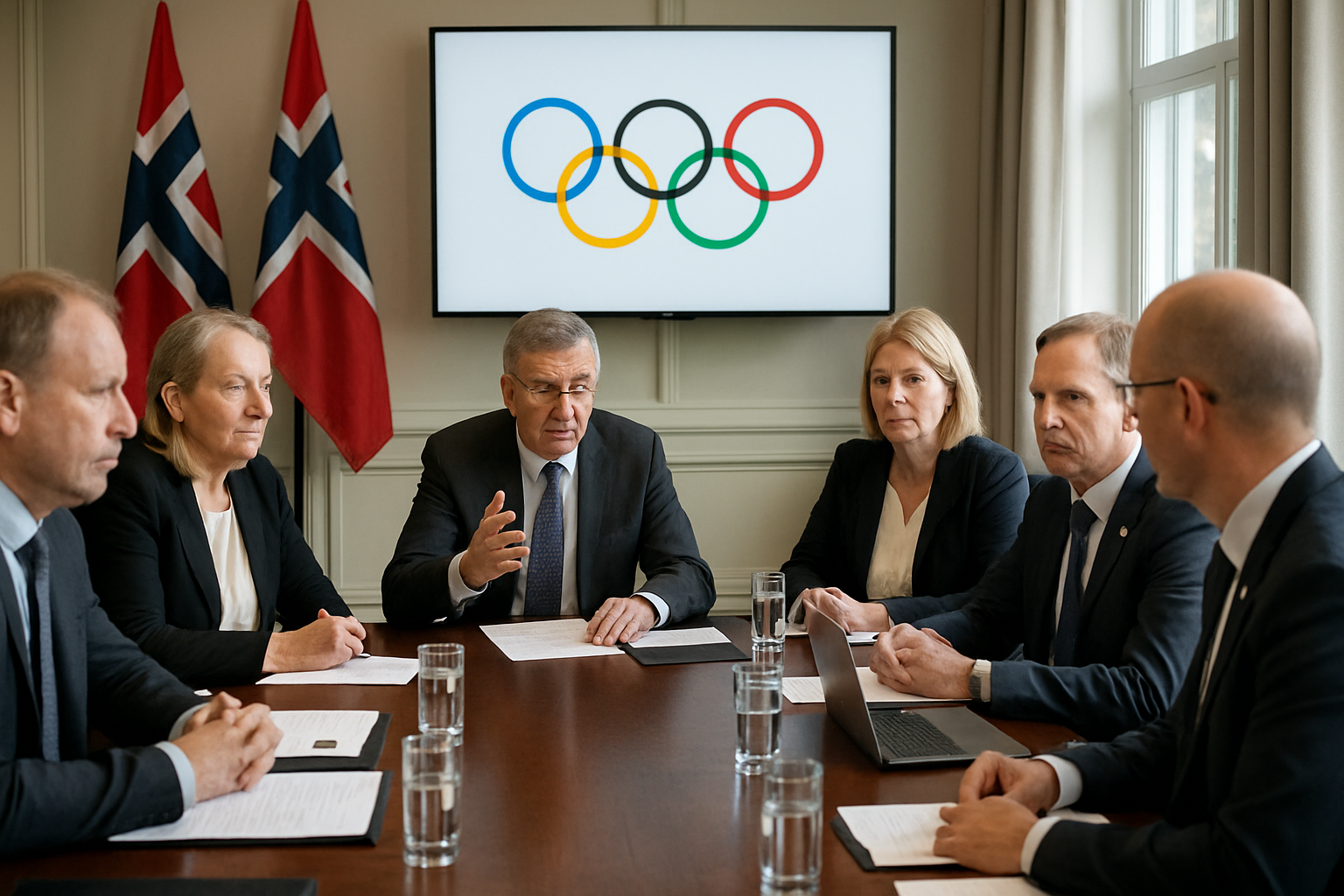
Norway is actively exploring the possibility of hosting a future Olympic Games, with Oslo's Mayor Eirik Lae Solberg proposing a collaborative approach involving the Mjøs region that has already garnered positive responses from key municipal leaders.
The momentum for a Norwegian Olympic bid is building across political lines, following the country's historic performance at the Milano-Cortina 2026 Winter Olympics where Norway achieved unprecedented records with 18 gold medals and 41 total medals. Johannes Høsflot Klæbo's remarkable feat of winning six gold medals at a single Olympics has reinvigorated national pride in winter sports excellence.
Political Consensus Emerges
A broad parliamentary majority in the Storting supports examining Norway as an Olympic host nation, though not all parties are equally enthusiastic about the prospect. The proposal has revealed interesting political dynamics, with three parties - Rødt (Red Party), KrF (Christian Democratic Party), and FRP (Progress Party) - standing alone in opposition to Norwegian Olympic hosting ambitions.
The political support reflects Norway's deep Olympic heritage and proven organizational capabilities. The country previously hosted successful Winter Olympics in 1952 (Oslo) and 1994 (Lillehammer), establishing a strong foundation for future Olympic endeavors. The success of these previous Games continues to resonate in Norwegian sporting culture and political discourse.
Regional Collaboration Strategy
Mayor Eirik Lae Solberg's vision centers on Oslo as the natural host city while leveraging existing infrastructure and expertise in the Mjøs region. The mayors of Lillehammer and Hamar have responded positively to this collaborative approach, recognizing the benefits of sharing Olympic responsibilities across multiple municipalities.
This regional strategy draws inspiration from successful models, including the recent Milano-Cortina 2026 Games which demonstrated that geographically dispersed hosting can be both environmentally sustainable and competitively excellent. The Italian model proved that dual-city hosting across 400+ kilometers can maintain Olympic standards while utilizing existing venues and infrastructure.
Learning from Recent Olympic Success
Norway's consideration of Olympic hosting comes at an opportune moment, following lessons learned from Milano-Cortina 2026's revolutionary approach. The Italian Games established new paradigms for Olympic hosting by combining environmental sustainability, technological innovation, and cultural authenticity while maintaining athletic excellence.
The successful implementation of AI technology integration, sustainable venue utilization, and distributed hosting models provides a template that Norway could adapt for its own Olympic ambitions. The Milano-Cortina experience demonstrated that modern Olympics can transcend traditional geographical constraints while preserving Olympic values and international cooperation.
Infrastructure and Legacy Considerations
Norway's Olympic hosting discussions benefit from the country's existing winter sports infrastructure and deep cultural connection to Nordic disciplines. The success of venues in Lillehammer and the broader region from the 1994 Olympics provides a foundation that could be updated and expanded for a future Games.
The collaborative approach between Oslo and the Mjøs region would allow Norway to leverage multiple strengths: Oslo's status as the national capital with modern facilities and international connectivity, combined with the proven Olympic experience and specialized winter sports venues in Lillehammer and surrounding areas.
Global Olympic Landscape
Norway's potential bid enters a changing Olympic landscape where sustainability, cost-effectiveness, and legacy utilization are increasingly prioritized by the International Olympic Committee. The Milano-Cortina model of using existing venues and creating distributed hosting arrangements aligns with contemporary Olympic hosting preferences.
The Norwegian approach of regional collaboration could position the country as an attractive Olympic candidate, especially given its demonstrated excellence in winter sports and successful Olympic hosting history. The political support spanning multiple parties suggests a level of national consensus that could sustain an Olympic bid through the lengthy selection process.
Future Implications
As Norway considers its Olympic hosting potential, the discussions reflect broader trends in international sports hosting. The country's proven winter sports excellence, combined with sustainable hosting principles and regional collaboration models, positions Norway as a compelling candidate for future Olympic Games.
The positive reception from regional mayors and broad political support suggests that Norway's Olympic hosting discussions will continue to develop, potentially leading to a formal bid that could bring the Winter Olympics back to one of winter sports' most successful nations. The collaborative approach between Oslo and the Mjøs region represents an innovative model that could influence how future Olympic Games are conceived and organized.