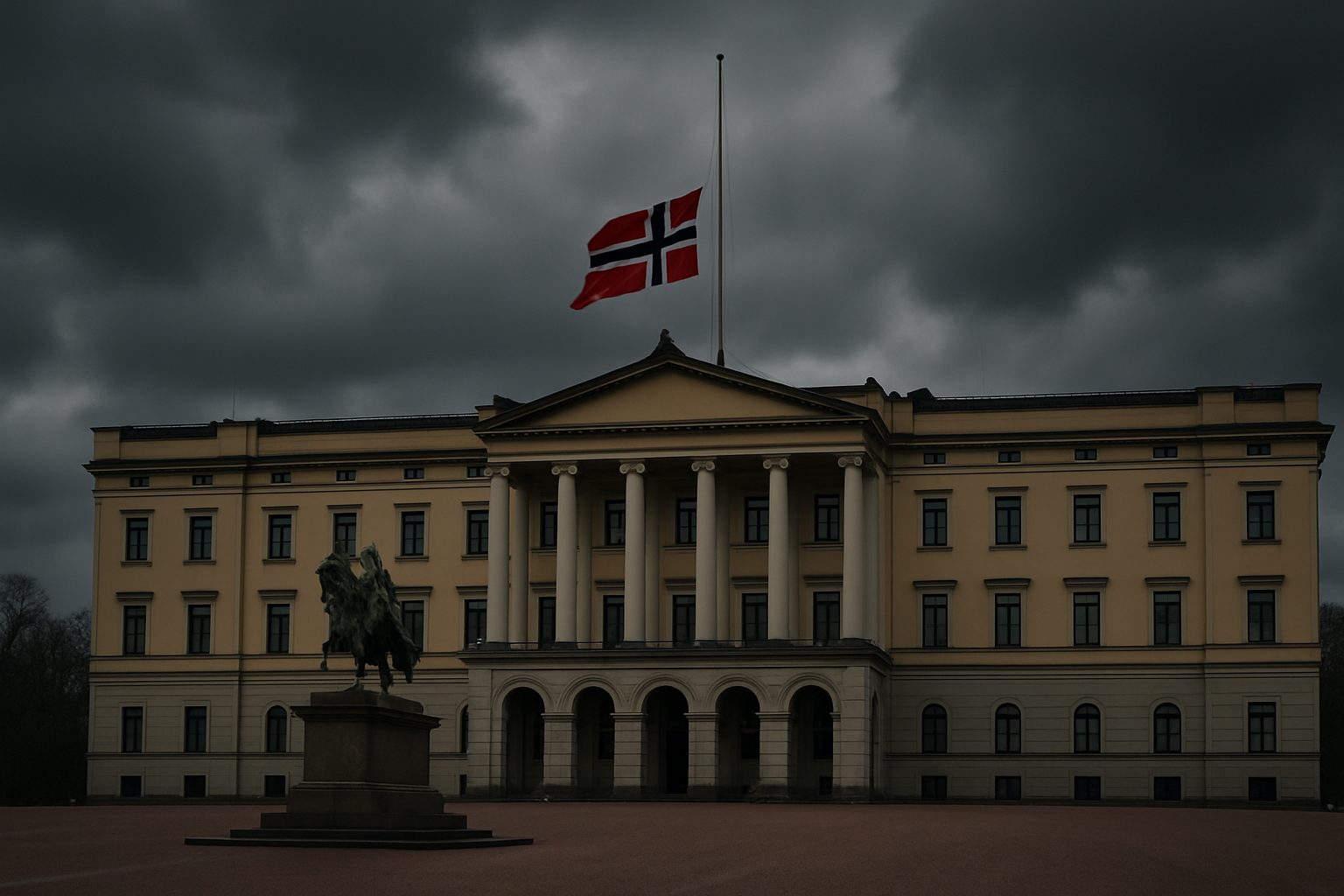
Norway's constitutional monarchy is facing its gravest crisis in modern history as Marius Borg Høiby, the 29-year-old son of Crown Princess Mette-Marit, pleaded not guilty to rape charges in Oslo District Court on Tuesday, while simultaneously his stepmother confronts a damaging scandal over her connections to convicted sex offender Jeffrey Epstein.
The unprecedented dual crisis has prompted royal experts to question the very survival of the Norwegian monarchy, with polling showing nearly half of Norwegians now believe Crown Princess Mette-Marit is unfit to become queen. The combination of criminal charges against the Crown Princess's son and revelations about her own past associations represents what experts are calling "the largest royal scandal in modern history."
Trial Opens with Dramatic Courtroom Scene
Høiby stood motionless for 24 minutes in Oslo District Court as prosecutor Sturla Henriksbø meticulously read out 38 criminal charges spanning from 2018 to 2024. To each of the most serious allegations—including four counts of rape—he replied with a firm "no." However, he admitted partial guilt to some lesser charges, including inflicting bodily harm.
The charges against Høiby, who has no royal title or official duties despite being the stepson of Crown Prince Haakon, include domestic violence, drug possession, knife threats, and violations of restraining orders. If convicted on all charges, he faces a maximum sentence of 16 years in prison.
"This is an historic royal scandal that is now playing out in the Oslo County Court,"
— Norwegian media covering the proceedings
The courtroom was packed with international media from Europe, North America, and Asia, while Norwegian citizens queued for hours to secure gallery seats. The trial is expected to last seven weeks, with testimony from multiple alleged victims scheduled in the coming days.
Pattern of Alleged Violence Emerges
Court documents reveal a disturbing pattern of alleged violence against multiple former girlfriends. One victim, referred to as the "Skaugum woman" after the Crown Prince's residence, testified that she doesn't remember the moment when Høiby allegedly filmed an assault against her, telling the court, "I'm sitting here and shaking."
The most recent arrest came on February 1, just one day before the trial began, when Høiby was detained for allegedly threatening a former girlfriend with a knife and violating a restraining order. Oslo District Court ordered his detention until March 2, citing flight risk and potential for witness intimidation.
Høiby's defense strategy appears focused on attacking the credibility of prosecutors, police, media, and the alleged victims themselves. His lawyer has characterized the environment around Høiby as one where "sex is a very large part," suggesting a lifestyle defense.
Crown Princess Mette-Marit's Epstein Scandal
Compounding the royal crisis, Crown Princess Mette-Marit has found herself at the center of an international scandal following the release of over 3 million pages of Jeffrey Epstein documents by the U.S. Department of Justice. The Crown Princess's name appears more than 1,000 times in the documents, revealing what Norwegian media describe as "intimate messages" and an "unexpectedly close relationship" with the convicted sex trafficker.
The revelations have prompted Norway's financial crimes unit, Økokrim, to consider launching a criminal investigation into the royal connections. Former Prime Minister Erna Solberg has demanded complete transparency, stating that "only honesty can end this crisis."
In an unprecedented move, Sex og Samfunn (Sex and Society), a major Norwegian organization, immediately terminated all collaborative partnerships with the Crown Princess following the Epstein revelations—marking the first time a major institution has formally rejected royal involvement.
Constitutional Crisis and Public Trust
The simultaneous scandals have created what constitutional experts describe as an existential threat to the Norwegian monarchy. Royal expert Sigrid Hvidsten warned that the kingdom's security is at risk, calling the situation "much larger and more shocking than anything we've seen before."
Recent polling data shows a dramatic erosion of public support for the royal family, with some Norwegians expressing a desire to see the "royal family gone within ten years." The crisis is being watched closely by other European constitutional monarchies, as it could set precedents for how such institutions handle accountability questions in the modern era.
The case also tests Norway's commitment to judicial independence and equal treatment under the law, regardless of royal connections. Despite the family's high profile, the proceedings are being handled through standard court procedures.
Media Ethics and Royal Treatment
The crisis has also sparked soul-searching within Norwegian media about their treatment of the royal family. The editor of Se og Hør magazine admitted to sitting on information about Høiby for years, expressing regret for not publishing earlier and acknowledging accusations of police special treatment.
NRK, Norway's public broadcaster, has detailed the "demanding dilemmas" they face in covering the trial, balancing individual privacy rights against significant public interest. The organization has committed to comprehensive coverage while respecting legal boundaries.
Family Response and Royal Duties
The royal family has maintained a careful distance from the legal proceedings, with palace officials confirming they will not attend court sessions. However, on the evening before the trial began, Crown Princess Mette-Marit, Crown Prince Haakon, and Princess Ingrid Alexandra made a hospital visit to see Høiby—a gesture that underscored the personal toll the crisis is taking on the family.
The Crown Princess has remained largely silent about both scandals, though the palace has previously stated that Høiby's legal troubles are a private family matter and do not affect official royal duties.
International Implications
The Norwegian royal crisis occurs against a backdrop of global scrutiny of elite networks and institutional accountability. The Epstein document releases have affected officials across multiple countries, from the UK's Peter Mandelson to various European politicians and dignitaries.
For Norway, a country that prides itself on egalitarian values and transparent governance, the dual scandals represent a fundamental test of whether royal status provides protection from legal and moral accountability. The outcome could influence how constitutional monarchies across Europe navigate similar challenges in the future.
As the trial continues through March, Norway finds itself grappling with questions about the very nature of modern monarchy and whether ancient institutions can survive in an era demanding absolute transparency and accountability from all public figures.