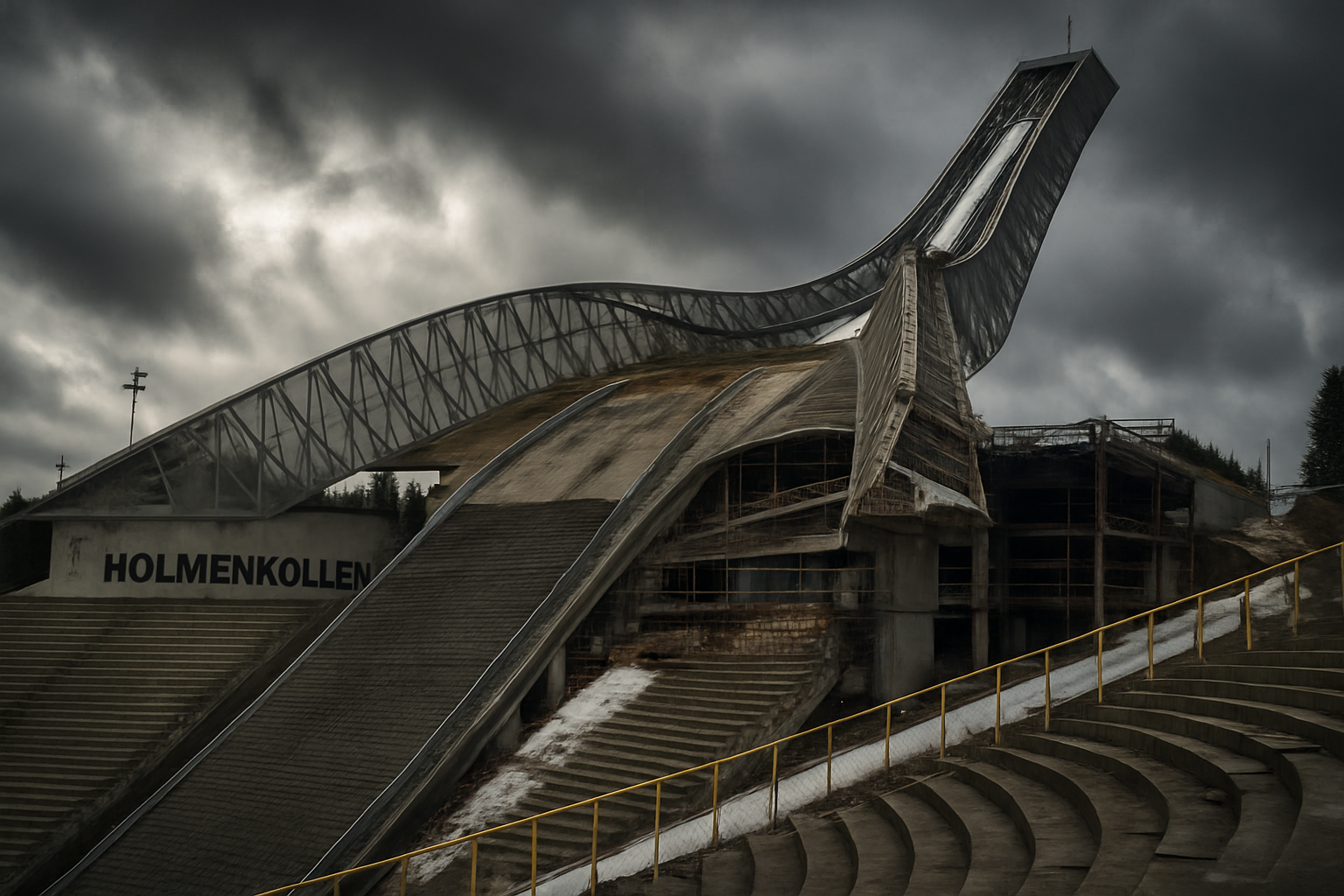
Norway's ski jumping chief Jan-Erik Aalbu has delivered a scathing assessment of Holmenkollen, calling the iconic venue "the worst in Europe" following this weekend's competitions, exposing a deepening infrastructure crisis that threatens the foundation of Nordic winter sports.
The explosive criticism from Aalbu, delivered in the aftermath of what organizers are calling "Kollen-helgen" (Holmenkollen weekend), represents an unprecedented public attack on Norway's most celebrated ski jumping facility by one of the sport's most influential figures in the country.
According to reports from both VG and Aftenposten, Aalbu's condemnation has sent shockwaves through the Norwegian winter sports community, with event organizers expressing bewilderment at the severity of the criticism leveled against the historic venue.
Historic Venue Under Fire
Holmenkollen, which has served as the spiritual home of Nordic skiing for over a century, finds itself at the center of an unprecedented controversy. The venue, which has hosted countless World Cup events and served as a cornerstone of Norway's winter sports legacy, is now facing its most serious crisis in recent memory.
The criticism comes at a particularly sensitive time for Norwegian winter sports, as the country continues to grapple with infrastructure challenges across multiple venues. The assessment by Aalbu suggests systemic problems that extend beyond simple maintenance issues.
Organizers Push Back
Event organizers have reportedly expressed confusion and frustration at Aalbu's harsh assessment, indicating a significant rift between venue management and the national ski jumping leadership. This divide highlights the complexity of maintaining world-class winter sports facilities in an era of increasing technical demands and climate challenges.
The disagreement between Aalbu and venue organizers suggests deeper issues within Norway's winter sports infrastructure management, potentially indicating problems with funding, maintenance protocols, or strategic planning for facility upgrades.
Cross-Country Skiing Also at Risk
The crisis extends beyond ski jumping, with reports indicating that the traditional cross-country skiing "femmila" (5-mile race) is once again facing uncertainty. This development compounds concerns about Norway's ability to maintain its position as a winter sports powerhouse.
The recurring problems with the femmila suggest that infrastructure challenges are not isolated incidents but part of a broader pattern affecting multiple disciplines within Norwegian winter sports.
Broader Implications for Norwegian Winter Sports
Aalbu's criticism comes against the backdrop of Norway's remarkable success at the Milano-Cortina 2026 Winter Olympics, where the country achieved historic records with 18 gold medals and Johannes Høsflot Klæbo's unprecedented six gold medals at a single Games. This contrast between international success and domestic infrastructure concerns creates a troubling paradox.
The timing of the criticism is particularly significant given Norway's recent discussions about potentially hosting future Olympic Games, with broad parliamentary support for exploring hosting opportunities in collaboration with the Mjøs region, including Lillehammer and Hamar.
Infrastructure Crisis Deepens
The Holmenkollen controversy reflects broader challenges facing winter sports venues across Europe, as facilities struggle to adapt to changing climate conditions, increased technical requirements, and evolving safety standards. However, for Norway—a nation that views itself as the cradle of Nordic skiing—such problems carry particular weight.
The infrastructure challenges at Holmenkollen could have far-reaching implications for Norway's ability to host major international competitions, potentially affecting the country's bid considerations for future Olympic Games or World Championships.
Technical and Safety Concerns
While specific details of Aalbu's complaints have not been fully disclosed, the severity of his language suggests serious technical or safety concerns that could impact athlete performance and wellbeing. Modern ski jumping requires precise technical specifications for takeoff angles, landing hill profiles, and wind protection systems.
The designation of Holmenkollen as Europe's "worst venue" implies fundamental deficiencies that go beyond cosmetic issues, potentially affecting the venue's ability to meet international competition standards set by the International Ski Federation (FIS).
Looking Forward
The crisis at Holmenkollen serves as a wake-up call for Norwegian winter sports authorities, highlighting the urgent need for comprehensive infrastructure investment and strategic planning. The country's winter sports legacy, built over more than a century, now faces modern challenges that require innovative solutions.
As Norway continues to dominate international winter sports competitions, the contrast between athlete success and venue deficiencies becomes increasingly stark. The resolution of the Holmenkollen crisis will likely serve as a test case for how effectively Norway can modernize its winter sports infrastructure while preserving its historic sporting heritage.
The coming months will be crucial as stakeholders work to address Aalbu's concerns and restore confidence in one of winter sports' most iconic venues. The outcome will have implications not only for Norwegian skiing but for the broader future of Nordic winter sports competition.