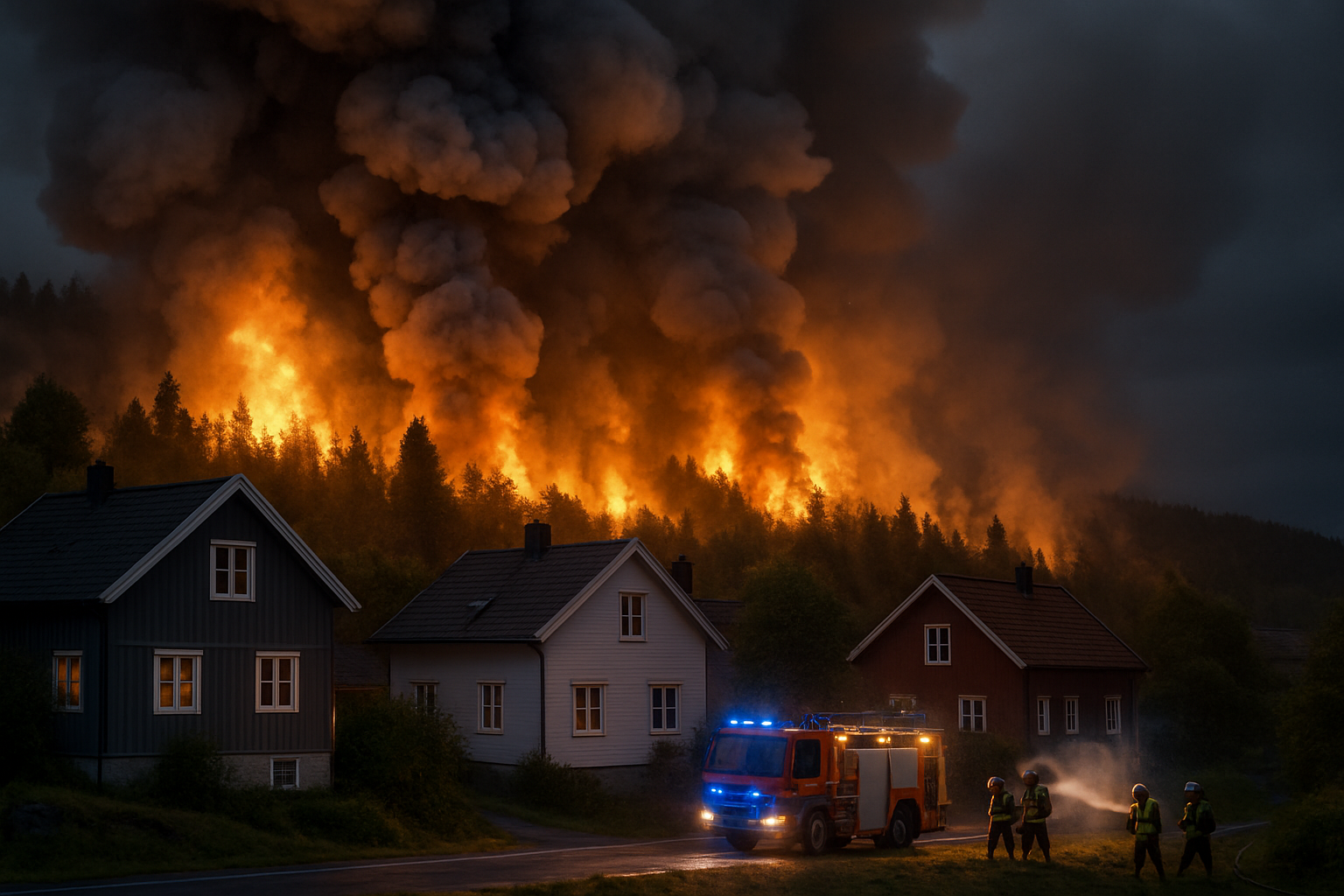
A devastating wildfire near Ålesund, Norway has forced the emergency evacuation of hundreds of residents as firefighting services report they have lost control of the rapidly spreading blaze, with police describing the situation as "very scary."
According to Norwegian media reports, approximately 300 people were evacuated Tuesday evening as the wildfire advanced toward residential areas around the Sukkertoppen mountain region. The fire has created a dangerous situation for local communities, with emergency services overwhelmed by the scale and intensity of the blaze.
Emergency Response Overwhelmed
Norwegian fire services have acknowledged they do not have control over the fire, marking a critical escalation in what has become one of the most serious wildfire emergencies in the region's recent history. Police authorities have characterized the situation as "very scary," underlining the severity of the threat to both residents and emergency responders.
The evacuation orders affected multiple residential areas as the fire approached housing developments, forcing families to abandon their homes with minimal notice. Emergency shelters have been established to accommodate the displaced residents, though the full scale of the evacuation operation continues to evolve as the fire spreads.
Regional and International Context
This wildfire crisis occurs against the backdrop of the 20th consecutive month of global temperatures exceeding 1.5°C above pre-industrial levels, representing the longest sustained warming streak in recorded human history. The unprecedented climate conditions have created what experts term a "climate volatility paradox," where extreme weather events are becoming increasingly unpredictable and severe.
The Ålesund fire adds to a growing pattern of emergency situations that have overwhelmed traditional response capabilities across Europe and beyond. Recent months have seen devastating wildfires, floods, and extreme weather events strain emergency services from Australia to Europe, demonstrating the compound effects of accelerating climate change.
"Emergency services are facing unprecedented challenges as traditional mutual aid mechanisms prove inadequate when multiple regions face simultaneous disasters."
— European Emergency Management Assessment
Infrastructure and Community Impact
The wildfire has exposed critical vulnerabilities in emergency response infrastructure, with evacuation routes becoming compromised and emergency services stretched beyond their operational limits. The situation mirrors similar challenges faced across Europe, where aging emergency response systems designed for sequential rather than concurrent disasters are struggling to cope with the new reality of compound extreme events.
Local communities have had to rely increasingly on informal networks and social media coordination when official systems become overwhelmed, echoing patterns seen in other recent emergency situations across the Nordic region.
Broader European Emergency Crisis
The Ålesund wildfire occurs during a period of unprecedented strain on European emergency response systems. Recent analysis indicates that traditional mutual aid mechanisms designed for sequential regional emergencies are failing when multiple continents face simultaneous crises.
Infrastructure systems built for historical climate patterns are operating beyond their design parameters, with recovery timelines extending from weeks to months or years. This represents a fundamental shift in disaster response approaches, with "building back better" evolving from an optional enhancement to an essential survival strategy.
Climate Adaptation Challenges
The current crisis demonstrates the urgent need for enhanced international cooperation and resource sharing as climate disasters increase in both frequency and severity. Current response mechanisms remain functional but are increasingly strained, requiring significant expansion to meet the challenges of a rapidly changing climate.
Scientists warn that the conditions experienced in March 2026 may represent a preview of routine circumstances in the 2030s without immediate climate adaptation investment. The window for effective environmental action continues to narrow as ecological systems approach critical thresholds that could trigger irreversible changes to global food security, climate stability, and human settlements.
Emergency Management Evolution
The Ålesund wildfire highlights the transformation required in emergency management systems to address what experts now term "permanent climate volatility" rather than exceptional weather events. Traditional frameworks designed for predictable seasonal patterns are proving inadequate for the compound disasters now affecting multiple regions simultaneously.
Successful adaptation requires sophisticated integration of cutting-edge technology with traditional ecological knowledge and community-based management systems. Some regions have demonstrated effective hybrid approaches, combining advanced meteorological forecasting with local expertise and community networks.
International Implications
Environmental challenges increasingly transcend political boundaries, making unilateral adaptation efforts insufficient. The success of future emergency responses will depend on unprecedented coordination, knowledge sharing, and innovative financing that recognizes ecosystem services as essential for economic stability and human prosperity.
The Norwegian wildfire serves as another reminder that the tools, knowledge, and cooperation frameworks exist for comprehensive environmental protection, but implementation requires unprecedented speed and coordination through sustained international cooperation. March 2026 represents a critical juncture between reactive crisis management and proactive climate resilience building.
As emergency services continue their battle against the Ålesund blaze, the incident underscores the urgent need for transformative adaptation approaches that can address the reality of permanent climate volatility affecting communities across the globe.