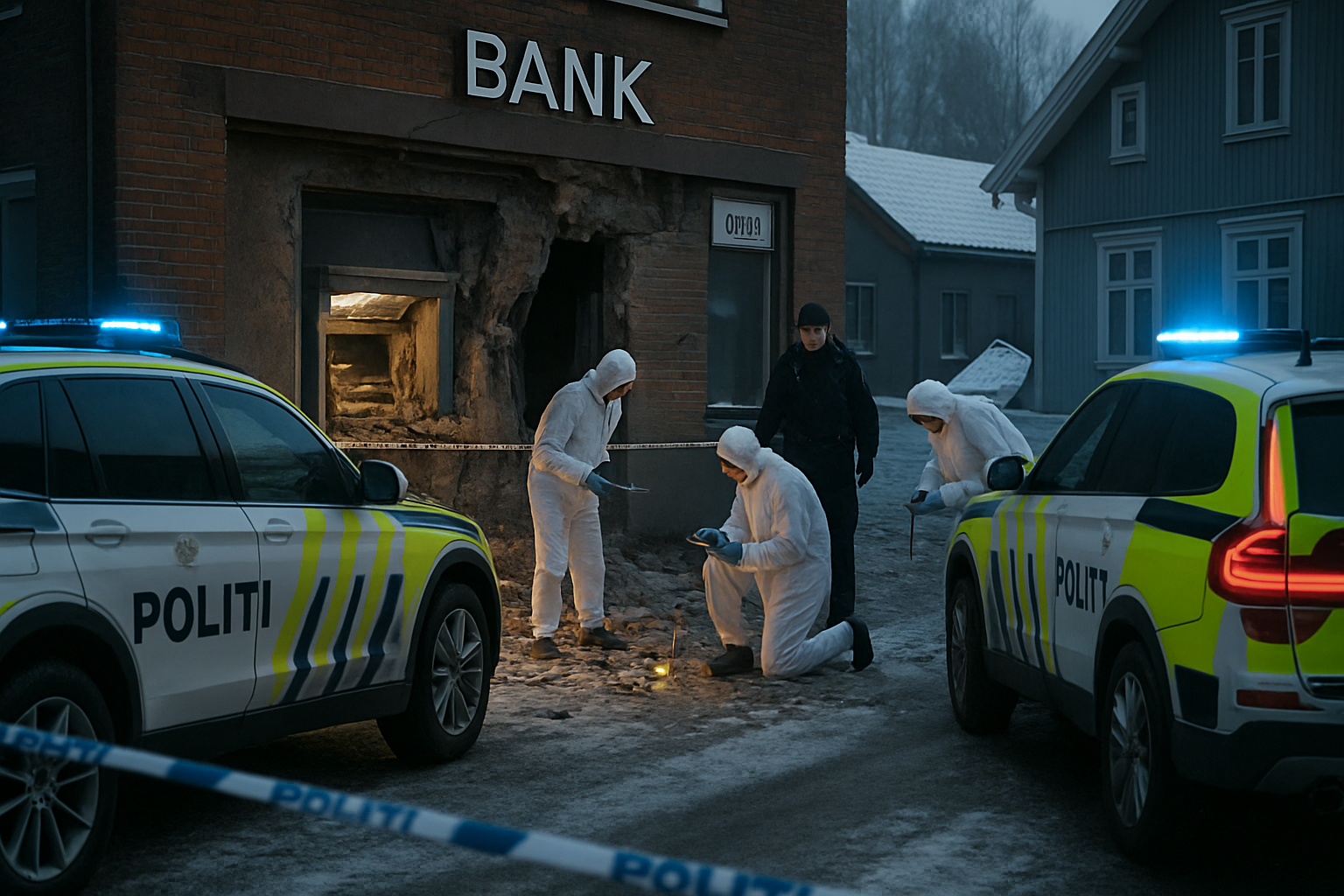
Norway faces an unprecedented surge in serious criminal activity as authorities investigate a brazen attempt to rob Marker Sparebank using explosives in the small town of Ørje, while notorious suspect Viktor Savvinov, known as the "Butcher from Suntar," has been arrested in connection with a new double murder.
The explosive bank robbery attempt occurred during the early hours of Monday morning, March 2, 2026, when criminals detonated explosives at Marker Sparebank in Ørje, a quiet town in Østfold county near the Swedish border. Police responded to multiple alarms from the bank premises at approximately 3:50 AM, arriving 25 minutes later to discover extensive damage to the building's interior.
Sophisticated Criminal Methods Alarm Authorities
The attempted heist represents a significant escalation in criminal methodology within Norway's traditionally peaceful society. According to operation leader Rune Isaksen, forensic evidence clearly indicates the perpetrators used explosives to breach the bank's security systems, specifically targeting a minibank ATM inside the premises.
"Evidence at the scene suggests explosives were used during the break-in, and a minibank inside the bank has been destroyed," Isaksen confirmed to Norwegian media. The scale of destruction suggests the criminals possessed sophisticated knowledge of explosive devices and bank security systems.
Police have deployed substantial resources to the scene, with multiple patrol units and technical investigation teams conducting comprehensive forensic analysis. The investigation is focusing on identifying the explosive materials used, potential entry and escape routes, and any surveillance footage that might reveal the perpetrators' identities.
The "Butcher from Suntar" Returns
In a separate but equally concerning development, Norwegian authorities have arrested Viktor Savvinov, 38, in connection with a new double murder. Savvinov, infamously known as the "Butcher from Suntar," was previously released from Russian imprisonment as part of prisoner exchanges during the ongoing Ukraine conflict.
The suspect's arrest has sent shockwaves through Norwegian society, particularly given his violent criminal history and the circumstances surrounding his previous release. Norwegian security services had been monitoring individuals released through various prisoner exchange programs, but Savvinov's alleged return to violent crime underscores the challenges facing law enforcement in tracking potentially dangerous individuals.
Sources close to the investigation indicate that Savvinov is suspected of involvement in two recent murders, though authorities have not yet released details about the victims or the circumstances of their deaths. The case highlights growing concerns about the movement of individuals with serious criminal backgrounds across European borders.
Rising Security Concerns Across Norway
These incidents occur against a backdrop of increasing security challenges across Norway. Earlier this year, authorities dealt with a terrorism investigation involving a 17-year-old who allegedly planned attacks against NATO installations, including the Jåttå base near Stavanger. The suspect was arrested by Norway's Police Security Service (PST) after bringing an ISIS flag to school, triggering a broader investigation into potential terrorist activities.
The combination of sophisticated criminal methods, international criminal networks, and terrorism-related investigations has prompted Norwegian security services to reassess their threat assessment procedures. Law enforcement experts note that Norway's traditionally low crime rates and open society may have created vulnerabilities that criminals are now exploiting.
"We are seeing an evolution in criminal methodology that requires us to adapt our response strategies significantly."
— Norwegian Law Enforcement Official
International Criminal Networks
The Ørje bank bombing represents more than an isolated criminal incident—it reflects broader patterns of international criminal activity affecting Nordic countries. The use of explosives in financial crimes has become increasingly common across Europe, with criminal organizations sharing sophisticated techniques and equipment across borders.
Norwegian intelligence services have documented increased activity by international criminal networks operating within the country's borders. These organizations often combine traditional criminal enterprises with newer threats, including cybercrime and terrorism-related activities.
The proximity of Ørje to the Swedish border has raised questions about potential cross-border criminal coordination. Swedish authorities have been notified of the incident and are cooperating with Norwegian police to track any suspects who may have fled across the international boundary.
Community Impact and Response
The explosive bank robbery has deeply affected the small community of Ørje, where residents are unaccustomed to such violent criminal activity. Local businesses and financial institutions are reviewing their security procedures in response to the incident, while community leaders are calling for enhanced police presence in the region.
The psychological impact on residents cannot be understated. Many locals express shock that such sophisticated criminal methods would be employed in their peaceful community, traditionally known for cross-border commerce and tourism rather than serious crime.
Financial institutions across Norway are now conducting comprehensive security reviews, particularly focusing on ATM protection and explosive detection systems. The Norwegian banking industry is coordinating with police to develop enhanced security protocols that can prevent similar attacks while maintaining accessibility for customers.
Broader Security Implications
The concurrent developments—the explosive bank robbery and Savvinov's arrest—highlight multiple dimensions of Norway's evolving security landscape. Traditional crime prevention methods designed for a low-crime society are proving inadequate against sophisticated international criminal networks and individuals with extensive violent backgrounds.
Norwegian security services are increasingly recognizing the need for enhanced international cooperation, particularly with neighboring Scandinavian countries and broader European Union law enforcement agencies. The movement of criminals across borders, combined with the international nature of modern criminal enterprises, requires coordinated multinational responses.
The incidents also raise questions about prisoner exchange policies and the monitoring of individuals released through such programs. While prisoner exchanges serve important diplomatic and humanitarian purposes, the security implications of releasing individuals with serious criminal backgrounds require careful ongoing assessment.
Law Enforcement Adaptation
Norwegian police are adapting their operational procedures to address these evolving threats. This includes enhanced training in explosive device investigation, improved coordination with international law enforcement agencies, and development of specialized units capable of responding to sophisticated criminal activities.
The PST and other Norwegian security agencies are also reviewing their threat assessment methodologies to better identify and track individuals who pose potential security risks. This includes improved information sharing between different law enforcement agencies and enhanced monitoring of cross-border criminal activities.
Investment in technological capabilities is also increasing, with Norwegian authorities seeking advanced forensic equipment and surveillance technologies that can match the sophistication of modern criminal enterprises.
Looking Forward
As investigations into both the Ørje bank bombing and the Savvinov case continue, Norwegian authorities face the challenge of maintaining public safety while adapting to rapidly evolving criminal threats. The incidents serve as a stark reminder that Norway's traditionally peaceful society is not immune to the sophisticated criminal activities affecting other European nations.
The outcomes of these investigations will likely influence Norwegian security policy for years to come, potentially leading to enhanced security measures, revised international cooperation protocols, and new approaches to monitoring individuals with serious criminal backgrounds.
For now, Norwegian communities remain vigilant as law enforcement agencies work diligently to apprehend those responsible for these serious crimes and prevent similar incidents in the future. The contrast between Norway's peaceful reputation and these violent criminal activities underscores the complex security challenges facing modern European societies in an increasingly interconnected world.