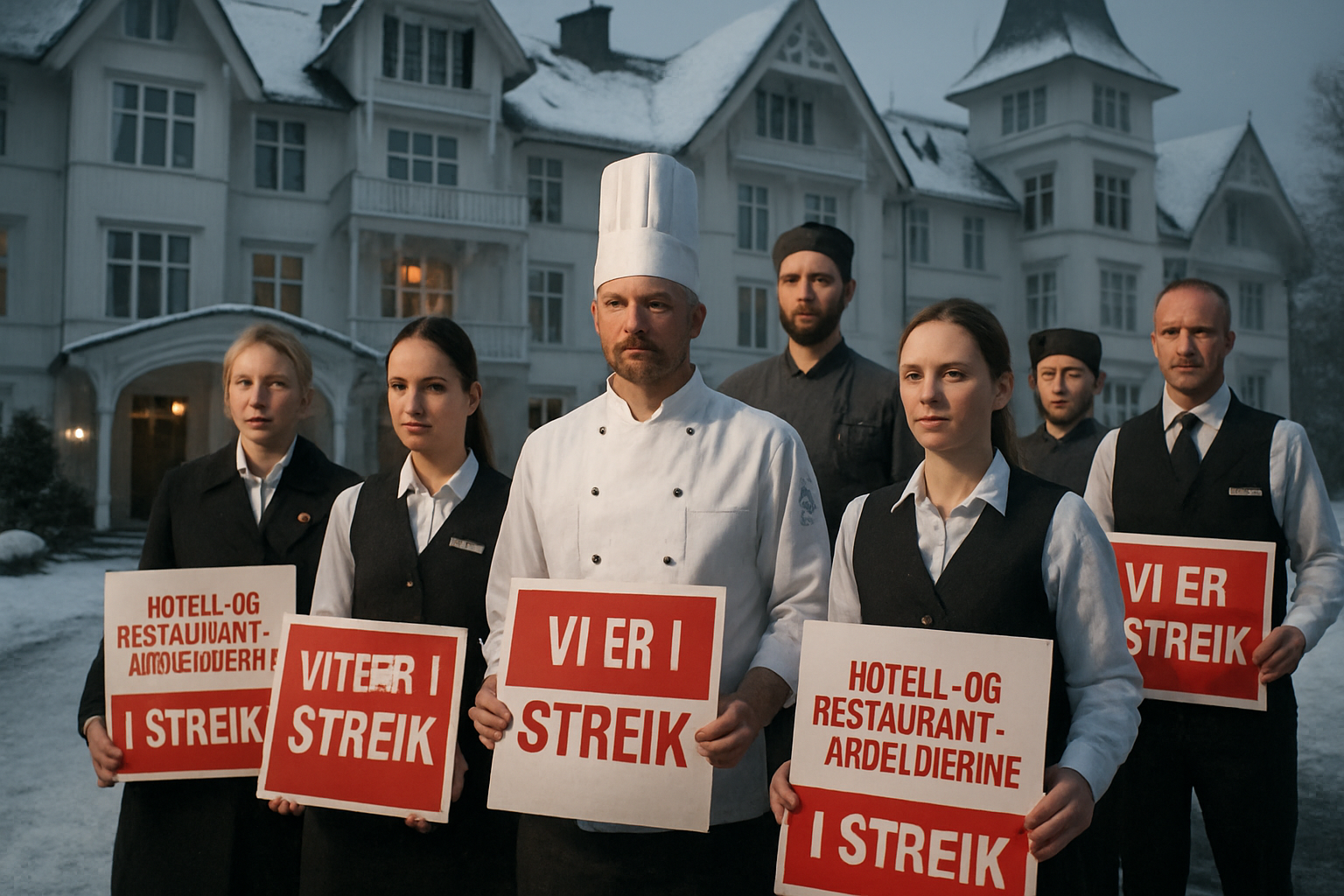
Nearly 2,000 hotel and restaurant workers across Norway launched a comprehensive strike on Sunday after wage negotiations with employers collapsed, marking one of the country's most significant hospitality industry labor actions in recent years.
The strike, affecting 1,922 employees, began at noon on Sunday after both Fellesforbundet and Parat unions terminated mediation talks with NHO Reiseliv (Confederation of Norwegian Enterprise's travel industry division). The work stoppage comes as Norway's hospitality sector faces mounting pressure from rising operational costs and worker demands for better compensation packages.
Strike Escalation Planned
According to detailed plans released by Fellesforbundet, the labor action is set to intensify significantly by Thursday, when over 1,000 additional members across 79 businesses will join the strike. This escalation would bring the total number of striking workers to 2,668, affecting 185 hospitality establishments nationwide.
"Hotel and restaurant workers have some of the country's lowest wages, but they have the same expenses for food and rent as everyone else. Without an offer for real wage increases, we see no other way out than to strike," said Dag-Einar Sivertsen, Fellesforbundet's chief negotiator, in a press statement.
Breakdown of Negotiations
The negotiation process, which had been ongoing since Friday under the supervision of the National Mediator (riksmekleren), reached an impasse early Sunday morning. Sources close to the talks indicated that the parties remained far apart on core wage issues, with unions seeking substantial increases to address inflation and rising living costs that have particularly impacted service sector workers.
The failure of mediation represents a significant breakdown in Norway's traditionally collaborative industrial relations system, where social partnership between employers and unions typically resolves disputes before they reach the strike stage. This breakdown occurs within the context of broader labor tensions across Norwegian industries in 2026.
Industry Impact and Response
The timing of the strike is particularly challenging for Norway's tourism and hospitality sector, which is entering its crucial spring and summer season. Hotels, restaurants, and tourism-related businesses across the country are now forced to operate with significantly reduced staff or, in some cases, close temporarily until the dispute is resolved.
NHO Reiseliv has not yet issued a detailed public response to the strike action, but industry sources suggest that employers are concerned about the financial viability of significant wage increases given the sector's ongoing recovery from pandemic-related challenges and current economic pressures.
Economic Context
The hospitality strike occurs against the backdrop of Norway's complex economic landscape in 2026. While the country has benefited from high energy prices and strong petroleum revenues, service sector workers have faced mounting pressure from inflation, particularly in housing and food costs that disproportionately affect lower-wage earners.
Recent analysis of Norwegian wage structures has shown that hospitality workers consistently rank among the lowest-paid groups in the Norwegian economy, despite the sector's importance to the country's tourism industry and local economies. The unions argue that current wage levels are unsustainable given Norway's high cost of living, particularly in urban areas where many hotels and restaurants operate.
Historical Context
This strike represents part of a broader pattern of labor unrest that has affected Norwegian industries throughout early 2026. The hospitality action follows successful wage negotiations in other sectors, including the frontfag (manufacturing) settlement that saw Fellesforbundet secure significant improvements for industrial workers earlier this year.
However, the service sector has historically lagged behind manufacturing in terms of wage growth and collective bargaining outcomes, creating persistent disparities that unions argue have become unsustainable as living costs continue to rise across Norway.
Union Strategy
The phased escalation strategy employed by Fellesforbundet demonstrates sophisticated labor organization designed to maximize economic pressure while allowing for potential negotiated resolution. The initial strike affects key operations across multiple regions, while the planned Thursday expansion would create nationwide disruption to hospitality services.
Union representatives have indicated their willingness to return to negotiations if employers present substantive wage improvement offers. However, they emphasize that any resolution must address the fundamental issue of wage adequacy for workers facing Norway's high living costs.
Government Response
Norwegian government officials have not yet intervened directly in the dispute, consistent with the country's approach of allowing social partners to resolve labor conflicts through established collective bargaining mechanisms. However, if the strike continues to expand and significantly disrupts the tourism sector, political pressure for mediation or intervention may increase.
The timing is particularly sensitive given Norway's upcoming tourism season and the sector's importance to regional economies, particularly in areas dependent on hospitality and tourism revenue.
International Implications
The Norwegian hospitality strike reflects broader global trends in post-pandemic labor relations, where service sector workers increasingly demand compensation that reflects their essential role in economic recovery. Similar disputes have affected hospitality industries across Europe and globally, as workers seek to address wage stagnation and improved working conditions.
The outcome of Norway's hospitality strike may influence labor strategies in other Scandinavian countries, where similar wage pressures and cost-of-living challenges affect service sector workers. Norway's traditionally strong labor movement and social partnership model make this dispute particularly significant for regional labor relations.
Path Forward
Resolution of the strike will likely require both sides to make significant concessions. Unions have clearly indicated that substantial wage increases are non-negotiable, while employers face genuine financial constraints and competitive pressures. The success or failure of finding middle ground will test the resilience of Norway's industrial relations system and could set precedents for future service sector negotiations.
As the strike enters its second day with planned escalation later this week, both the immediate economic impact and longer-term implications for Norwegian labor relations remain significant. The hospitality industry's ability to maintain operations during peak season, combined with workers' determination to achieve meaningful wage improvements, creates a high-stakes environment requiring innovative solutions from all parties involved.
The coming days will be crucial in determining whether Norway's traditional consensus-based approach to labor relations can successfully address the growing disparities between living costs and service sector wages, or whether more confrontational approaches will become necessary to resolve fundamental economic inequalities affecting hospitality workers nationwide.