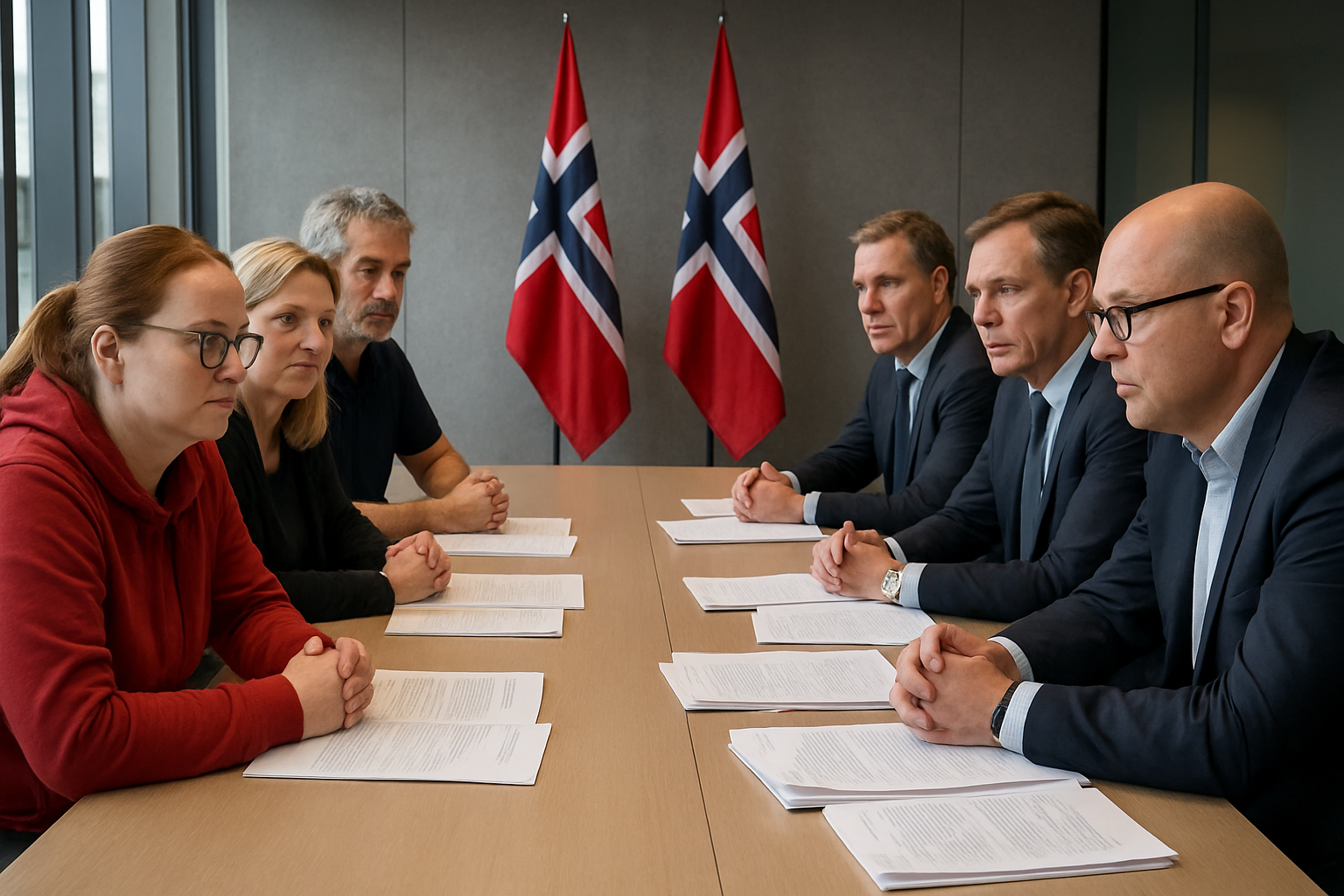
Norway's largest labor union, Fellesforbundet, reached a landmark agreement with Norsk Industri in the critical frontfag wage negotiations on Sunday, securing substantial wage increases for workers while averting what could have been one of the country's largest industrial strikes in decades.
The agreement, concluded after 13 hours of overtime negotiations that extended well beyond the original deadline, establishes a wage framework of 4.4 percent for the coming period. This translates to a general wage increase of 6.50 Norwegian kroner, providing all workers covered by the agreement with monthly salary increases exceeding 1,000 kroner.
"This wage agreement ensures a solid improvement for both the economy, predictability, and security of Norwegian workers," stated Christian Justnes, leader of Fellesforbundet, in announcing the successful conclusion of negotiations that began in mandatory mediation on Wednesday.
Negotiation Breakthrough Prevents Mass Strike
The successful conclusion of talks between Fellesforbundet and Norsk Industri represents a significant victory for industrial peace in Norway. Had negotiations failed, the country could have faced a historic strike affecting approximately 35,000 industrial workers across multiple sectors, potentially causing severe disruptions to Norway's manufacturing and industrial output.
The negotiations were particularly critical as they serve as the "frontfag" – the leading sector wage settlement that traditionally sets the pattern for wage negotiations across the Norwegian economy. The agreement's terms are expected to influence subsequent wage talks in other sectors throughout 2026.
However, while Fellesforbundet celebrated success, the union Parat remains in ongoing mediation talks, creating uncertainty for an additional 1,242 members across 63 companies. In a press statement, Parat emphasized that "despite reports of resolution for Fellesforbundet, Parat continues to sit at the mediator's table."
Enhanced Benefits for Lowest-Paid Workers
The agreement includes special provisions for Norway's lowest-paid industrial workers, who will receive an additional 4 kroner supplement on top of the general increase. This targeted approach reflects the unions' focus on addressing wage inequality within the industrial sector while ensuring competitive compensation packages across all worker categories.
The 4.4 percent overall wage framework represents a substantial improvement over previous settlements and reflects both the strong bargaining position of Norwegian unions and the robust state of the country's industrial economy. The agreement comes at a time when Norwegian workers have faced increasing living costs and inflation pressures throughout 2025 and early 2026.
Continued Uncertainty for Parat Members
While Fellesforbundet's successful negotiations provide relief for the majority of affected workers, significant uncertainty remains for the 1,242 Parat members whose fate continues to hang in the balance. The union has previously announced plans for work stoppages affecting 63 companies if negotiations fail to produce a satisfactory outcome.
"Until a potential agreement is reached, or mediation concludes without result, the danger of conflict remains," Parat warned in its official statement. The union's continued presence at the negotiating table underscores the complex multi-union dynamics that characterize Norwegian industrial relations.
The ongoing Parat negotiations highlight the decentralized nature of Norwegian wage bargaining, where different unions negotiate separately even within the same industrial sectors. This system, while providing unions with specific leverage for their members' concerns, can also create situations where partial agreements leave significant worker populations still facing potential industrial action.
Economic Context and International Implications
The successful Fellesforbundet agreement comes against the backdrop of significant labor unrest across Europe throughout early 2026. From transport strikes in Germany to ongoing labor disputes in Argentina, Norwegian unions' ability to reach negotiated settlements demonstrates the continued strength of the country's consensus-based industrial relations model.
Norway's approach to labor negotiations, characterized by mandatory mediation and structured bargaining processes, has historically helped the country avoid the prolonged strikes and industrial disruption experienced by other European nations. The frontfag system, where leading sectors establish wage patterns for the broader economy, provides predictability for both workers and employers while maintaining competitive wage levels.
The timing of these negotiations has particular significance as Norway continues to balance its role as a major energy exporter with domestic economic pressures. The industrial sector covered by these agreements plays a crucial role in Norway's diversified economy beyond oil and gas, including manufacturing, processing, and technology sectors that employ hundreds of thousands of workers.
Broader European Labor Context
The Norwegian negotiations conclude during a period of heightened labor tensions across Europe. Recent months have witnessed significant strikes affecting transportation systems in Germany, where Ver.di union actions have disrupted airports and public transport, and ongoing disputes in other Nordic countries over wage adjustments and working conditions.
Against this backdrop, Norway's successful negotiation represents a model of constructive labor relations that other European nations are watching closely. The ability to reach agreements that satisfy both worker demands for improved compensation and employer needs for predictable labor costs demonstrates the effectiveness of institutional frameworks that prioritize dialogue over confrontation.
Implementation and Future Outlook
The implementation of the new wage agreement will begin immediately for Fellesforbundet members, with the first increased payments expected to appear in upcoming payroll cycles. The agreement's multi-year framework provides stability for both workers and employers, enabling long-term planning and investment decisions across the industrial sector.
For the broader Norwegian economy, the successful resolution of these negotiations removes a significant source of potential disruption while setting positive precedents for upcoming wage talks in other sectors. The pattern established by this frontfag agreement will likely influence negotiations in public sector employment, service industries, and other segments of the Norwegian labor market throughout 2026.
However, the unresolved situation with Parat serves as a reminder that even within Norway's consensus-oriented system, achieving universal agreement remains challenging. The coming days will be crucial in determining whether the positive momentum from the Fellesforbundet agreement can extend to resolve the remaining disputes and ensure comprehensive industrial peace.
As European labor movements continue to grapple with inflation pressures, changing work conditions, and evolving economic circumstances, Norway's experience in these negotiations provides valuable insights into maintaining productive worker-employer relationships while addressing legitimate concerns about wages and working conditions. The success of these talks reinforces Norway's reputation for effective industrial relations and social partnership, even as questions remain about the final resolution of all outstanding disputes.