New South Wales has ruled out introducing free public transport while the federal Albanese government considers taxpayer-funded petrol subsidies as Australia grapples with its most severe fuel crisis since the 1970s oil shocks.
With fuel prices surging past $2.50 per liter and approaching the critical $3 threshold in some regions, the crisis has exposed deep divisions in government responses across federal and state levels. While NSW Energy Minister Penny Sharpe chairs emergency crisis talks with transport, agriculture, mining and consumer groups in Sydney, the state government has implored drivers "not to panic and to avoid hoarding fuel."
Federal Government Considers Unprecedented Intervention
The Albanese government is preparing to use public funds to underwrite the cost of fuel in a bid to reduce prices at the pump and secure Australia's supply, according to sources familiar with the discussions. The move represents a significant shift toward direct market intervention as fuel stations across the country run dry or face severe shortages.
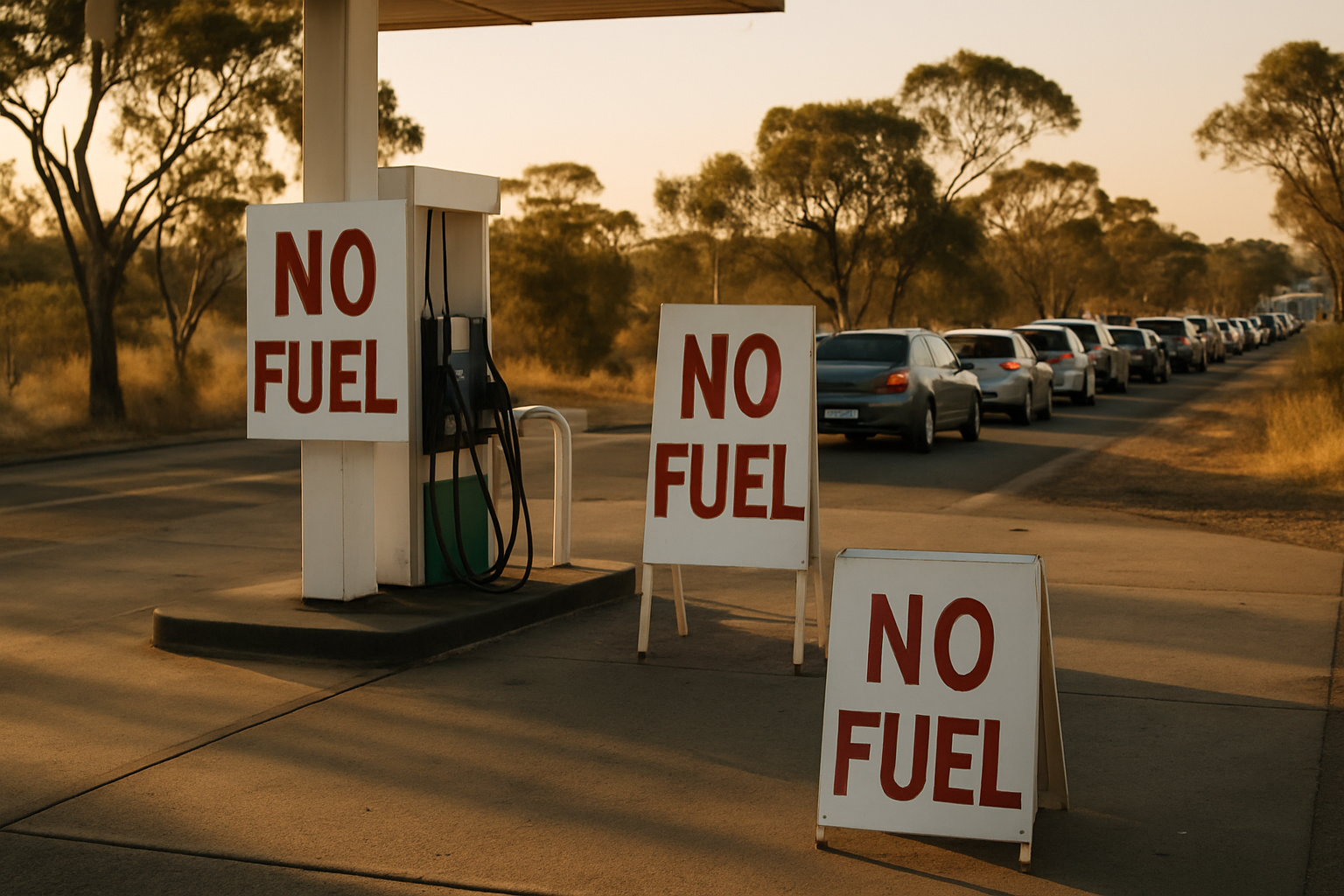
Fuel is running low or completely depleted at hundreds of petrol stations around the country, with the cost of diesel well over $3 per liter and unleaded petrol sitting at around $2.60 nationally. Some regional areas are experiencing even higher prices, creating acute hardship for rural communities with limited transport alternatives.
Regional Communities Bear the Brunt
The crisis has hit regional Australia particularly hard, with Queensland fuel stations running completely dry in multiple locations. The town of Texas in Queensland ran completely out of fuel over the weekend, while Robinvale, located 70 kilometers east of Mildura, has been depleted of supplies.
Goondiwindi Mayor Lawrence Springborg reports that major suppliers are favoring bulk distributors over independents, creating severe rural shortages that affect communities with limited alternatives. "Major suppliers are abandoning independent stations, leaving regional communities without transport alternatives," Springborg warned.
The Australian Competition and Consumer Commission (ACCC) is actively monitoring fuel companies for price gouging as the crisis unfolds, with concerns that some operators may be exploiting the emergency situation.
Global Context of the Crisis
Australia's fuel emergency is part of a worldwide energy crisis triggered by Iran's Revolutionary Guard declaring the Strait of Hormuz "unsafe for shipping," blocking 40% of global oil transit. Oil prices have breached $100 per barrel for the first time since 2022, with Brent crude peaking at $119.50 and WTI reaching a record single-day jump of 18.98% to $108.15.
The International Energy Agency (IEA) has deployed its largest strategic petroleum reserve release in 50-year history—400 million barrels from 32 countries—more than double the 2022 Ukraine crisis response. Japan is releasing 80 million barrels for the first time since the 2011 Fukushima disaster, highlighting the global nature of this supply crisis.
Aviation and Transport Sectors Under Pressure
The crisis extends beyond road transport, with over 18,000 flights cancelled worldwide—the most since COVID-19. Dubai International Airport, the world's busiest with 86 million passengers, has been shut down due to missile damage, while eight countries have imposed simultaneous airspace closures.
Jet fuel costs have surged from $85-90 to $150-200 per barrel, representing a 122% increase that is forcing airlines to implement emergency surcharges and route modifications. Air New Zealand has cut over 1,000 flights, affecting 44,000 passengers, demonstrating the ripple effects across all transport modes.
Financial Market Implications
The fuel crisis has triggered significant financial market volatility, with Pakistan's KSE-100 experiencing its largest single-day decline in history at -8.97%, while South Korea's KOSPI fell 12% before circuit breakers activated. The Korean won has hit a 17-year low, illustrating how energy security concerns translate into broader economic instability.
Central banks including the European Central Bank and Bank of Japan are coordinating emergency liquidity measures, as traditional monetary policy tools prove limited in addressing structural geopolitical disruptions to energy supplies.
Emergency Measures Across Government Levels
The crisis has prompted unprecedented government interventions worldwide. Hungary has imposed immediate price caps on gasoline and diesel to combat "war-driven explosions" in fuel costs. France has deployed 500 fuel station inspectors to prevent price manipulation, while Romania has outlined five emergency scenarios to prevent diesel from exceeding 10 lei per liter.
In contrast to these interventions, NSW's decision to rule out free public transport represents a more market-oriented approach, even as the federal government explores taxpayer-funded subsidies to address the supply crisis directly.
Supply Chain Vulnerabilities Exposed
The crisis has highlighted Australia's dangerous dependence on fuel imports and limited domestic refining capacity. Independent rural stations operate on thin margins with limited storage and just-in-time delivery systems, making them particularly vulnerable when major suppliers prioritize bulk distributors.
The 21-mile Strait of Hormuz represents a single-point failure in modern logistics, with no realistic alternatives for the massive volume of oil that transits this critical chokepoint. Alternative Arabian Peninsula routes lack adequate capacity and impose significant time and cost penalties.
Long-term Energy Security Implications
Energy security experts are calling this "the most severe energy security crisis in decades," with single-chokepoint vulnerabilities exposed on a global scale. Samuel Ciszuk, energy analyst, warns that the crisis demonstrates how over-dependence on strategic chokepoints requires fundamental restructuring to reduce geopolitical volatility.
The crisis serves as a stark reminder of the importance of energy security and supply chain resilience in an interconnected but unstable world. Strategic petroleum reserves, while providing a temporary buffer, cannot address sustained disruptions, highlighting the need for more comprehensive energy architecture transformation.
Recovery Timeline Uncertain
Unlike weather-related disruptions, the recovery timeline for this crisis remains uncertain as it depends on military and diplomatic resolution of conflicts in the Middle East. The template-setting nature of this crisis will likely influence energy security planning for decades to come.
As Australia deploys its strategic fuel reserves for the first time in the nation's history, the crisis represents a watershed moment exposing regional vulnerabilities that require comprehensive policy responses addressing supply chain resilience in an interconnected but unstable world.
The divergent approaches between NSW's market-oriented stance and federal consideration of direct subsidies reflect broader debates about the role of government intervention during energy emergencies—discussions that will shape Australia's energy policy framework for years to come.