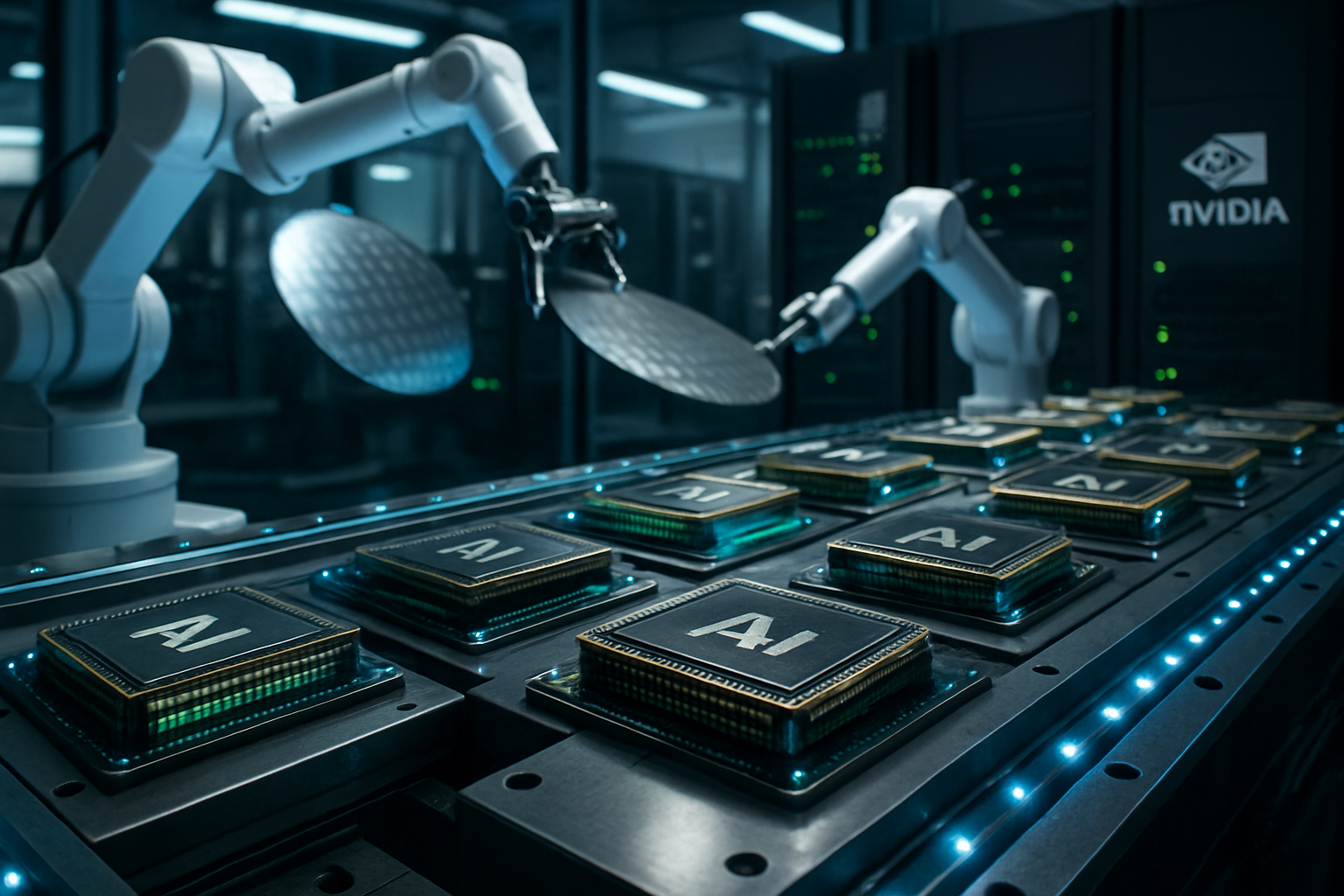
Nvidia Corporation delivered exceptional fourth quarter fiscal 2027 financial results on Wednesday, posting record revenue of $68.1 billion that significantly exceeded analyst expectations, as global demand for artificial intelligence chips continues to drive unprecedented growth in the semiconductor industry.
The Santa Clara-based chip manufacturer reported quarterly net profit of $42.96 billion, representing a 94% year-over-year increase that underscores the company's dominant position in the rapidly expanding AI infrastructure market. The results triggered immediate market reactions, with Nvidia stock surging more than 2% in after-hours trading and sparking a global technology rally extending from Wall Street to the Australian Securities Exchange and European markets.
CEO Jensen Huang's leadership has been validated as the company maintains its position as the world's most valuable corporation, with the latest earnings demonstrating sustained momentum despite ongoing global memory chip crisis that has affected competitors Samsung, SK Hynix, and Micron with sixfold price increases.
Data Center Business Drives Record Performance
Nvidia's data center business segment served as the primary growth engine, benefiting from massive enterprise AI adoption across healthcare, financial services, automotive, and manufacturing sectors. The company's integrated AI platform approach has created multiple revenue streams and established competitive barriers that competitors struggle to match.
Major technology companies including Google, Microsoft, Meta, and Amazon continue their aggressive AI spending commitments, with collective investments exceeding $600 billion. This sustained demand has positioned Nvidia as the primary beneficiary of the AI transition from experimental technology to essential business infrastructure.
The earnings results alleviate investor concerns about AI infrastructure monetization that emerged during the ongoing "SaaSpocalypse" - a market disruption that eliminated hundreds of billions in traditional software company valuations as AI systems demonstrate direct replacement capabilities for conventional solutions.
Global Market Impact and Investor Response
The strong performance contrasts sharply with broader technology sector regulatory pressures in Europe, including Spain's criminal executive liability measures and France's AI company raids. Nvidia's operational excellence in navigating supply chain constraints and regulatory challenges demonstrates sustained market leadership capabilities.
Financial markets interpreted the performance as validation of the artificial intelligence investment thesis, potentially triggering increased sector investment globally. The results represent a critical inflection point for technology industry transformation and AI infrastructure development trajectory.
"This performance positions Nvidia as the primary beneficiary of AI transition from experimental to essential business infrastructure."
— Industry Analysis, Planet News Investigation
Despite the exceptional results, some investors remain cautious about the sustainability of massive AI infrastructure spending. The global memory crisis, with semiconductor prices surging sixfold, continues to create supply chain challenges that could impact future growth trajectories.
Competitive Landscape and Supply Chain Challenges
The earnings announcement comes amid intensifying global competition in AI chip manufacturing. Chinese breakthrough technologies and European digital sovereignty initiatives are challenging traditional market assumptions, creating a multipolar competitive landscape that extends beyond Silicon Valley concentration.
Supply chain constraints remain a significant factor, with memory manufacturers operating at full capacity unable to meet explosive demand from AI development projects. The crisis is expected to persist until 2027 when new fabrication facilities come online, potentially creating ongoing bottlenecks for industry expansion.
Consumer electronics have experienced 20-30% cost increases over the past year due to supply shortages, though Nvidia's strong relationships with suppliers and strategic inventory management have helped mitigate some impacts on their core AI chip business.
Looking Forward: Revenue Forecasts and Market Outlook
Nvidia forecasted first-quarter fiscal 2027 revenue of $78 billion, with a margin of plus or minus 2%, compared to analyst estimates of $72.60 billion according to LSEG data. This guidance reflects continued confidence in AI infrastructure demand despite macroeconomic uncertainties.
The company's performance represents fundamental restructuring of global economic dynamics through AI infrastructure investment. As governments and corporations worldwide recognize AI as essential rather than optional technology, Nvidia's position as the leading supplier of specialized processing units creates sustainable competitive advantages.
Industry observers note that the technology sector faces ongoing infrastructure constraints while pushing innovation boundaries, with AI applications becoming a strategic battleground between major powers. Nvidia's ability to navigate these complexities while maintaining growth demonstrates the company's operational sophistication.
Strategic Implications for the AI Revolution
The record-breaking results occur during what analysts describe as the most critical period for artificial intelligence development since the technology boom began. Success in resolving infrastructure constraints, establishing international cooperation frameworks, and developing sustainable business models will determine whether AI achieves transformative promise or faces systemic corrections.
Nvidia's integrated approach spanning hardware development, software platforms, and strategic partnerships creates multiple revenue streams that distinguish the company from traditional semiconductor manufacturers. This diversification strategy positions the company advantageously as AI applications expand across industries.
The earnings performance validates CEO Jensen Huang's long-term vision of AI as a fundamental computing paradigm shift rather than a temporary market trend. The company's consistent execution during periods of rapid technological change demonstrates management capabilities essential for sustained leadership in dynamic markets.