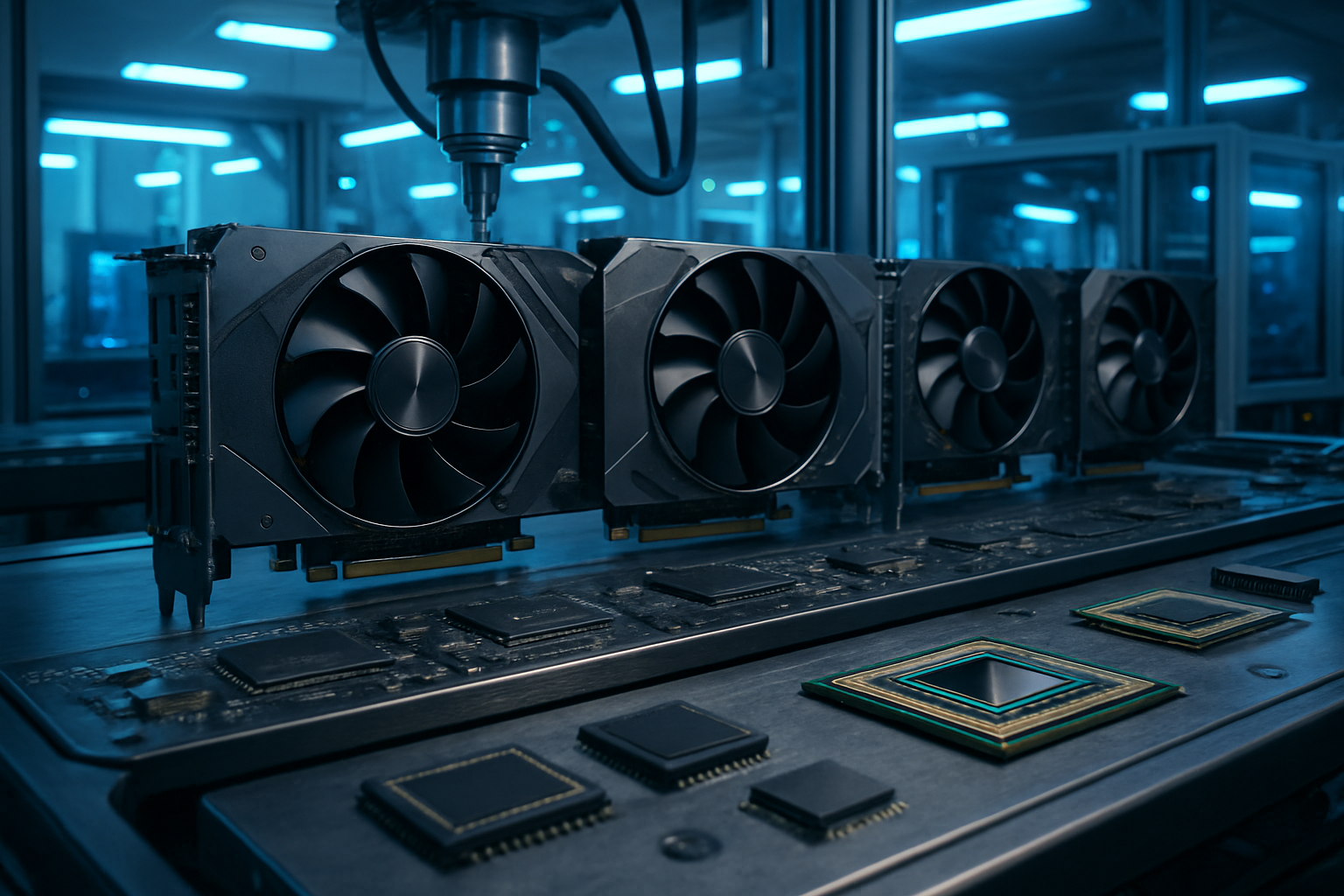
In an unprecedented move reflecting the severity of the global memory crisis, Nvidia Corporation is preparing to release modified versions of its older GeForce RTX 3060 graphics cards to address critical supply shortages affecting the semiconductor industry worldwide.
The tech giant's decision to revisit older GPU architecture comes as memory semiconductor prices have surged sixfold over the past year, creating what industry analysts describe as the most severe supply crisis in modern computing history. With memory manufacturers Samsung, SK Hynix, and Micron operating at full capacity but unable to meet explosive demand from AI development and data center operations, Nvidia is adapting its product strategy to navigate the constrained supply environment.
Memory Crisis Reaches Critical Point
The current semiconductor shortage represents a fundamental shift from previous supply disruptions. Unlike past crises driven by production stoppages or geopolitical tensions, the 2026 memory crisis stems from genuine demand explosion as artificial intelligence applications transition from experimental to essential business infrastructure across multiple industries.
Consumer electronics have experienced cost increases of 20-30% over the past year, with gaming hardware particularly affected. The shortage has forced companies to explore alternative approaches, from memory-efficient algorithms to creative product configurations that maximize performance while minimizing high-demand components.
"The current memory shortage is unlike anything we've seen in decades. It's forcing the entire industry to innovate around constraints rather than simply scale up production."
— Industry Analyst, Technology Research Institute
RTX 3060 Revival Strategy
Nvidia's decision to release "stripped-down" versions of the RTX 3060 represents a strategic pivot to older, proven architecture that can be manufactured with currently available memory configurations. The RTX 3060, originally launched in February 2021, established itself as a popular mid-range gaming GPU before being phased out for newer generations.
The modified RTX 3060 variants will likely feature reduced memory specifications compared to original models, allowing Nvidia to serve the gaming market while preserving higher-capacity memory modules for data center and AI training applications where demand continues to outstrip supply.
This approach reflects the broader industry challenge of allocating limited memory resources between consumer gaming products and enterprise AI infrastructure. With companies like OpenAI, Microsoft, and Google competing intensively for semiconductor capacity to support their AI initiatives, gaming consumers have found themselves competing for the same fundamental components driving the artificial intelligence revolution.
Industry-Wide Implications
Nvidia's RTX 3060 revival illustrates how the memory crisis is reshaping product development cycles across the technology sector. Rather than following traditional annual upgrade patterns, manufacturers are adapting existing architectures to work within current supply constraints.
The semiconductor shortage has created a ripple effect throughout the technology ecosystem. Major cloud providers Amazon, Microsoft, and Google have committed hundreds of billions of dollars to AI infrastructure investments, creating unprecedented demand for high-bandwidth memory modules. Simultaneously, the gaming industry faces pressure to maintain product availability for millions of consumers worldwide.
Supply Chain Adaptation
Memory manufacturers are working to expand capacity, but new semiconductor fabrication facilities require 18-24 months for construction and commissioning. Industry projections suggest the current supply-demand imbalance will persist until 2027, when new production capacity comes online.
In the meantime, companies are developing innovative approaches to maximize efficiency. These include improved memory compression algorithms, hybrid cloud-local processing architectures, and strategic component allocation across product lines. Nvidia's RTX 3060 strategy exemplifies this adaptive approach, leveraging proven designs that can be manufactured within current constraints.
Market Response and Consumer Impact
The gaming community has responded with mixed reactions to news of older GPU rereleases. While some appreciate continued product availability during the shortage, others express disappointment at the industry's inability to deliver consistent generational improvements that characterized previous decades of graphics card development.
For consumers, the RTX 3060 revival may provide more affordable entry points into modern gaming, albeit with performance characteristics similar to hardware from several years ago. The modified specifications will likely target budget-conscious gamers and emerging markets where absolute cutting-edge performance is less critical than accessibility and value.
Future Outlook
Nvidia's strategic response to the memory crisis demonstrates the technology industry's resilience and adaptability during unprecedented supply chain challenges. The company's willingness to revisit older architectures reflects a pragmatic approach to serving customer needs while managing resource constraints.
As the industry navigates this transitional period, success will increasingly depend on companies' ability to optimize existing technologies rather than simply introducing new ones. This constraint-driven innovation may ultimately lead to more efficient and sustainable approaches to hardware development.
The RTX 3060 revival serves as a case study in how established technology companies can adapt their strategies during global supply crises. By leveraging proven architectures and modifying them for current market conditions, Nvidia maintains its market presence while contributing to industry-wide efforts to address the semiconductor shortage.
The resolution of the global memory crisis will ultimately depend on expanding production capacity and achieving better balance between AI infrastructure demands and consumer electronics needs. Until then, creative adaptations like Nvidia's RTX 3060 strategy will likely become increasingly common as the industry navigates one of its most challenging periods in modern history.