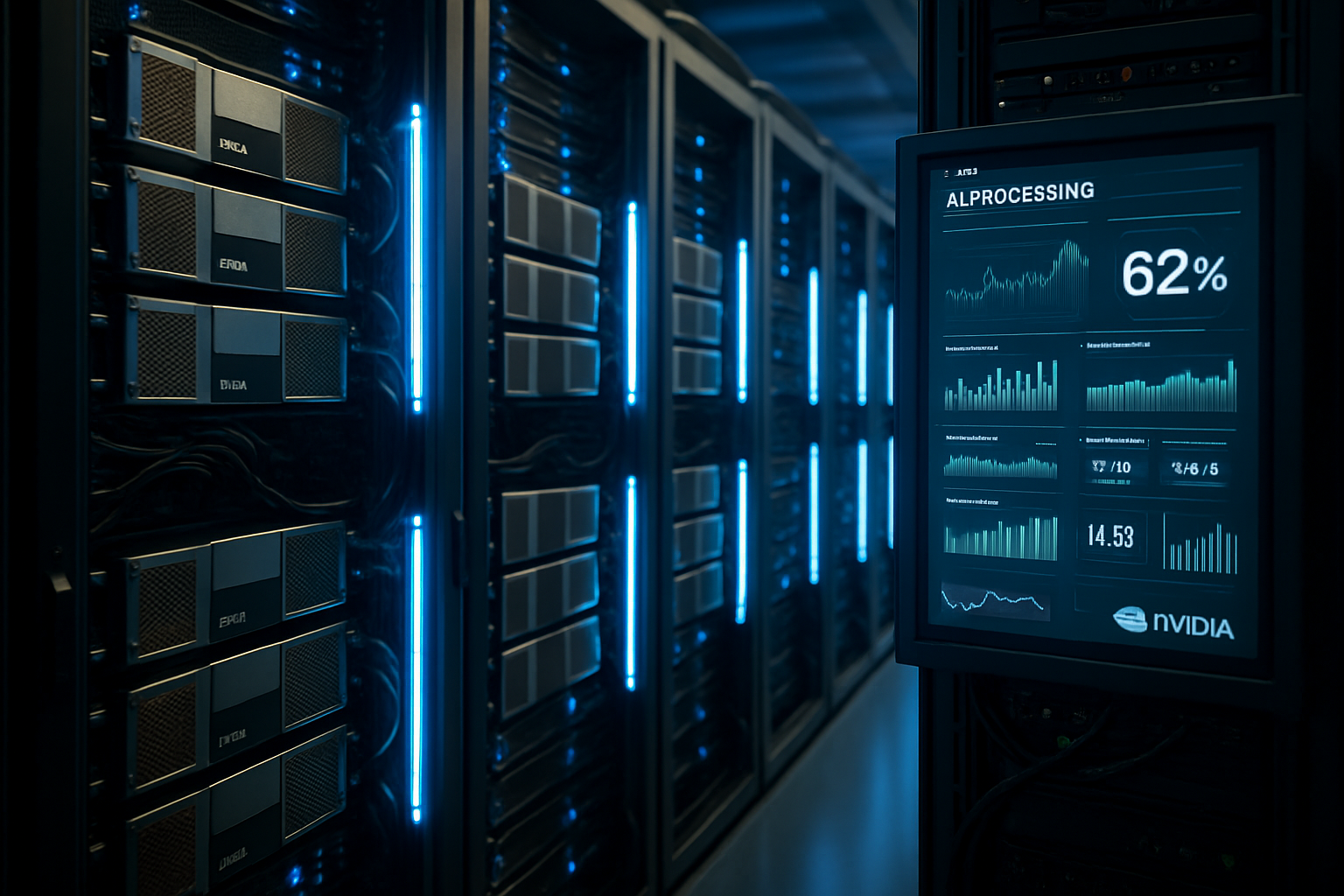
Nvidia Corporation delivered blockbuster fourth-quarter results for fiscal year 2026, with revenue soaring 73% year-over-year to a record $68.1 billion, significantly surpassing analyst expectations and triggering a global technology market rally amid ongoing semiconductor supply constraints.
The semiconductor giant's exceptional performance validates CEO Jensen Huang's strategic vision during a critical inflection point for artificial intelligence infrastructure development. The results come as the company maintains its position as the world's most valuable corporation, despite widespread concerns about AI infrastructure monetization and the ongoing "SaaSpocalypse" that has eliminated hundreds of billions in traditional software market capitalization.
Record Financial Performance Drives Market Rally
Nvidia's Q4 results exceeded market expectations across all key metrics, with the company achieving quarterly net profit of $42.96 billion, representing a 94% year-over-year increase. The stock surged over 2% in after-hours trading, catalyzing a broader technology sector rally that extended from Wall Street to international markets including the Australian Securities Exchange and European trading floors.
Looking ahead, Nvidia forecast first-quarter fiscal 2027 revenue of $78 billion (±2%), substantially above analyst estimates of $72.60 billion according to LSEG data. This guidance reinforces investor confidence in the company's ability to capitalize on continued enterprise AI adoption across multiple industries.
"These results demonstrate the fundamental shift from experimental AI to essential business infrastructure across every sector of the global economy."
— Jensen Huang, CEO, Nvidia Corporation
Data Center Business Drives Growth
The company's data center segment emerged as the primary growth driver, fueled by explosive enterprise AI adoption across healthcare, financial services, automotive, and manufacturing sectors. Major technology companies including Google, Microsoft, Meta, and Amazon continue their massive AI spending commitments, with combined investments exceeding $600 billion in 2026 alone.
This enterprise demand reflects a broader industry transformation as businesses integrate AI capabilities into core operations. Unlike previous technology cycles focused on consumer adoption, the current AI boom is characterized by systematic infrastructure investments by established corporations seeking competitive advantages through automated processes and enhanced decision-making capabilities.
Gaming Chip Shortage Persists
Despite record financial performance, Nvidia warned that gaming chip shortages will continue through the end of 2026. The shortage stems from unprecedented demand for high-bandwidth memory (HBM) and advanced semiconductors required for AI training and data center operations, creating supply allocation challenges between gaming and enterprise markets.
Global memory manufacturers Samsung, SK Hynix, and Micron continue operating at full capacity but remain unable to meet explosive AI development demand. Memory chip prices have surged sixfold compared to 2025 levels, driving consumer electronics costs up 20-30% across the industry. Relief is not expected until 2027 when new fabrication facilities come online after 18-24 month construction timelines.
Navigating Global Supply Chain Constraints
Nvidia's ability to deliver record results while navigating severe supply chain constraints demonstrates the company's operational excellence and strategic supply relationships. The global semiconductor crisis has created significant challenges for competitors, with many technology companies forced to delay product launches or reduce features due to component shortages.
The company's integrated AI platform approach creates multiple revenue streams and competitive barriers that competitors struggle to replicate. By co-designing everything from custom chips to software frameworks, Nvidia maintains technological advantages that extend beyond individual product cycles.
Regulatory Pressures and Market Position
Nvidia's strong performance comes amid intensifying regulatory pressures, particularly in Europe where new frameworks including Spain's criminal executive liability for platform violations and France's cybercrime enforcement actions target technology companies. Despite these challenges, the company has successfully adapted compliance strategies while maintaining growth momentum.
The results also validate the AI investment thesis at a time when many investors questioned returns on massive infrastructure spending. The "SaaSpocalypse" that eliminated hundreds of billions in traditional software valuations highlighted risks of AI disruption, but Nvidia's performance demonstrates the technology transition creates winners alongside losers.
Global Economic Impact
Financial markets interpreted Nvidia's performance as validation of the AI transformation thesis, potentially triggering increased sector investment globally. The results provide concrete evidence that artificial intelligence has moved beyond experimental applications to generate substantial revenue streams for infrastructure providers.
The company's success positions it as the primary beneficiary of the transition from experimental AI to essential business infrastructure. As organizations worldwide integrate AI capabilities into operations, demand for advanced semiconductors and computing platforms continues accelerating despite supply constraints.
Future Outlook Amid Industry Transformation
Nvidia's record results represent a critical inflection point for the technology industry's AI transformation trajectory. The combination of exceptional financial performance, strong forward guidance, and continued enterprise demand suggests the AI infrastructure buildout has substantial room for expansion.
However, the gaming chip shortage warning highlights ongoing supply-demand imbalances that could constrain growth in consumer-facing segments. The company's ability to navigate these tradeoffs between enterprise and consumer markets will significantly influence its competitive positioning as semiconductor supply gradually normalizes.
The February 2026 results mark a watershed moment demonstrating AI's transition from technological novelty to fundamental business infrastructure. For Nvidia, this transformation represents both unprecedented opportunity and the challenge of sustaining growth amid global supply chain constraints and intensifying regulatory scrutiny.