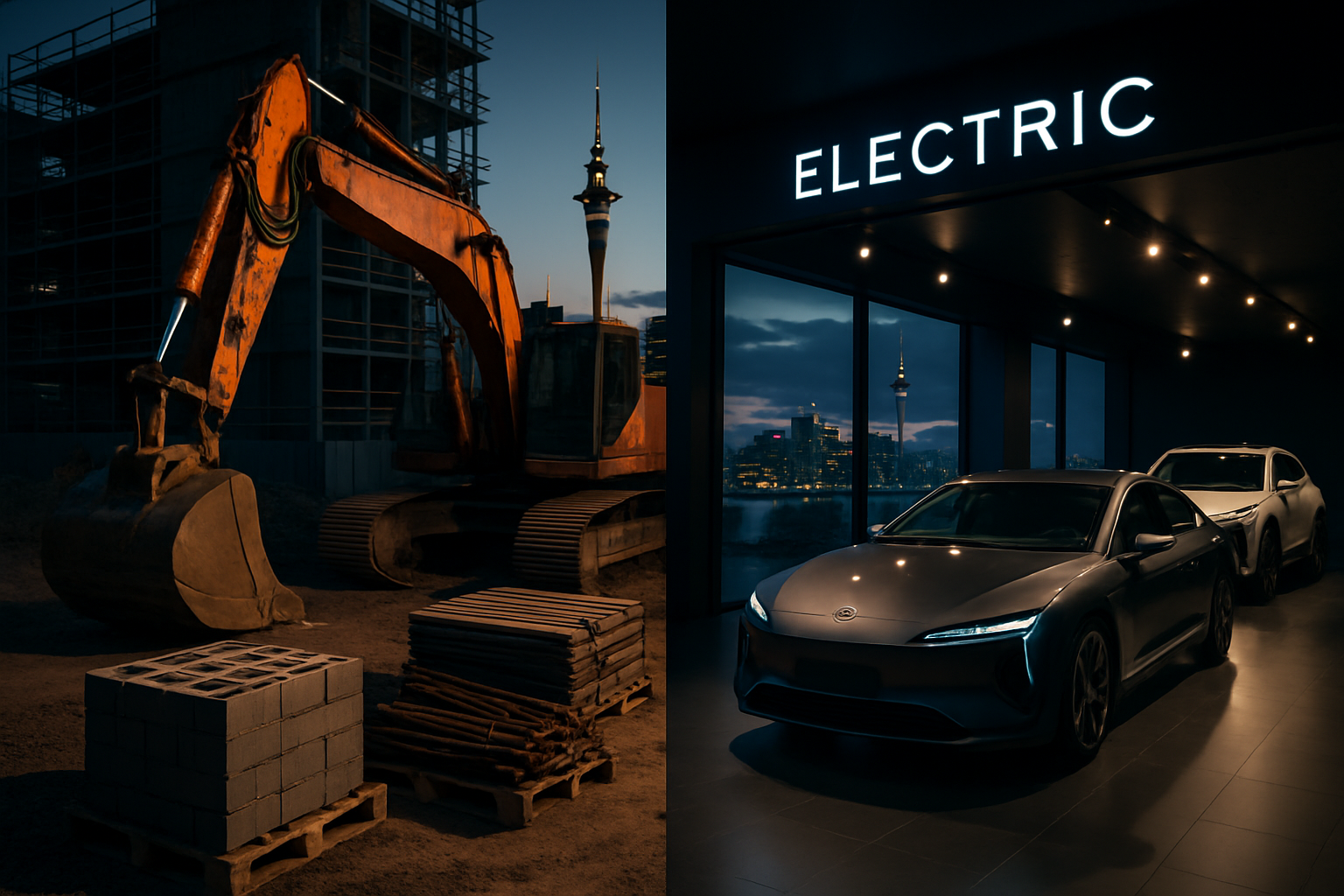
New Zealand's business landscape is experiencing dramatic shifts as Auckland construction stalwart Teak Construction enters liquidation after 34 years of operation, while Chinese luxury electric vehicle brand ArcFox prepares to enter the market through Auto Distributors NZ.
The contrasting fortunes of these developments underscore the broader transformation sweeping through New Zealand's economy, where traditional industries face mounting pressures while emerging sectors promise new opportunities in an increasingly connected global marketplace.
Construction Industry Under Pressure
Teak Construction's collapse represents more than just another business failure - it reflects systemic challenges facing New Zealand's construction sector. The company, which worked on prominent projects including the Victopia Apartments on Auckland's Victoria Street, built its reputation over more than three decades serving the city's growing urban landscape.
The liquidation comes amid a broader crisis affecting construction companies globally, with rising material costs creating negative profit margins for developers and builders. Memory chip shortages have driven semiconductor prices up sixfold, affecting smart building technologies that are becoming standard in modern developments.
New Zealand's construction sector has been particularly vulnerable to supply chain disruptions and cost pressures. The industry faces additional challenges from stringent regulatory requirements, climate adaptation needs, and a competitive market where margins have been steadily compressed.
Electric Vehicle Revolution Accelerates
While traditional industries struggle, the electric vehicle sector presents new opportunities. ArcFox's planned entry into New Zealand follows Auto Distributors NZ's successful launch of BAIC, demonstrating growing appetite for Chinese automotive brands in the market.
The luxury electric vehicle segment represents a significant shift in New Zealand's automotive landscape. Chinese manufacturers have been gaining ground globally through competitive pricing, advanced technology integration, and sophisticated design approaches that challenge traditional European and Japanese dominance.
"The automotive transformation involves evolution serving diverse market needs while preparing for an electrified future."
— Industry Analysis
ArcFox's entry timing is strategic, coming as governments worldwide intensify pressure on traditional automotive manufacturers. China announced a comprehensive ban on hidden car door handles effective January 2027, prioritizing safety over design aesthetics - a move that could influence global vehicle safety standards.
Global Context Shapes Local Markets
These New Zealand developments occur within a complex global economic environment. The construction industry worldwide faces unprecedented challenges, with supply chain constraints affecting everything from basic building materials to advanced technological systems.
China controls 60% of global critical materials production and 90% of refining capacity for elements essential to electric vehicles, creating both opportunities and vulnerabilities for markets like New Zealand. This dominance extends to battery technologies, where Chinese companies have achieved breakthrough innovations including water-based battery systems that eliminate flammability risks.
The memory chip crisis, affecting Samsung, SK Hynix, and Micron with shortages expected until 2027, illustrates how interconnected global supply chains impact local businesses across sectors. Smart construction technologies and advanced vehicle systems both depend on semiconductor components whose scarcity drives up costs and delays projects.
Economic Transformation Indicators
The simultaneous decline of a established construction company and arrival of a luxury EV brand reflects New Zealand's economic transition. Traditional industries built on local demand and conventional technologies face challenges adapting to new realities, while sectors aligned with global technological shifts present growth opportunities.
This transformation parallels developments across the Asia-Pacific region, where countries are positioning themselves within evolving supply chains and technological ecosystems. Australia has experienced similar construction industry pressures, while Denmark achieved record-breaking EV sales despite traditional seasonal challenges, demonstrating consumer acceptance of electric mobility.
The success of electric vehicle adoption depends on coordinated infrastructure development, consumer incentives, and supply chain security. New Zealand's approach to these challenges will determine whether it can successfully integrate into the global electric vehicle ecosystem while supporting domestic industries through the transition.
Infrastructure and Investment Implications
ArcFox's market entry requires substantial infrastructure investment, from charging networks to service capabilities. This infrastructure development could create new employment opportunities even as traditional construction faces challenges.
The luxury vehicle segment often serves as a testing ground for new technologies and market approaches before broader adoption. ArcFox's success could encourage other international automotive brands to consider New Zealand expansion, while failure might reinforce conservative market approaches.
Construction industry challenges, meanwhile, affect housing supply, commercial development, and infrastructure projects essential for economic growth. The loss of established companies like Teak Construction reduces sector capacity and institutional knowledge, potentially affecting project delivery and quality standards.
Strategic Positioning for the Future
New Zealand faces critical decisions about its economic positioning in rapidly changing global markets. The country must balance support for traditional industries with embrace of emerging sectors that offer long-term growth potential.
Success requires sophisticated policy coordination across sectors, from construction industry support to electric vehicle infrastructure development. International cooperation becomes essential as supply chains transcend national boundaries and technological standards require global coordination.
The contrast between Teak Construction's collapse and ArcFox's entry illustrates broader themes affecting developed economies worldwide - the challenge of managing economic transitions while maintaining social stability and ensuring prosperity benefits are broadly shared.
These developments represent more than isolated business events; they signal fundamental shifts in how economies adapt to technological change, global competition, and evolving consumer preferences. New Zealand's response to these challenges will influence its economic trajectory for years to come, determining whether it successfully navigates the transition to a more technology-integrated, globally connected economy while supporting communities and industries through the adjustment process.