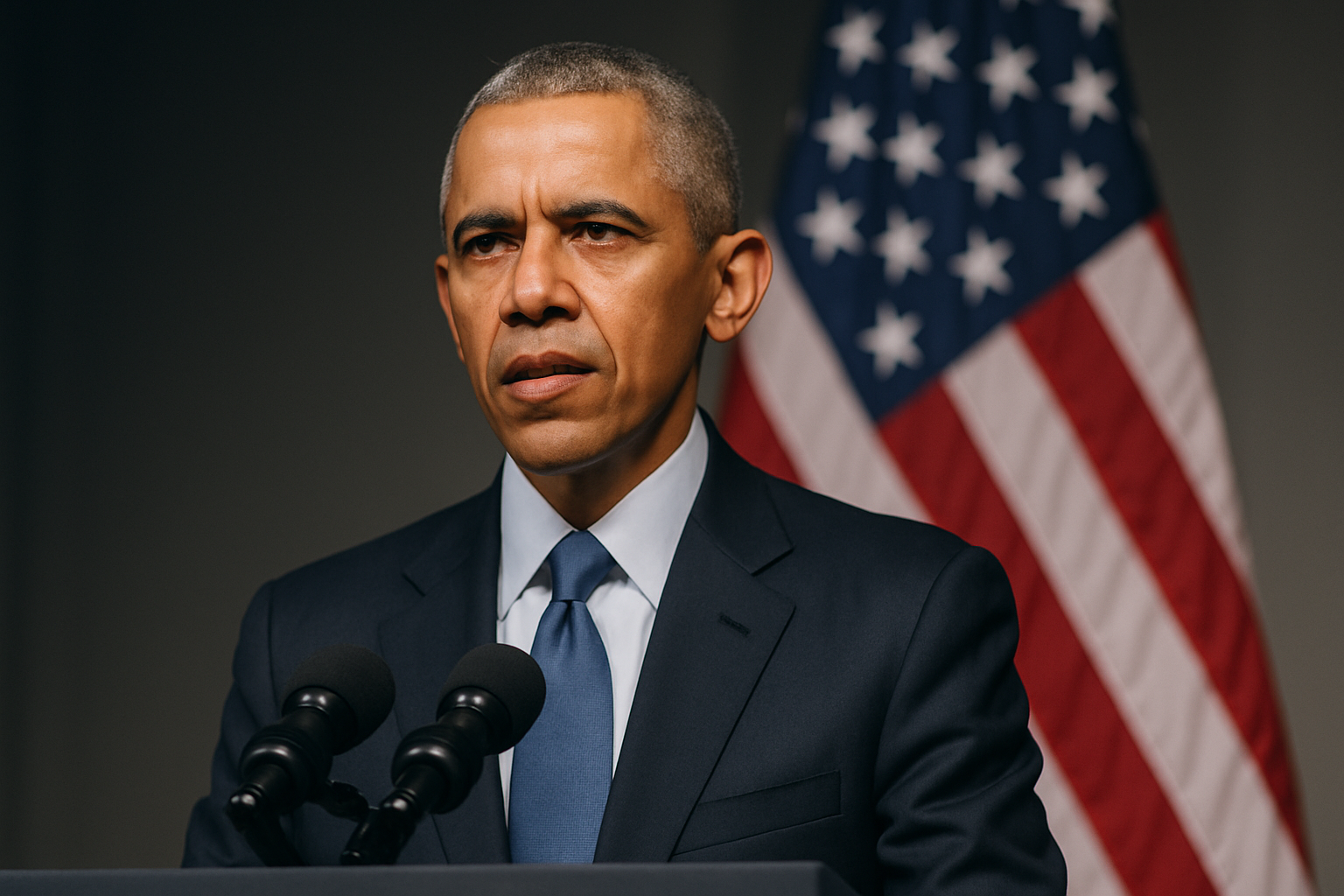
Former President Barack Obama broke his silence Saturday over Donald Trump's racist video that depicted him and former First Lady Michelle Obama as monkeys, condemning it as part of a brazen "clown show" and expressing dismay at the absence of shame in modern American politics.
In his first public comments since the controversial video surfaced on Trump's Truth Social account in early February, Obama delivered a scathing assessment of the current state of political discourse during a wide-ranging interview with liberal podcaster Brian Tyler Cohen on Saturday.
"What we're seeing is this brazen clown show where people don't seem to experience shame anymore," Obama said, referencing the racist imagery that showed him and the former First Lady with their faces superimposed on dancing ape bodies while "The Lion Sleeps Tonight" played in the background.
Video Controversy Sparks Bipartisan Condemnation
The offensive video, which remained on Trump's Truth Social platform for 18 hours before being deleted, was embedded within broader content about election conspiracy theories. The racist imagery appeared in the final seconds of the post, which Trump later claimed he had not fully viewed.
The incident sparked widespread condemnation across the political spectrum. House Speaker Nancy Pelosi called it "vile, racist filth," while Republican Senator Tim Scott condemned the content as "unacceptable and deeply offensive." The bipartisan rebuke highlighted how the video crossed traditional party lines in violating widely accepted standards of presidential conduct.
International coverage was equally damning, with media outlets from 17 countries covering the controversy. French newspaper Le Monde used "bloodbath" terminology, while Swedish and German outlets explicitly called the content "racist."
Historical Context and Escalation
Obama's response comes against the backdrop of a troubling escalation from Trump's historical "birther" conspiracy theories targeting the nation's first Black president to explicit racist imagery. The video, which appears to be AI-generated or manipulated, originated from an October 2025 social media post captioned "President Trump: King of the jungle."
The former president noted that most Americans find the current level of political discourse "deeply troubling," reflecting polling data showing growing concern about the coarsening of public debate. Obama predicted that such communication tactics would ultimately harm Trump's Republicans in upcoming elections.
Civil rights organizations emphasized the historical significance of racist imagery targeting the first Black president and First Lady. The NAACP called it a "deliberate attempt to dehumanize and demean not just the Obamas, but all Black Americans," highlighting how the content perpetuated centuries-old racist tropes used to dehumanize Black individuals.
White House Response Evolution
The Trump administration's response to the controversy evolved significantly over the 18-hour period the video remained online. Initially, White House Press Secretary Karoline Leavitt dismissed criticism as "fake outrage" over what she characterized as an "internet meme." However, as condemnation mounted, the administration shifted to claiming a "White House staffer erroneously made the post."
Trump himself later told reporters that he "only saw the first part, didn't watch it completely," but subsequently declared he "didn't make a mistake" and refused to apologize, stating "There doesn't have to be an apology for everything."
This pattern of initial dismissal followed by staff blame, then defiant non-apology, has become characteristic of Trump's approach to controversial content, according to political observers who have tracked similar incidents throughout his presidency.
Platform Accountability Questions
The incident raised serious questions about content moderation on Truth Social, Trump's social media platform. Despite the platform's community guidelines prohibiting hate speech, the racist video was allowed to circulate for 18 hours, reaching potentially millions of users before its removal.
Technology experts highlighted the challenges of governing AI-generated content, noting how sophisticated manipulation tools can create convincing fake imagery "in seconds." The Obama video represents part of a broader pattern where AI-generated racist content has been used to target political figures and activists.
Former Vice President Kamala Harris condemned what she called a "cover up" after the video's deletion, arguing that the administration's changing explanations demonstrated a lack of accountability for the platform's content policies.
Diplomatic Implications
The timing of the racist video during ongoing Ukraine peace talks and Iran nuclear negotiations raised concerns among international observers about America's moral authority on the global stage. European officials privately expressed concern about how such incidents affect the United States' ability to lead on democratic values and human rights issues.
Political historians noted that the video represented an unprecedented breach of democratic norms, with no previous president using dehumanizing racist imagery against a former president and First Lady. This erosion of presidential conduct standards has implications that extend far beyond domestic politics, affecting America's credibility in international forums.
Obama's Broader Message
Beyond condemning the specific racist video, Obama used the interview to address what he sees as a broader crisis in American political discourse. He argued that the absence of shame and accountability in public life threatens the foundation of democratic governance.
"People seem to have forgotten that there used to be certain lines you didn't cross, certain standards of decency that were maintained regardless of political differences," Obama observed, speaking more broadly about the current political climate.
The former president's comments reflect growing concern among political observers about the normalization of racist discourse at the highest levels of government. The incident has prompted discussions about whether traditional democratic institutions are adequate to address such unprecedented breaches of political norms.
Long-term Implications
The controversy over Trump's racist video extends beyond the immediate political implications, raising fundamental questions about the health of American democracy. Civil rights leaders argue that allowing such content to circulate without meaningful consequences sets dangerous precedents for future political discourse.
Obama's decision to finally respond publicly after months of similar incidents suggests a calculation that the racist imagery crossed a line requiring direct confrontation. His characterization of the political moment as a "clown show" reflects deep concern about the degradation of institutional norms that have traditionally governed American political life.
As the nation approaches future elections, the incident serves as a stark reminder of the ongoing challenges facing American democracy. Obama's call for renewed standards of decency and accountability in public life comes at a moment when such values appear increasingly under threat.
The former president's intervention in the debate signals his recognition that preserving democratic norms may require more active engagement from former leaders, even as he has traditionally sought to remain above the political fray during his post-presidency.