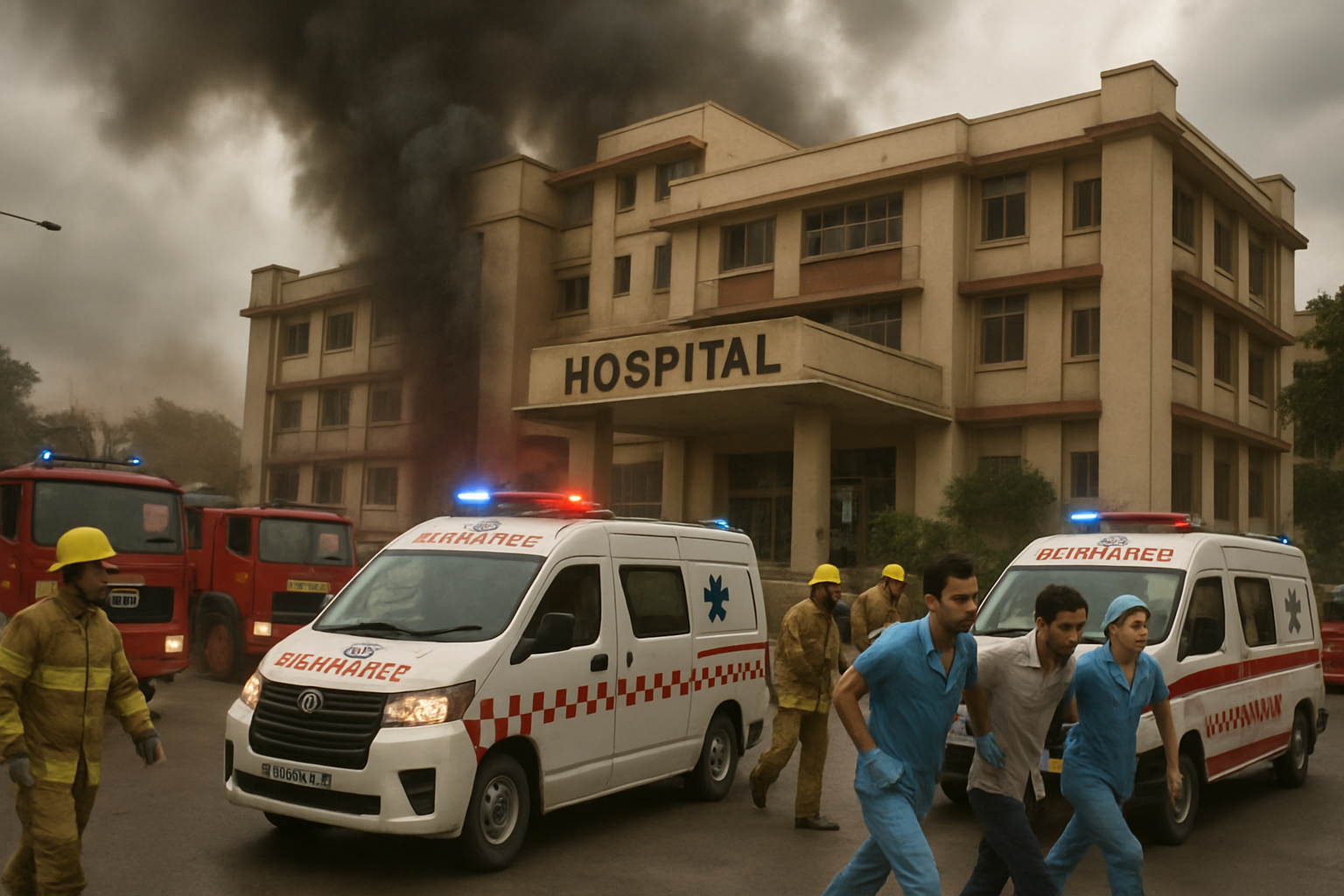
A devastating fire erupted in the trauma unit of a hospital in India's eastern state of Odisha on Monday, March 16, 2026, claiming the lives of 10 patients and injuring five others in what marks one of the deadliest hospital incidents in the region this year.
The tragic incident occurred at approximately 4:15 PM local time, sending hospital staff into urgent evacuation procedures as flames rapidly spread through the trauma unit. Emergency responders rushed to the scene as thick smoke filled corridors, creating widespread panic among patients, visitors, and medical personnel.
According to reports from Khaama Press, officials in India confirmed the death toll, with hospital staff scrambling to evacuate patients and control the rapidly spreading flames. The fire's intensity and location within the trauma unit—where the most critically ill patients receive care—contributed to the severity of casualties.
Emergency Response and Evacuation Efforts
Al Jazeera reported that emergency responders carried patients out of the government hospital in a coordinated rescue effort. Fire department personnel, medical staff, and local authorities worked together to evacuate the facility and provide immediate medical attention to those affected by smoke inhalation and burns.
The five injured patients were immediately transferred to nearby medical facilities for specialized treatment, with several reportedly in critical condition due to smoke exposure and potential burn injuries. Local hospitals mobilized additional resources to accommodate the sudden influx of emergency cases.
Hospital administration praised the quick response of medical staff, many of whom remained in the building during the evacuation to ensure no patients were left behind despite personal safety risks. Several healthcare workers sustained minor injuries during the rescue operations but continued assisting in the emergency response.
Investigation and Preliminary Findings
Local authorities have launched a comprehensive investigation into the cause of the fire, with preliminary reports suggesting potential electrical system failures or equipment malfunction as possible triggers. Fire department officials are conducting forensic analysis of the trauma unit to determine the exact origin and spread pattern of the flames.
State health officials arrived at the scene to oversee the investigation and coordinate with hospital administration regarding immediate safety measures. The affected trauma unit has been sealed off pending completion of the investigation, with patient care services temporarily relocated to other areas of the facility.
"We are committed to uncovering the exact cause of this tragedy and implementing necessary measures to prevent such incidents in the future."
— State Health Official, Odisha Government
Healthcare Infrastructure Challenges
This tragedy highlights ongoing concerns about fire safety protocols and infrastructure maintenance in India's healthcare system. Many government hospitals across the country face challenges with aging electrical systems, inadequate fire suppression equipment, and overcrowded facilities that complicate emergency evacuations.
Healthcare experts have long advocated for comprehensive safety audits and infrastructure upgrades in public medical facilities, particularly in trauma units and intensive care areas where patients may be unable to evacuate independently during emergencies.
The incident occurs during what medical professionals describe as a critical period for healthcare infrastructure development, with hospitals nationwide working to modernize safety systems while managing increasing patient loads and resource constraints.
Government Response and Support
The Odisha state government has announced immediate financial assistance for families of the deceased and medical treatment support for injured patients. Chief Minister's office issued a statement expressing deep condolences and promising a thorough investigation into hospital safety protocols.
State health ministry officials are conducting emergency safety inspections at similar healthcare facilities across Odisha to identify potential fire hazards and ensure compliance with safety regulations. This proactive approach aims to prevent similar tragedies while maintaining essential healthcare services.
Federal health authorities have been notified of the incident and are providing technical expertise for the investigation. The tragedy has renewed calls for nationwide hospital safety standards and regular emergency preparedness training for medical staff.
Regional Healthcare Context
This incident adds to growing concerns about healthcare infrastructure safety across India, where rapid expansion of medical services has sometimes outpaced safety protocol implementation. Government hospitals serve millions of patients annually, making comprehensive safety measures essential for public health security.
The tragedy underscores the critical importance of regular fire safety drills, updated evacuation procedures, and modern fire suppression systems in healthcare facilities. Medical experts emphasize that hospitals require specialized safety protocols due to the presence of immobile patients and life-support equipment.
Healthcare advocacy groups are calling for immediate implementation of mandatory fire safety audits for all government medical facilities, with particular attention to high-risk areas like trauma units, intensive care units, and surgical theaters where patients may be unable to evacuate independently.
Moving Forward: Safety Reforms
The investigation's findings will likely influence healthcare safety policy across India, with potential implications for fire safety regulations, emergency response training, and infrastructure maintenance standards. This tragedy serves as a stark reminder of the critical importance of comprehensive safety measures in healthcare environments.
Local medical associations are advocating for increased investment in hospital safety infrastructure, including advanced fire detection systems, automated sprinkler systems, and specialized evacuation equipment designed for medical facilities. These improvements require significant funding but are essential for patient and staff safety.
As India continues expanding healthcare access and modernizing medical facilities, ensuring comprehensive safety protocols remains paramount. This tragedy emphasizes that healthcare infrastructure development must prioritize patient safety alongside service delivery to prevent similar devastating incidents in the future.
The families of the deceased patients and the broader Odisha community continue to mourn this tragic loss while demanding accountability and concrete measures to prevent future hospital fires. The incident serves as a sobering reminder of the vulnerability of hospitalized patients and the critical responsibility healthcare institutions bear for their safety.