Oil prices have surged dramatically to $80 per barrel following a 10% jump in weekend trading, as major shipping companies halt operations through the strategic Strait of Hormuz and hundreds of oil tankers remain anchored in the Persian Gulf amid escalating Middle East tensions.
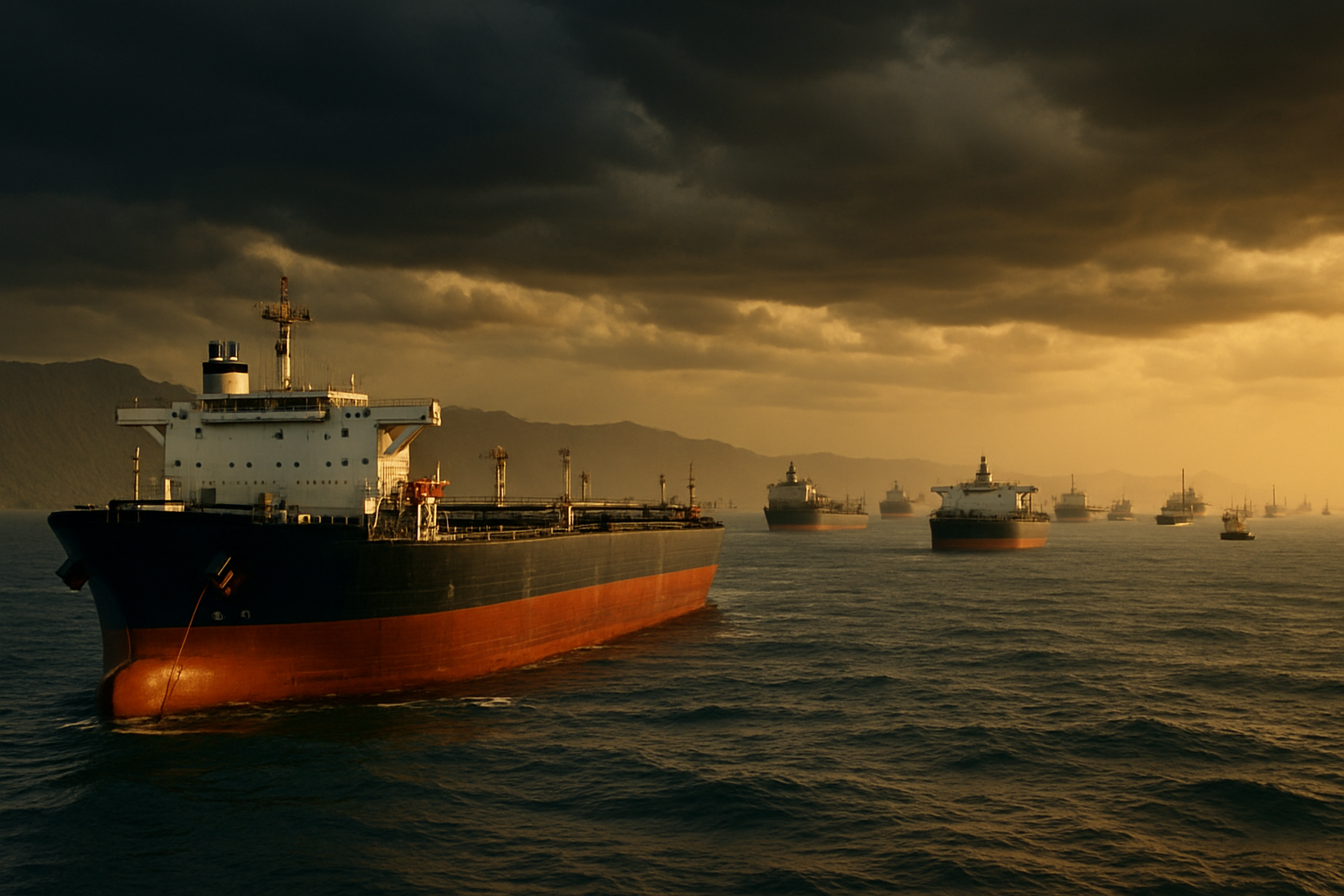
The crisis has reached unprecedented proportions with at least 150 tankers, including those carrying crude oil and liquefied natural gas (LNG), anchored in open waters above the Strait of Hormuz. The 21-mile-wide chokepoint, through which 40% of the world's seaborne oil passes daily, has effectively become a maritime bottleneck as companies implement maximum caution protocols.
Major Shipping Giants Suspend Operations
Two of the world's largest shipping companies, Maersk and Mediterranean Shipping Company (MSC), have suspended operations through the Strait of Hormuz following the dramatic escalation in regional tensions. The Danish shipping giant Maersk announced Sunday that it is halting all sailings through the strategic waterway, while MSC followed with similar measures.
The decisions come as Iran has effectively declared the strategic waterway "unsafe" following US-Israeli military operations. Iranian Revolutionary Guard forces have increased their presence in the area, leading to multiple incidents with commercial vessels attempting to transit the route.
"The situation in the Persian Gulf and Strait of Hormuz has created an unprecedented challenge for global maritime operations"
— Greek Maritime Ministry Statement
The Greek Ministry of Maritime Affairs has placed the country on "increased alert" regarding developments in the Persian Gulf, highlighting the international concern over the rapidly deteriorating situation.
Oil Markets React with Dramatic Price Surge
Brent crude, the European benchmark, jumped 10% to approximately $80 per barrel in over-the-counter trading on Sunday, according to industry traders. Market analysts are predicting prices could reach $100 per barrel if the current crisis persists, with some warning of an unprecedented oil shock.
Bulgarian market reports indicate that crude oil prices have already begun affecting European markets, with analysts expecting further increases as the supply disruption continues. The price surge represents one of the most significant single-day increases in recent years, reflecting the market's deep concern over supply security.
West Texas Intermediate (WTI) crude has similarly surged, with traders citing the potential for sustained supply disruptions as Iran continues to threaten shipping in the vital waterway. The current crisis represents the most serious threat to global oil supplies since previous regional conflicts.
OPEC Response and Production Adjustments
In response to the crisis, the Organization of the Petroleum Exporting Countries and its partners (OPEC+) held an emergency meeting on Sunday, during which they announced plans to increase crude production by 206,000 barrels per day (bpd) starting in April.
However, energy analysts warn that this modest increase will likely be insufficient to offset the potential supply disruptions from the Persian Gulf region. The effectiveness of increased production is severely limited if shipping routes remain compromised.
Russian sources within OPEC+ confirmed that key producers, including Russia, agreed to the output adjustment in what they termed an "extraordinary response to extraordinary circumstances." The production increase represents the organization's attempt to stabilize global markets amid the unprecedented disruption.
Regional Aviation Crisis Compounds Problems
The crisis has extended beyond maritime shipping to affect aviation routes across the Middle East. Iran, Iraq, Israel, the UAE, and Qatar have all closed their airspace, creating a massive disruption for international air travel.
Major airlines including Emirates, Air France-KLM, Wizz Air, and Bulgaria Air have suspended operations to Middle Eastern destinations. The closure of Dubai International Airport, the world's busiest international airport, has left hundreds of thousands of passengers stranded worldwide.
Over 18,000 flights have been cancelled globally, representing the most comprehensive regional aviation disruption since the COVID-19 pandemic. The closures affect critical Europe-Asia flight routes that normally transit through Middle Eastern hubs.
Energy Security Implications for Europe and Asia
Natural gas prices have also surged dramatically, with European markets up 24% and US markets increasing by 78% over recent weeks. The combination of reduced oil flow and natural gas supply concerns has created a perfect storm for energy security across multiple continents.
Sweden's energy economists are predicting immediate impacts on electricity prices, with increases of 10-20 öre expected, while gasoline prices could rise by 1-2 kronor. Similar patterns are being observed across European markets as the crisis deepens.
The disruption comes at a particularly sensitive time for global energy markets, which were already dealing with existing supply chain challenges and seasonal demand variations.
Diplomatic Breakdown and Military Escalation
The current crisis follows the complete breakdown of nuclear negotiations between the United States and Iran, despite previous diplomatic breakthroughs that had achieved "broad agreement on guiding principles" - the most significant progress since the 2018 JCPOA collapse.
The failure of these talks, combined with unprecedented military buildups including the deployment of two US aircraft carriers in the region, has created the most dangerous situation in the Persian Gulf in decades. Iran continues to enrich uranium to 60% purity, approaching weapons-grade levels, while maintaining that ballistic missiles and regional proxies remain "red lines" in any negotiations.
The diplomatic collapse has had immediate consequences for regional stability, with previously unprecedented consensus among Saudi Arabia, UAE, Qatar, and Egypt now severely strained as military actions have targeted member territories.
Global Supply Chain Ramifications
The Persian Gulf crisis extends far beyond oil and gas markets, threatening to disrupt global supply chains that depend on the region's strategic position. The Strait of Hormuz serves not only as a critical energy transit point but also as a vital commercial shipping route connecting Asian manufacturing centers with European and American markets.
Alternative shipping routes around the Arabian Peninsula would add significant time and cost to cargo movements, potentially affecting everything from consumer goods to industrial materials. The backup of 150 tankers represents billions of dollars in cargo that cannot reach its intended destinations.
Industry experts warn that if the crisis persists, it could trigger a cascade of supply chain disruptions affecting global commerce far beyond the immediate region.
International Response and Market Outlook
The United Nations Security Council has called an emergency session to address what Secretary-General António Guterres described as a "serious threat to international peace and security." The international community is scrambling to prevent a broader regional war that could have devastating consequences for the global economy.
Energy markets are likely to remain volatile as traders assess the potential for either diplomatic resolution or further military escalation. The current situation represents a critical test of the international community's ability to manage energy security crises in an increasingly multipolar world.
Strategic petroleum reserves in major consuming nations provide only temporary buffers, and their effectiveness is limited if the crisis extends over weeks or months. The situation has accelerated discussions about supply chain diversification and alternative energy infrastructure, but such transitions require years to implement effectively.
Looking Ahead: Critical Decisions Pending
As markets prepare for Monday trading, all eyes remain on developments in the Persian Gulf region. The combination of halted shipping operations, military tensions, and diplomatic breakdown has created what analysts are calling the most serious threat to global energy security in decades.
The crisis has highlighted the continued global dependence on a single strategic chokepoint for energy supplies, despite years of discussions about supply diversification. Whether through diplomatic intervention or alternative arrangements, the international community faces urgent decisions about how to address both immediate supply needs and long-term energy security.
The coming days will be crucial in determining whether the current crisis can be contained or whether it will escalate into a broader regional conflict with global ramifications extending far beyond energy markets.