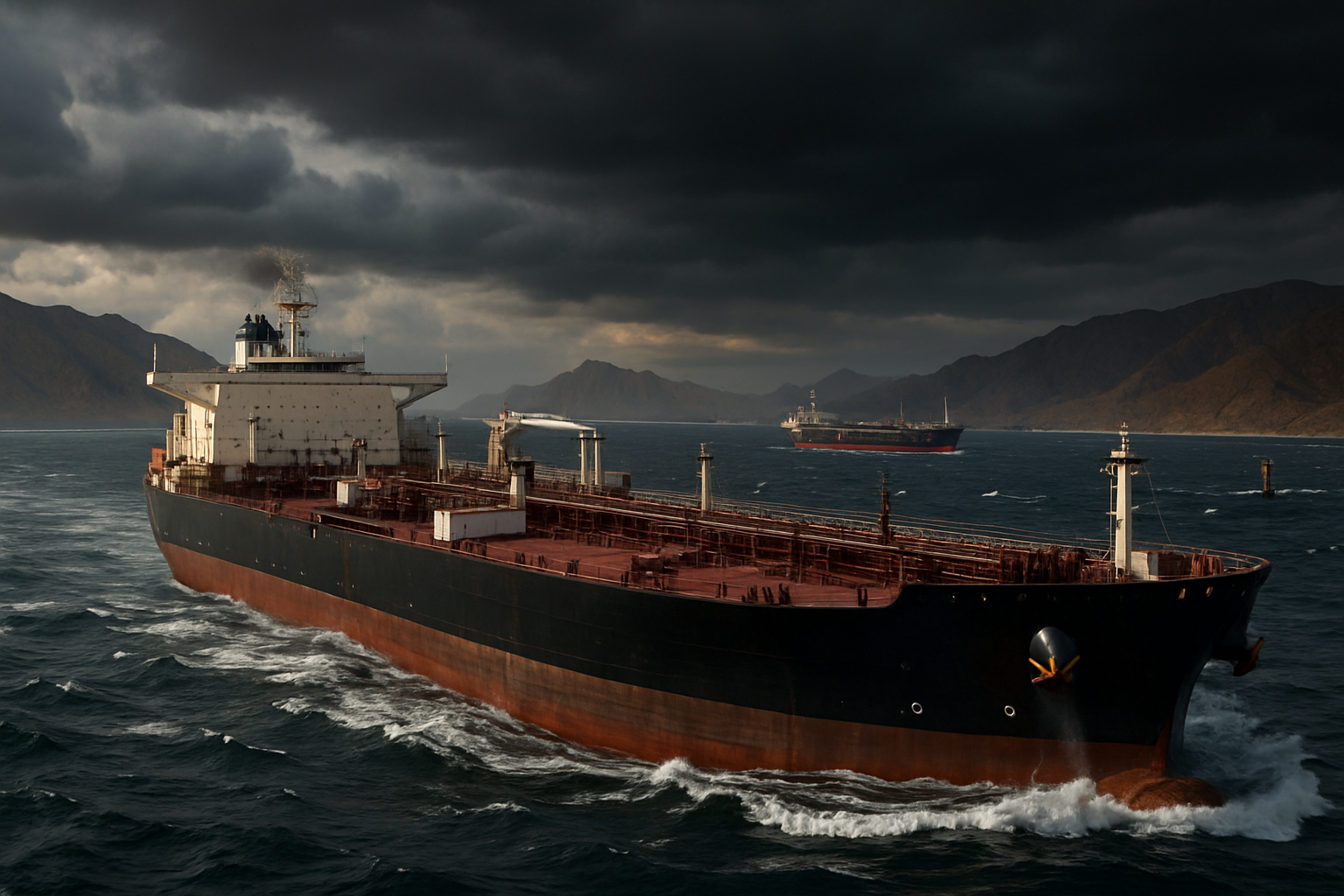
Global fuel markets remain in crisis mode as Middle East tensions continue to disrupt energy supplies worldwide, forcing governments from Ireland to Malaysia to implement emergency measures while airlines warn of potential summer travel disruptions.
More than seven weeks after Iran's Revolutionary Guard declared the Strait of Hormuz "unsafe for shipping," the energy crisis that began in March 2026 continues to reverberate across continents. Despite recent diplomatic breakthroughs and some price stabilization, experts warn the global energy system remains fundamentally vulnerable to geopolitical shocks.
Australia Braces for Extended Supply Disruptions
Australia has confirmed plans to consider military assets for an international mission to keep shipping through the Strait of Hormuz free of charge, signaling the ongoing strategic importance of this critical waterway that handles 40% of global oil transit.
The announcement comes as Australian Energy Minister Penny Sharpe confirmed that fuel price cuts could continue through Anzac Day if Iran maintains its shipping commitments. The development offers hope for consumers who have endured weeks of unprecedented fuel costs.
European Markets Show Mixed Signals
Energy markets in Europe displayed volatile behavior Friday, with oil losses reaching 10% during intraday trading before settling around 9% by market close. Cyprus reported significant relief as the Platts Basis Italy index showed its first substantial drop after six weeks of consecutive increases.
"The energy market decline was particularly intense, as intraday oil losses exceeded 10% on Friday before stabilizing near 9% at close."
— Cyprus Market Analysis
Brent crude oil prices, which peaked at historic levels of $119.50 per barrel in March, have shown some moderation but remain well above pre-crisis levels. The European Central Bank and Bank of Japan continue coordinating emergency liquidity measures to prevent broader financial contagion.
Aviation Industry Faces Critical Threshold
The International Air Transport Association (IATA) has issued unprecedented warnings that airlines worldwide need "well-coordinated plans" for potential jet fuel rationing due to the ongoing Middle East conflict. The industry faces its most severe supply challenge since the COVID-19 pandemic.
German Finance Minister Lars Klingbeil has called for emergency measures to address kerosene shortages, emphasizing that "warnings about jet fuel scarcity must be taken very seriously." The aviation sector continues to grapple with jet fuel costs that surged 122% from $85-90 to $150-200 per barrel during the crisis peak.
Summer Travel Season at Risk
With over 18,000 flights cancelled worldwide since the crisis began—the most extensive disruption since COVID-19—airlines are struggling to rebuild confidence among travelers. Eight Middle Eastern countries maintain simultaneous airspace closures, creating an "aviation black hole" for Europe-Asia corridors.
Global Government Responses Intensify
The crisis has prompted an unprecedented wave of government interventions worldwide, with nations abandoning traditional free-market principles to protect consumers:
- Ireland: Implementing emergency fuel packages and considering expanded support measures
- United States: Renewed Russian oil waivers after pressure from countries dealing with Iran war price shocks
- Latvia: Preparing comprehensive fuel tax reductions and windfall profit taxes
- Malaysia: Energy transition urgency highlighted by current supply vulnerabilities
The scale of intervention reflects the severity of the crisis, with traditional energy policy frameworks proving inadequate for such sustained supply disruptions.
Strategic Reserves Deployment Shows Mixed Results
The International Energy Agency's historic deployment of 400 million barrels from strategic petroleum reserves—the largest release in 50-year history—has provided market stability but failed to fully resolve underlying supply constraints. Japan led contributions with 80 million barrels, marking the first such deployment since the 2011 Fukushima disaster.
However, experts caution that strategic reserves represent only a temporary buffer against sustained geopolitical disruptions. Qatar Energy Minister Saad Al Kaabi's earlier warning that oil approaching $150 per barrel could "bring down world economies" continues to loom over markets.
Supply Chain Vulnerabilities Exposed
The crisis has revealed dangerous over-dependence on the 21-mile Strait of Hormuz chokepoint, with no realistic alternatives for the massive oil and LNG volumes that transit daily. Major shipping companies Maersk and MSC suspended Persian Gulf operations entirely, stranding over 150 tankers worth billions in cargo.

Manufacturing sectors dependent on Gulf networks—including automotive, electronics, and textiles—continue experiencing severe disruptions. China's suspension of refined fuel exports has compounded global shortage concerns, while Singapore reports logistics cost increases of up to 30%.
Consumer Impact Remains Severe
Despite some price relief in select markets, consumers worldwide continue facing significant energy cost pressures:
- Bangladesh: Fuel rationing affecting 170 million people
- Pakistan: Wartime austerity measures with four-day government work weeks
- Ireland: Heating oil approaching €2 per liter, criticized as "brazen rip-offs"
- Sweden: Electricity and gasoline price increases particularly affecting continental border regions
The Baltic states have shown modest fuel price decreases, providing some hope that regional markets may begin normalizing as diplomatic pressure continues.
Nuclear Diplomacy Context Adds Complexity
The energy crisis stems from the complete breakdown of US-Iran nuclear negotiations despite earlier diplomatic progress in Geneva. The failure of diplomatic frameworks to prevent military escalation has broader implications for 21st-century conflict resolution.
With the New START treaty having expired in February 2026—the first time in over 50 years without US-Russia nuclear constraints—the international community faces what UN Secretary-General António Guterres called "the greatest test of multilateral cooperation in the modern era."
Long-term Energy Architecture Transformation Required
Energy security experts emphasize that the crisis has exposed fundamental vulnerabilities requiring years or decades to address through supply diversification and renewable energy transitions. Samuel Ciszuk, a leading energy analyst, describes it as "the most severe energy security crisis in decades, with single-chokepoint vulnerabilities fully exposed."
"This situation is going on longer than initially thought. Financial markets are the ultimate constraint on prolonged conflict."
— Damien Boey, Financial Analyst
The crisis has accelerated discussions about energy independence and reduced geopolitical dependencies, with the European Union urging all 27 member states to maximize gas storage and prepare enhanced emergency protocols.
Financial Markets Continue Under Pressure
Global financial markets remain under severe stress, with Pakistan's KSE-100 having suffered its largest single-day decline in history (-8.97%) and South Korea's KOSPI triggering circuit breakers at -12%. The Korean won hit 17-year lows as foreign capital fled regional markets.
Central banks have coordinated emergency liquidity measures, though traditional monetary policy tools show limited effectiveness against structural geopolitical disruptions. PayPal postponed its $1.1 billion IPO indefinitely due to market volatility.
Path Forward Uncertain
Unlike weather-related disruptions with predictable recovery timelines, this crisis depends entirely on military and diplomatic developments in the Middle East. Aviation industries cannot maintain long-term scheduling with volatile airspace restrictions, while energy markets remain vulnerable to blocked transit routes.
The coming weeks will prove critical in determining whether recent diplomatic breakthroughs can provide sustained stability or if the global economy faces an extended period of energy uncertainty. What remains clear is that the March 2026 energy crisis represents a watershed moment requiring fundamental transformation of international energy security architecture.
The crisis serves as a stark reminder of the interconnected nature of modern global systems and the urgent need for diversified, resilient energy infrastructure that can withstand geopolitical shocks in an increasingly volatile world.