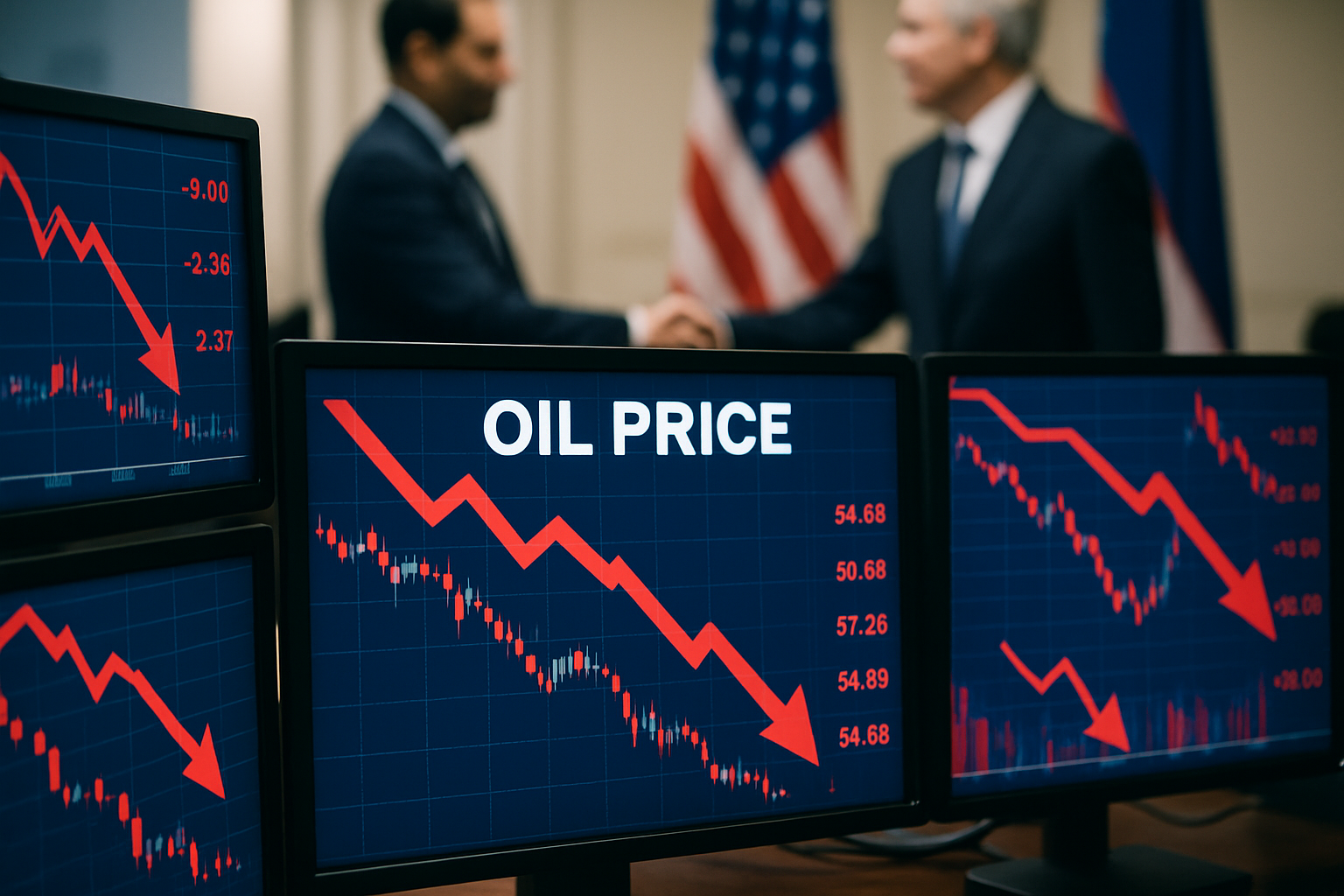
Global oil markets experienced dramatic reversals on Monday as diplomatic signals between Iran and the United States offered the first genuine hope of ending a crisis that has driven oil prices above $100 per barrel for the first time since 2022 and triggered the worst energy emergency since the 1970s oil shocks.
Brent crude, which had peaked at $119.50 during the crisis, plummeted below $90 per barrel within hours of reports suggesting a potential ceasefire framework. West Texas Intermediate (WTI) also reversed its record-breaking 18.98% single-day jump to $108.15, falling sharply as markets welcomed the prospect of reopening the Strait of Hormuz.
Iran Revolutionary Guard's Blockade Creates Global Crisis
The current crisis began when Iran's Revolutionary Guard declared the Strait of Hormuz "unsafe for shipping," effectively blocking 40% of global seaborne oil transit through the critical 21-mile waterway. This action followed the complete breakdown of US-Iran nuclear negotiations despite what had been described as a "broad agreement on guiding principles" - the most significant progress since the 2018 JCPOA collapse.
The energy disruption has been unprecedented in scale. Over 150 oil and LNG tankers remain stranded in the Persian Gulf, representing billions of dollars in cargo value. Major shipping companies Maersk and MSC completely suspended operations in the region, while Iran deployed an estimated 2,000-6,000 naval mines throughout the waterway.
"This is the most severe energy security crisis in decades, exposing single-chokepoint vulnerabilities in our global logistics system."
— Samuel Ciszuk, Energy Security Analyst
Unprecedented International Response
The crisis prompted the largest strategic petroleum reserve release in the International Energy Agency's 50-year history, with 400 million barrels deployed from 32 member countries - more than double the response to the 2022 Ukraine crisis. Japan led with an 80 million barrel release, marking the first such deployment since the 2011 Fukushima disaster.
The aviation industry faced parallel chaos, with over 18,000 flights cancelled worldwide - the most extensive disruption since COVID-19. Eight Middle Eastern countries simultaneously closed their airspace, creating what industry experts termed an "aviation black hole" between Europe and Asia. Dubai International Airport, the world's busiest handling 86 million passengers annually, remained completely shutdown due to missile damage.
Financial Markets in Turmoil
Global financial markets crashed as the crisis unfolded. Pakistan's KSE-100 index suffered its largest single-day decline in history, falling 8.97%, while South Korea's KOSPI dropped 12%, triggering circuit breakers and pushing the Korean won to a 17-year low. The volatility forced PayPal to postpone its $1.1 billion IPO indefinitely.
Central banks, led by the European Central Bank and Bank of Japan, coordinated emergency liquidity measures to prevent broader financial contagion. However, traditional monetary policy tools showed limited effectiveness against what economists termed "structural geopolitical disruptions."
Consumer Impact Worldwide
The energy crisis created severe impacts for consumers globally. Bangladesh implemented fuel rationing for 170 million people, while Pakistan introduced wartime austerity measures including four-day work weeks. European fuel prices approached €2 per liter in some regions, prompting multiple governments to implement emergency price controls.
Natural gas prices exploded by 24% in Europe and 78% in the United States, reaching €47.32/MWh - the highest levels since February 2025. Qatar's decision to halt LNG production at its major facilities eliminated approximately 20% of global LNG exports.
Diplomatic Breakthrough and Market Response
The dramatic market reversal came following reports that Iran and Oman were developing a protocol to "monitor transit" through the strait, suggesting a potential face-saving compromise that would allow selective passage while maintaining Iranian oversight. The framework appears designed to provide Iran with some control while enabling the resumption of commercial shipping.
European stock markets, which had opened with severe losses, reversed course dramatically. Spain's Ibex 35 fell 2.5% in early trading before surging to a 1% gain. German DAX and other major indices followed similar patterns, reflecting global relief at the diplomatic developments.
"The situation was going longer than initially thought, with financial markets becoming the ultimate constraint on prolonged conflict."
— Damien Boey, Portfolio Strategist
Regional Coalition Under Strain
The crisis severely tested the regional coalition that had supported diplomatic solutions. Iranian retaliation operations targeted coalition territories, resulting in casualties in the UAE (1 civilian killed in Abu Dhabi), Kuwait (32 injured in airport strikes), and Qatar (8 wounded while intercepting missiles and drones). Egyptian President Sisi condemned the attacks on "sisterly countries" and warned of "comprehensive chaos."
The first Iranian attack on European territory since World War II occurred when drones struck RAF Akrotiri in Cyprus, prompting the EU to activate its ESTIA evacuation plan for the first time.
Nuclear Governance Crisis
The energy crisis unfolded against a broader nuclear governance breakdown. The New START treaty expired on February 5, 2026, marking the first time in over 50 years without US-Russia nuclear constraints. Iran's continued uranium enrichment to 60% purity, with over 400kg of weapons-grade material, heightened nuclear proliferation concerns.
UN Secretary-General António Guterres described the nuclear risks as the "highest in decades," calling the crisis the "greatest test of multilateral cooperation in the modern era."
Energy Architecture Transformation
The crisis exposed fundamental vulnerabilities in global energy architecture. The 21-mile Strait of Hormuz represents a dangerous single-point failure in modern logistics, with no realistic alternatives capable of handling the diverted volume. Energy experts emphasized the urgent need for supply diversification and renewable energy transitions to reduce dependence on strategic chokepoints.
Qatar's Energy Minister Saad Al Kaabi had warned that Gulf states might declare force majeure "within weeks" if oil prices approached $150 per barrel, threatening to "bring down the economies of the world."
Historical Significance
Analysts describe March-April 2026 as a watershed moment in global energy security, representing the most dangerous international crisis since the end of the Cold War. The crisis simultaneously affected regional war prevention, global energy security, nuclear governance credibility, and international law enforcement mechanisms.
The rapid transition from diplomatic breakthrough to military confrontation and back to potential negotiation demonstrated both the fragility of crisis management in the multipolar era and the ultimate power of economic constraints in limiting prolonged conflicts.
Whether the current diplomatic window produces lasting nuclear and regional security solutions remains uncertain. However, the dramatic market reversals underscore the global economy's desperate need for stability after experiencing the most severe energy crisis in decades.
Looking Forward
The potential Iran-US peace framework offers hope for ending a crisis that had threatened to reshape global energy markets permanently. However, the underlying issues that triggered the confrontation - nuclear proliferation concerns, regional security arrangements, and energy infrastructure vulnerabilities - require comprehensive long-term solutions.
Success in containing this crisis could provide a template for nuclear crisis resolution in the 21st century. Failure might accelerate military solutions to international disputes, reshaping Middle Eastern geopolitics for decades while encouraging nuclear proliferation globally and undermining diplomatic credibility worldwide.
As markets cautiously welcomed the diplomatic developments, the events of March-April 2026 served as a stark reminder of how quickly regional conflicts can become global economic crises in an interconnected world, and how essential multilateral cooperation remains for maintaining international stability.