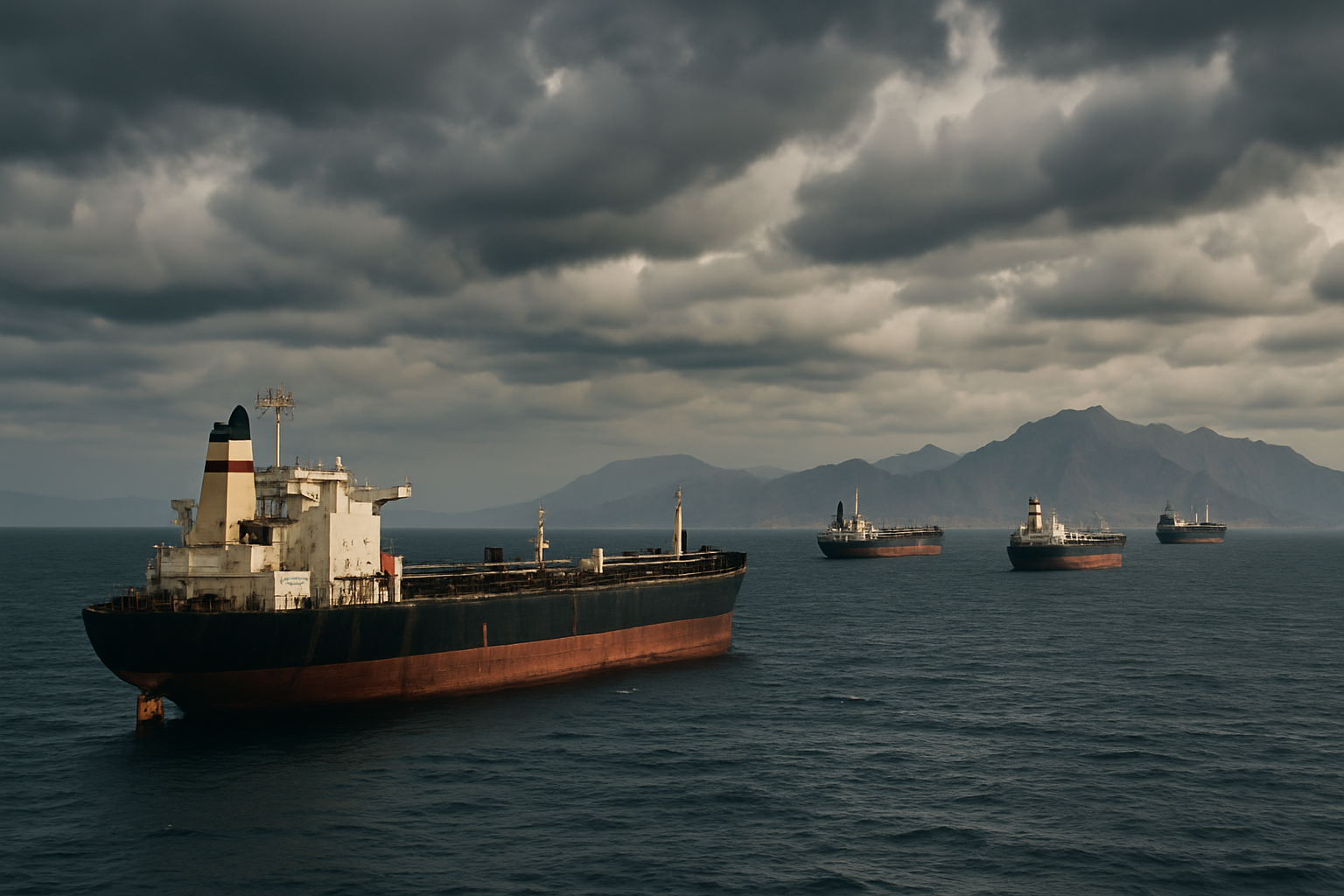
Global oil prices have surged above $100 per barrel once again in 2026, with Brent crude reaching $106.04 (+4.8%) and WTI climbing to $104.29, as ongoing Middle East tensions and Iran's control of the Strait of Hormuz continue to disrupt global energy markets in the most severe crisis since the 1970s oil shocks.
The latest price surge marks the second time this year that oil has breached the $100 threshold, following the historic March crisis when Brent crude peaked at $119.50 and WTI jumped a record 18.98% to $108.15. The ongoing volatility stems from Iran's Revolutionary Guard maintaining effective control over the 21-mile Strait of Hormuz, which handles 40% of global seaborne oil transit.
Iran's Strategic Chokepoint Control
Since March 2026, Iran has transformed the Strait of Hormuz into what analysts describe as a "toll booth" regime, implementing systematic vessel vetting procedures that have fundamentally altered global shipping patterns. Over 20,000 seafarers remain affected by the ongoing disruptions, with more than 150 oil and LNG tankers having been stranded at various points during the crisis.
Iranian Foreign Minister Abbas Araghchi has maintained that "We have not closed the strait. It is open" but requires "coordination with Iranian authorities with full respect for sovereignty and security." This position has created unprecedented uncertainty in global energy markets, as shipping companies must navigate new approval processes for passage through the critical waterway.
"This represents the most severe energy security crisis in decades, with single-chokepoint vulnerabilities completely exposed."
— Samuel Ciszuk, Energy Analyst
International Response and Strategic Reserves
The International Energy Agency deployed the largest strategic petroleum reserve release in its 50-year history, mobilizing 400 million barrels from 32 member countries—more than double the 182.7 million barrels released during the 2022 Ukraine crisis. Japan led the response with 80 million barrels, marking the first deployment since the 2011 Fukushima disaster, despite the country's 95% dependence on Middle East oil, with 70% transiting through Hormuz.
The response has provided some market stability, but experts warn that strategic reserves serve only as temporary buffers against sustained geopolitical disruptions. Energy Secretary Christopher Wright has considered lifting additional Russian oil sanctions to increase global supply, potentially making "hundreds of millions of barrels of sanctioned oil" available to markets.
Global Supply Chain Disruption
The crisis has extended far beyond energy markets, exposing dangerous vulnerabilities in global supply chains. Major shipping companies Maersk and MSC suspended Persian Gulf operations during peak crisis periods, while the Persian Gulf's role as a critical trade hub affects consumer goods, industrial materials, and manufacturing networks worldwide.
Qatar's LNG production at Ras Laffan and Mesaid facilities, representing approximately 20% of global exports, experienced significant disruptions. Qatar's Energy Minister Saad Al Kaabi has warned that Gulf states may be forced to declare force majeure "within weeks" if oil approaches $150 per barrel, threatening to "bring down economies of the world."
Aviation and Transport Crisis
The energy crisis has created parallel disruptions across the transportation sector. More than 18,000 flights have been cancelled worldwide—the most extensive aviation disruption since COVID-19—as eight Middle Eastern countries maintained simultaneous airspace closures. Dubai International Airport, the world's busiest with 86 million annual passengers, remains shut due to missile damage.
Jet fuel costs have surged 122%, rising from $85-90 to $150-200 per barrel, forcing airlines to implement emergency fare increases and cancel routes. European authorities warn of critical shortage risks if the situation doesn't stabilize, with some estimates suggesting only six weeks of jet fuel reserves remaining.
Consumer Impact Worldwide
The crisis has created severe hardships for consumers globally, with governments implementing unprecedented emergency measures:
- Bangladesh: Fuel rationing affecting 170 million people
- Pakistan: Wartime austerity measures including four-day government work weeks, with fuel prices reaching Rs321.17 per liter
- Ireland: Heating oil approaching €2 per liter, described as "brazen rip-offs"
- Sweden: Electricity increases of 10-20 öre and gasoline price rises of 1-2 kronor, with Malmö most exposed
- Philippines: Year-long "national energy emergency" declared by President Marcos Jr.
Financial Market Stress
Global financial markets have experienced historic volatility throughout the crisis. Pakistan's KSE-100 recorded its largest single-day decline in history at -8.97%, while South Korea's KOSPI fell 12%, triggering circuit breakers and pushing the Korean won to 17-year lows. The European Central Bank and Bank of Japan have coordinated emergency liquidity measures, though traditional monetary policy has proven limited in addressing structural geopolitical disruptions.
Nuclear Diplomacy Context
The energy crisis stems from the complete breakdown of US-Iran nuclear negotiations, despite February talks in Geneva achieving what officials described as "broad agreement on guiding principles"—the most progress since the 2018 JCPOA collapse. Fundamental disagreements over Iran's ballistic missile programs and regional proxies proved insurmountable, leading to Operation Epic Fury, the largest coordinated US-Israeli operation since 2003, and Iran's massive retaliation under "Operation True Promise 4."
The crisis coincides with broader nuclear governance challenges, including the February 2026 expiration of the New START treaty—the first time in over 50 years without US-Russia nuclear constraints—and Iran's continued uranium enrichment at 60% purity with over 400kg of near-weapons-grade material.
Regional Coalition Under Strain
The unprecedented consensus among Saudi Arabia, UAE, Qatar, and Egypt supporting diplomatic solutions has come under severe strain due to Iranian attacks on coalition territories. The UAE reported one civilian killed in Abu Dhabi, Kuwait suffered 32 injuries from airport strikes, and Qatar recorded eight wounded while intercepting 65 missiles and 12 drones using Patriot systems. Egyptian President Sisi condemned attacks on "sisterly Arab countries" and warned of "comprehensive chaos" spreading regionally.
Energy Architecture Transformation
The crisis has exposed fundamental vulnerabilities in global energy architecture that require years or decades to address through supply diversification and renewable energy transitions. The 21-mile Strait of Hormuz represents a dangerous single-point failure in modern logistics, with no realistic alternatives capable of handling the massive daily volumes of oil and LNG.
Estonia's energy model, featuring 88% renewable electricity generation and Europe's largest battery storage system serving 90,000 households, demonstrates potential pathways toward energy independence, though such transitions require sustained investment and political commitment over extended periods.
"This situation is going longer than people initially thought, and financial markets represent the ultimate constraint on prolonged conflict."
— Damien Boey, Financial Analyst
Long-term Implications
UN Secretary-General António Guterres has described the situation as the "greatest test of multilateral cooperation and crisis management in the modern era," with nuclear risks at their "highest levels in decades." The crisis represents a template-setting moment for 21st-century international relations, determining whether diplomatic frameworks or military solutions will dominate future dispute resolution.
Success in containing the escalation could provide a framework for nuclear crisis resolution and strengthen diplomatic precedents. Failure risks accelerating military solutions that could reshape Middle Eastern geopolitics for decades, encourage nuclear proliferation globally, and undermine diplomatic credibility in addressing international disputes.
The ongoing crisis has fundamentally altered discussions around energy security, supply chain resilience, and the need for strategic planning that reduces dependence on volatile geopolitical regions. As markets continue to navigate unprecedented volatility, the events of 2026 are establishing new paradigms for energy security planning that will influence international stability mechanisms for decades beyond the current crisis.