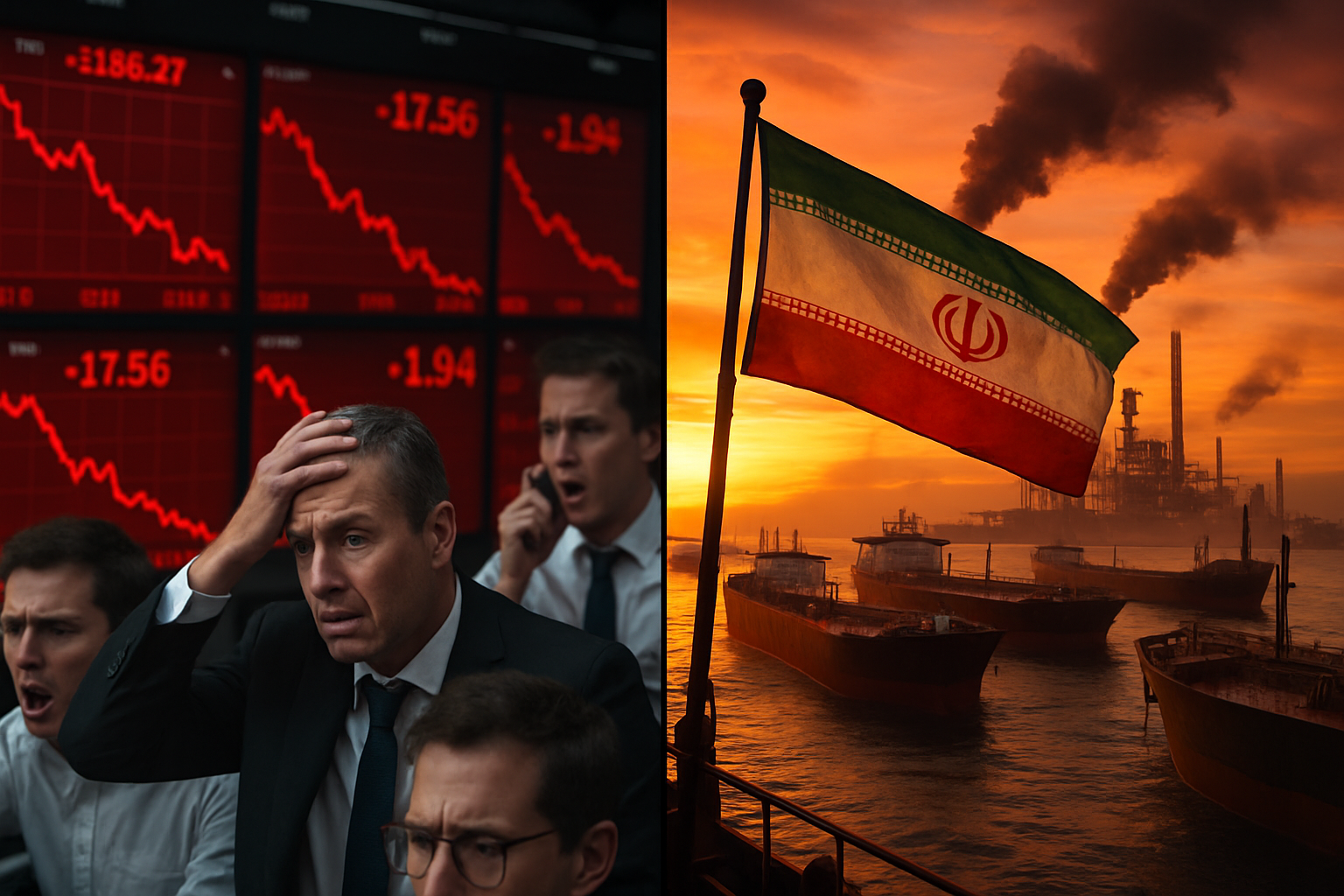
Oil prices experienced dramatic volatility on March 10, 2026, plummeting from record highs near $120 per barrel to below $90 after President Donald Trump suggested the Iran war could end "soon," providing temporary relief to global energy markets that have been in crisis for over a week.
The roller coaster trading session saw Brent crude futures fall more than 9% to $89.58 per barrel, while West Texas Intermediate dropped to $85.77, marking one of the largest single-day declines in recent history. Just 24 hours earlier, oil prices had reached their highest levels in over three years, with Brent crude peaking at $119.50 per barrel.
Trump's Contradictory Signals Create Market Confusion
Speaking from Mar-a-Lago, President Trump declared the conflict "almost over" and suggested American-Israeli forces had achieved their primary objectives. However, hours later, he warned that the United States would strike Iran "20 times harder" if Tehran continued disrupting oil flows through the Strait of Hormuz.
The mixed messaging reflects the complex dynamics of a conflict that has cost the Pentagon $5.6 billion in just the first two days, while Iran's Revolutionary Guard maintains it will determine when the war ends through continued military operations.
"The war is almost over, but we're prepared to do whatever it takes to protect global energy security."
— Donald Trump, President
Strait of Hormuz Remains Critical Chokepoint
Despite the price decline, the fundamental crisis persists. Iran's Revolutionary Guard has declared the Strait of Hormuz "unsafe for shipping," effectively blocking the narrow 21-mile waterway through which 40% of the world's seaborne oil transits. Over 150 oil and LNG tankers remain stranded in the Persian Gulf, representing billions of dollars in cargo value.
Major shipping companies including Maersk and MSC continue to suspend operations in the region, with alternative routes through the Arabian Peninsula lacking adequate capacity and adding significant time and cost penalties to global supply chains.
Aviation Industry Faces Mounting Pressure
The energy crisis has severely impacted global aviation, with jet fuel prices skyrocketing from $85-90 per barrel before the conflict to between $150-200 per barrel. Airlines including Australia's Qantas and Air New Zealand announced fare increases on Tuesday, citing unsustainable fuel costs.
Scandinavian Airlines (SAS) implemented a temporary fuel surcharge, joining a growing number of carriers forced to pass increased costs to consumers. Over 18,000 flights have been cancelled worldwide since the conflict began, making it the most extensive aviation disruption since the COVID-19 pandemic.

European Energy Markets in Turmoil
European natural gas prices fell 15% to €47 per megawatt-hour following Trump's comments, but remain at critically high levels. The crisis has exposed the continent's vulnerability to energy supply disruptions, with some countries down to just days of gas reserves.
Sweden faces electricity price increases of 10-20 öre per kilowatt-hour, with gasoline prices rising 1-2 kronor per liter. The Malmö region in southern Sweden is particularly exposed due to its integration with continental European energy markets.
Global Economic Ripple Effects
Financial markets showed mixed reactions to the oil price decline. While energy stocks fell sharply, broader market indices recovered some of their losses from the previous week's dramatic sell-offs. Pakistan's KSE-100 index had suffered its worst single-day decline in history, falling 8.97%, while South Korea's KOSPI dropped 12% with circuit breakers activated.
Central banks including the European Central Bank and Bank of Japan have coordinated emergency liquidity measures to prevent broader financial contagion, though traditional monetary policy tools have limited effectiveness against structural geopolitical disruptions.
Saudi Aramco Warns of Market Catastrophe
Saudi energy giant Aramco, the world's largest oil exporter, warned of "catastrophic consequences" for global energy markets if the Strait of Hormuz remains closed. CEO Amin Nasser told investors that the conflict is creating serious disruptions that could have far-reaching impacts on various economic sectors.
Qatar's Energy Minister Saad Al Kaabi has warned that Gulf states may be forced to declare force majeure within weeks if the situation doesn't improve, potentially driving oil prices toward $150 per barrel and threatening to "bring down the economies of the world."
Consumer Impact Spreads Worldwide
The energy crisis is affecting consumers far beyond the Middle East. In Germany, fuel prices have exceeded €2 per liter at some stations, while Dutch diesel prices rose above €2.50 per liter, driving motorists to seek cheaper fuel in neighboring Belgium.
Romania has seen overnight price increases of 0.10-0.15 lei per liter, marking the fourth increase since the conflict began. Spain reported diesel prices rising 20% and gasoline 10% since the war started, according to the Ministry of Ecological Transition.
Government Responses Vary
Countries are implementing various measures to cope with the crisis:
- Vietnam's Ministry of Commerce encouraged businesses to allow remote work to save fuel
- The Philippines implemented a four-day work week for government agencies
- Pakistan received crucial fuel shipments at Port Qasim, easing supply concerns
- Several European nations are considering temporary fuel tax reductions
Nuclear Diplomacy Collapse Sparked Crisis
The current crisis stems from the complete breakdown of US-Iran nuclear negotiations, despite achieving what was described as "broad agreement on guiding principles" - the most progress since the 2018 JCPOA collapse. The fundamental disagreement over scope proved insurmountable, with Iran excluding ballistic missiles and regional proxies as "red lines" while the US demanded comprehensive agreements.
This diplomatic failure led to Operation Epic Fury, the largest US-Israeli coordinated military operation since 2003, which prompted Iran's massive retaliation through "Operation True Promise 4."
Long-term Energy Security Concerns
Energy analysts warn that the crisis has exposed critical vulnerabilities in global energy architecture. The 21-mile Strait of Hormuz represents a single point of failure for modern logistics, with no realistic alternatives capable of handling the diverted volume.
"This is the most severe energy security crisis in decades, exposing our over-dependence on strategic chokepoints."
— Samuel Ciszuk, Energy Analyst
The Persian Gulf serves as a critical trade hub beyond energy, affecting consumer goods and industrial materials worldwide. Manufacturing sectors dependent on Gulf networks, including automotive, electronics, and textiles, face severe supply chain disruptions.
Recovery Timeline Remains Uncertain
Unlike weather-related disruptions with predictable timelines, recovery from this crisis depends entirely on military operations and diplomatic resolution. Aviation industries cannot engage in long-term scheduling with multiple airspaces closed, while energy markets remain volatile with critical transit routes blocked.
The crisis represents a template-setting moment for 21st-century conflict resolution, with implications extending far beyond current events. Success in containing the escalation could provide a framework for future nuclear crisis resolution, while failure may accelerate military solutions and reshape Middle Eastern geopolitics for decades.
Looking Ahead
Despite Tuesday's price decline, fundamental supply chain disruptions remain in place. The International Energy Agency is coordinating with G7 nations on potential strategic petroleum reserve releases, while Japan is considering deploying its national oil stockpiles for the first time since the 2011 Fukushima disaster.
The crisis has highlighted the urgent need for energy architecture restructuring to reduce dependence on volatile geopolitical regions. However, supply diversification and renewable energy transitions require years or decades to implement, leaving the global economy vulnerable during this transition period.
As markets continue to react to conflicting signals from Washington and Tehran, the world watches to see whether diplomatic solutions can emerge from what experts are calling the most dangerous international crisis since the end of the Cold War.