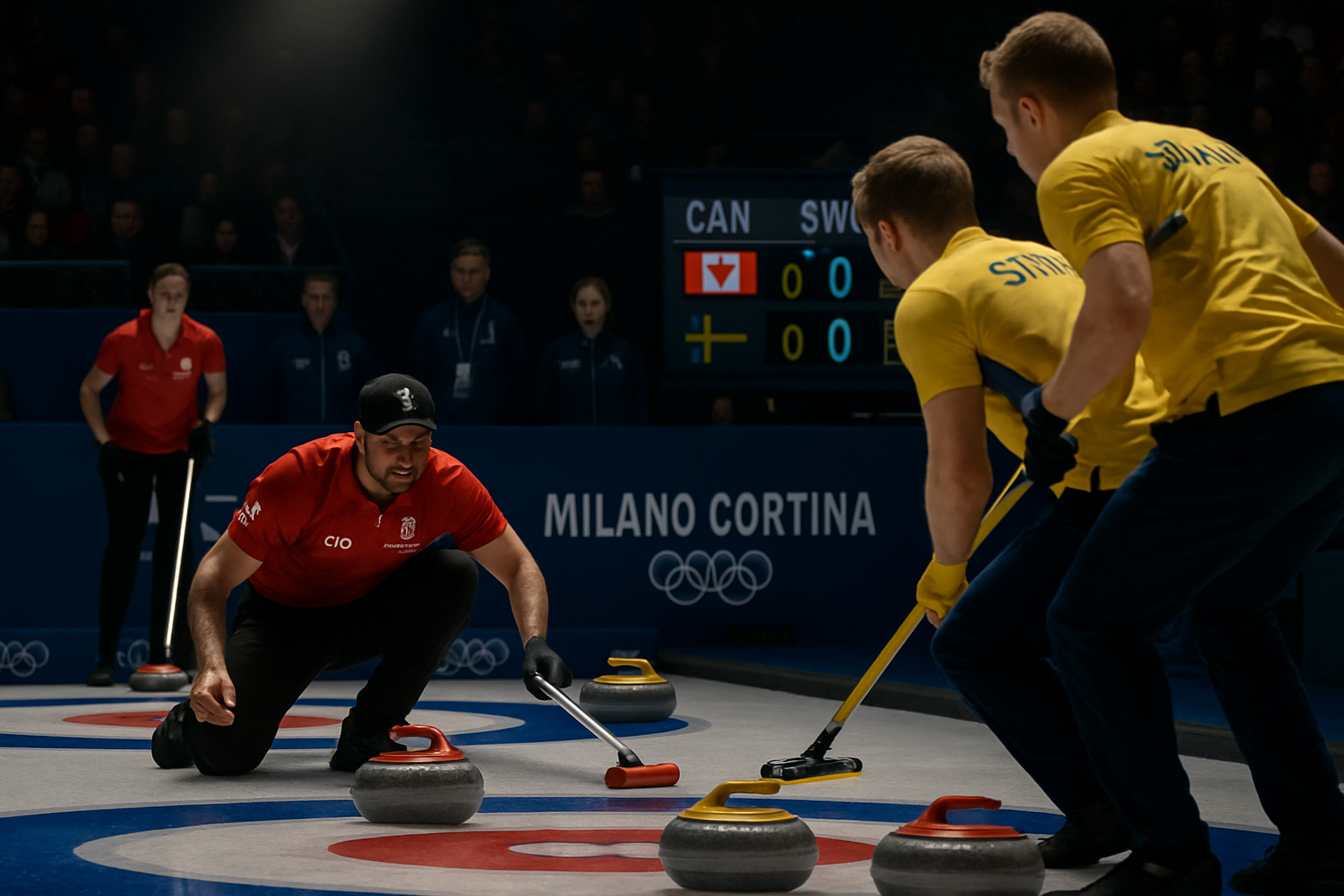
A major controversy has erupted at the Milano-Cortina 2026 Winter Olympics, placing Canada's curling program under intense scrutiny as both men's and women's teams face allegations of illegal stone manipulation during crucial matches against Sweden.
The scandal centers on accusations of "double-touching" – where players allegedly make contact with curling stones after release, a serious violation that could provide unfair competitive advantages. The allegations have sparked heated confrontations on the ice and prompted intervention from World Curling officials.
The Accusations Surface
The controversy reached its peak during Canada's pivotal match against Sweden on Friday evening, when Swedish rival Oskar Eriksson directly accused Canadian skip Marc Kennedy of illegal stone contact. The confrontation quickly escalated, with both teams exchanging what sources describe as profanity and heated accusations of cheating.
"Controversy is swirling in curling at the Winter Olympics and it's all centring on whether the mighty Canadian team is cheating," reported CBC Sports, highlighting the gravity of the situation facing one of Canada's most successful Olympic programs.
"Both men's and women's teams have now been accused of the same infraction: double-touching the curling stone after it is released."
— New Zealand Media Coverage
The allegations represent a significant challenge to Canada's reputation in curling, a sport where the nation has historically dominated Olympic competition. The timing is particularly damaging, coming during what many consider the most geographically dispersed Winter Olympics in history.
International Reaction and Official Response
The scandal has generated international attention, with Swedish media reporting calls for Video Assistant Referee (VAR) technology to be introduced to curling. Swedish curler Rasmus Wranå, who won gold in mixed doubles earlier in the Games, argued that technological assistance would eliminate such controversies.
"I think it would be good, then you would avoid many of these discussions that can arise on the track," Wranå told Swedish media, reflecting growing frustration with officiating disputes in the sport.
World Curling officials were forced to issue a verbal warning to the Canadian team following the confrontation, marking a rare disciplinary action at Olympic level. The intervention highlights the seriousness with which international officials are treating the allegations.
Technical Aspects of the Violation
Double-touching in curling involves a player making contact with a stone after its initial release, potentially altering its trajectory or speed. This violation can provide significant competitive advantages by allowing players to make subtle corrections to shots that might otherwise miss their intended targets.
The allegations against both Canadian teams suggest a systematic issue rather than isolated incidents. Such widespread accusations are unprecedented in Olympic curling competition and raise questions about training methods and competitive ethics within the Canadian program.
The controversy has been particularly pronounced given the high-stakes nature of Olympic competition, where medal positions often depend on precision shots and minimal margins of error.
Historical Context and Broader Implications
This curling controversy adds to the complex narrative of the Milano-Cortina 2026 Winter Olympics, which have already faced numerous challenges including infrastructure problems, power outages, and various competitive disputes. The Games represent the most geographically dispersed Winter Olympics in history, spanning over 400 kilometers across seven venues.
Canada's curling program has been a cornerstone of the nation's Olympic success, making these allegations particularly damaging to national sporting pride. The country has traditionally been viewed as upholding the sport's values of sportsmanship and fair play, principles that are now under question.
The incident also reflects broader tensions in Olympic curling, where traditional powers like Canada face increasing competition from nations like Sweden, creating pressure that may contribute to rule-bending behaviors.
Looking Forward
The controversy raises important questions about officiating standards and technological assistance in curling. Swedish calls for VAR technology implementation suggest that traditional officiating methods may be insufficient for modern Olympic competition.
As the Games continue, both Canadian teams will face intense scrutiny in their remaining matches. The allegations have already impacted team morale and could affect performance in crucial elimination rounds.
The international curling community will likely use this controversy as a catalyst for reviewing rules enforcement and potentially implementing technological solutions to prevent future disputes. The outcome could reshape how the sport is officiated at the highest levels.
For Canada, restoring credibility will require transparent cooperation with officials and demonstrably clean competition in remaining Olympic events. The nation's curling reputation, built over decades of success, now faces its greatest challenge in the sport's Olympic history.