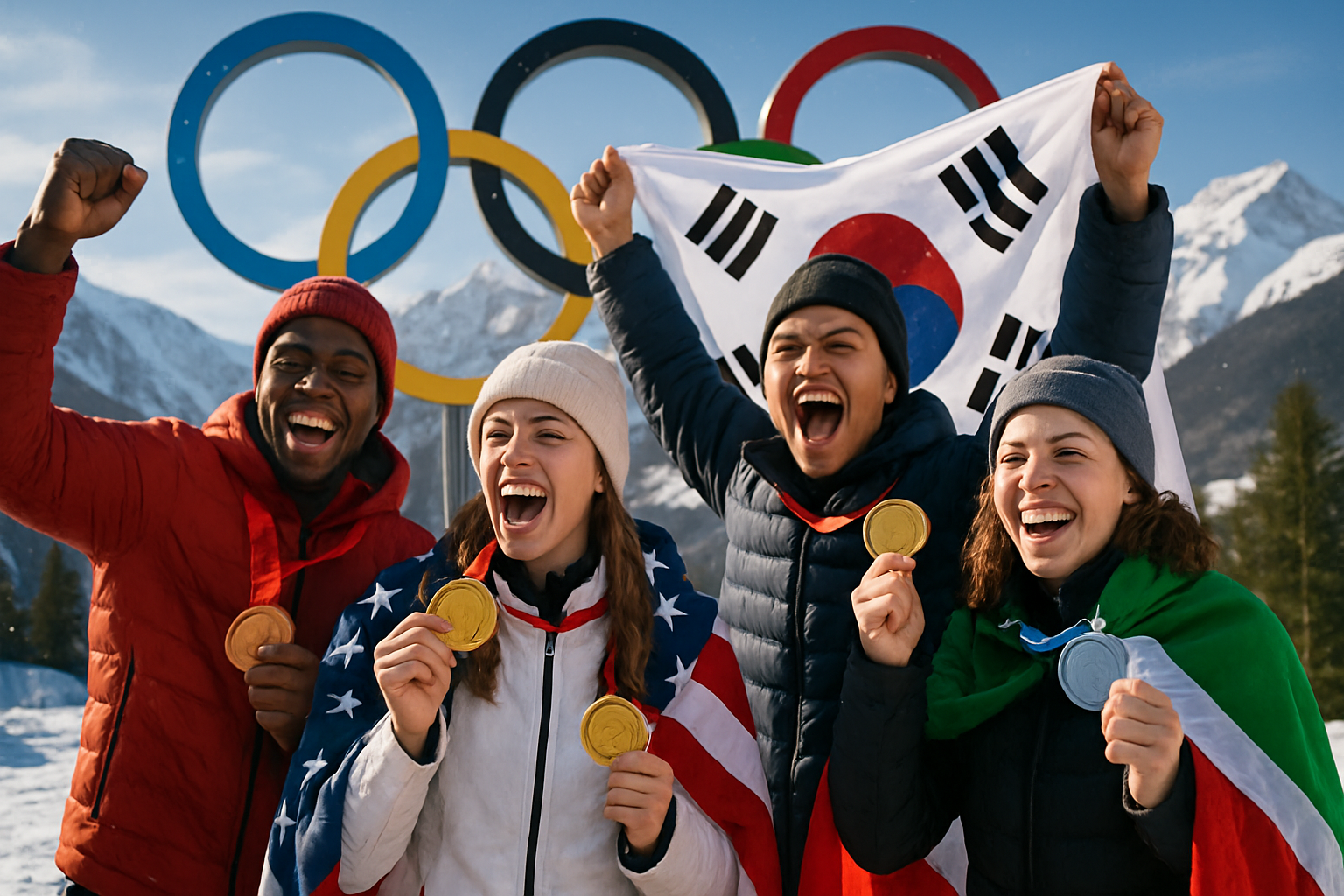
As the dust settles from the revolutionary Milano-Cortina 2026 Winter Olympics, Olympic champions are returning home to heroes' welcomes, with Estonia's Henry Sildaru expressing hopes for future Games participation and Kazakhstan's President honoring figure skating sensation Mikhail Shaidorov for his historic gold medal triumph.
Estonia's 19-year-old freestyle skiing sensation Henry Sildaru, who captured silver in men's freeski halfpipe at the recently concluded Games, has indicated his intention to continue competing at the highest level for years to come. The young athlete's breakthrough performance ended Estonia's medal drought at Milano-Cortina 2026, marking a significant milestone for the Baltic nation's winter sports program.
Historic Kazakhstan Gold Medal Recognition
Meanwhile, in Kazakhstan's capital of Astana, President Kassym-Jomart Tokayev personally presented state awards to Olympic gold medalist Mikhail Shaidorov and his coaching team on February 25, celebrating what officials described as a "historic triumph" and "milestone for Kazakhstan's national sports history." The 21-year-old figure skater's victory at the 25th Winter Olympic Games represents Kazakhstan's first-ever Olympic figure skating medal.
Shaidorov received a ceremonial welcome at Astana airport upon his return from Italy, greeted by enthusiastic fans, sports officials, and fellow athletes. The champion expressed gratitude to supporters who gathered despite the late hour, stating he was "bursting with pride" for his historic achievement.
"I would like to express my gratitude to everyone who came to meet me at such a late hour. I am truly grateful. I was bursting with pride for my country."
— Mikhail Shaidorov, Olympic Figure Skating Champion
Estonian Rising Star's Future Ambitions
Henry Sildaru's silver medal performance at Milano-Cortina 2026 marked a coming-of-age moment for the Estonian freestyle skiing program. Following in the footsteps of his sister Kelly Sildaru, who has achieved considerable success in women's freestyle skiing, Henry's breakthrough at just 19 years old suggests a bright future for Estonian winter sports.
The young athlete's 93.00-point performance in the halfpipe final came after a dramatic recovery from a first-run crash, demonstrating the resilience and determination that characterizes Olympic-level competition. His achievement was particularly significant as it ended Estonia's medal drought at the Games and represented the nation's emergence in freestyle skiing disciplines.
Injury Concerns and Recovery Updates
The post-Olympic period has also brought injury concerns, with NHL star Miko Rantanen of the Dallas Stars reportedly facing several weeks on the sidelines due to injuries sustained during Olympic competition. The setback highlights the physical demands and risks associated with competing at the highest level of international winter sports.
Rantanen's situation underscores the delicate balance athletes must maintain between representing their countries at the Olympics and protecting their professional careers. The most productive player for Dallas this season, his absence will be felt as the team navigates the remainder of the NHL season.
Revolutionary Games Leave Lasting Impact
The Milano-Cortina 2026 Winter Olympics, remembered as the most geographically dispersed Games in Olympic history, spanning over 400 kilometers across northern Italy, proved that sustainable, innovative hosting models can maintain the highest competitive standards while embracing environmental responsibility.
The Games featured unprecedented global participation, with breakthrough performances from nations across six continents challenging traditional winter sports hierarchies. From Australia's emergence as a moguls powerhouse to Brazil's first Winter Olympic gold, the competition demonstrated that winter sports excellence truly knows no geographic boundaries.
Technology and Cultural Innovation
Milano-Cortina 2026 also marked several technological firsts, including the debut of Alibaba's Qwen AI system as the first Olympic-integrated large language model and OMEGA's AI-powered figure skating analysis. These innovations enhanced both competitor performance analysis and spectator experiences across the distributed venue network.
Cultural authenticity was preserved through bilingual place names in Alto Adige/South Tyrol, sustainable Olympic villages featuring greenhouse spaces, and the popular Gen Z mascots Milo and Tina, proving that innovation and tradition can coexist successfully in modern Olympic hosting.
Looking Ahead to Future Olympic Cycles
As athletes like Henry Sildaru express optimism about future Olympic participation, the success of Milano-Cortina 2026 has established new paradigms for Olympic hosting that combine environmental sustainability, technological innovation, and cultural authenticity while maintaining the highest competitive standards.
The Games' legacy extends beyond individual achievements to demonstrate how the Olympic movement can adapt to 21st-century realities while preserving its core values of international cooperation, athletic excellence, and the celebration of human potential. For young champions like Sildaru and established stars like Shaidorov, the experience has undoubtedly shaped their perspectives on what it means to compete at the pinnacle of international sport.
With the next Winter Olympics scheduled for the French Alps in 2030, the foundation laid by Milano-Cortina 2026's revolutionary approach promises to influence how future Games balance tradition with innovation, ensuring the Olympic movement remains relevant and inspiring for generations to come.