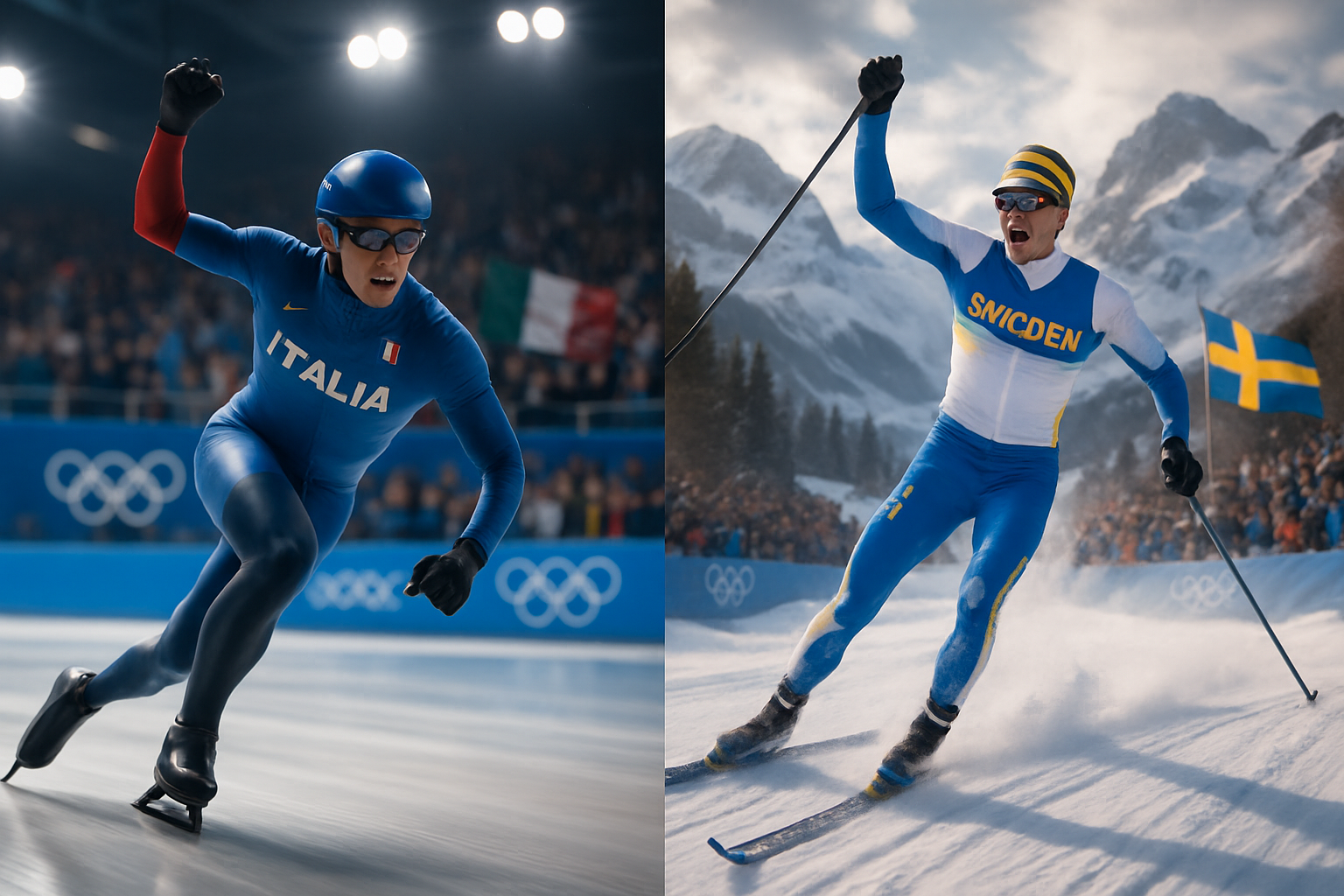
Italian speed skating sensation Francesca Lollobrigida captured her second gold medal of the Milano-Cortina 2026 Winter Olympics with a commanding victory in the women's 5,000 meters, while Sweden's Frida Karlsson continued her cross-country skiing dominance with an overwhelming triumph in the 10-kilometer freestyle event on February 12.
Lollobrigida's Remarkable Post-Motherhood Success
Lollobrigida's victory in the 5,000m represents the pinnacle of one of the most inspiring comeback stories in Olympic history. The Italian champion, who returned to elite competition following childbirth, has transformed her career trajectory into what Hungarian media described as a "speed skating fairy tale." Her second gold medal was decided by the narrowest of margins - just one-tenth of a second - demonstrating the razor-thin precision required at Olympic level.
The 33-year-old Lollobrigida has become a symbol of athletic perseverance, reaching peak form in her thirties after becoming a mother. Her performances at the home Olympics have electrified Italian crowds and established her as one of the most celebrated athletes of the Milano-Cortina Games.
"This victory means everything to me and shows that dreams don't have an expiration date. Coming back after childbirth and winning two Olympic golds on home ice is beyond what I ever imagined."
— Francesca Lollobrigida, Italy
Norwegian Bronze Adds to Historic Medal
Norway's Ragne Wiklund earned a historic bronze medal in the women's 5,000m speed skating, providing one of the most emotional moments of the competition. The 25-year-old Oslo native demonstrated exceptional resilience despite struggling on the final laps, securing Norway's first medal in this discipline in decades.
Wiklund's achievement carries special significance as it ended a prolonged Norwegian drought in women's long-distance speed skating. Her bronze medal ceremony was marked by tears of joy, representing years of dedication and the breakthrough Norway had been seeking in this traditionally Dutch and German-dominated event.
Karlsson's Cross-Country Domination
Meanwhile, in cross-country skiing, Sweden's Frida Karlsson delivered what Russian sports commentators described as a "demonstration of complete power" in the women's 10-kilometer freestyle event. The 27-year-old's victory margin was so substantial that it bordered on embarrassing for her competitors, showcasing the exceptional form that has made her one of the most feared Nordic skiers of her generation.
Karlsson's second Olympic gold of these Games continues Sweden's challenge to traditional Norwegian supremacy in cross-country skiing. Her technical proficiency and tactical awareness have been studied by competitors worldwide, with her skiing technique described as near-perfect by Nordic sport experts.
The victory represents Sweden's continued emergence as a Nordic powerhouse, building on their strong start to the Milano-Cortina Games with multiple medals across winter disciplines. Karlsson's dominance in the freestyle technique has been particularly noteworthy, with her powerful stride and efficient energy management setting new standards in the sport.
American Cross-Country Renaissance
The cross-country skiing events also featured a remarkable achievement for United States Nordic skiing. Veteran competitor Jessie Diggins, competing at age 34 in what she has announced as her final Olympics, captured a bronze medal in the women's 10-kilometer event despite racing through the pain of injured ribs sustained in training.
Diggins' medal represents her third consecutive Olympic Games with a podium finish, cementing her legacy as the most successful American cross-country skier in Olympic history. Her ability to perform at elite level while managing significant injury demonstrates the mental toughness that has characterized her career.
"Racing with broken ribs wasn't easy, but this is my last Olympics and I wasn't going to let anything stop me from giving everything I had. This bronze means the world to me."
— Jessie Diggins, United States
Alpine Success Stories
The day's celebrations extended beyond Nordic events, with American alpine skier Breezy Johnson adding to the medal success stories. Johnson's gold medal in alpine skiing was accompanied by a personal milestone - a marriage proposal from her fiancé Connor Watkins immediately following her victory.
The romantic gesture, captured by Olympic cameras, provided one of the most heartwarming moments of the Games. Watkins, who met Johnson on the dating app Bumble without initially knowing her athletic prominence, described himself as "out-kicking his coverage" when they first connected.
Competition Challenges and Infrastructure
The February 12 competitions took place amid the unique challenges of hosting the most geographically dispersed Winter Olympics in history. With venues spanning over 400 kilometers from Milan to Cortina d'Ampezzo, the Games have required unprecedented logistical coordination while maintaining the highest competitive standards.
Despite earlier infrastructure concerns, including power outages and incomplete transportation systems, competition has proceeded smoothly. The revolutionary dual-city hosting model has proven viable, with athletes and spectators successfully navigating between venues across the spectacular Italian Alpine landscape.
Medal Standings Impact
The day's results continue to reshape the medal standings, with Italy's strong home performance bolstered by Lollobrigida's success. Sweden's continued Nordic dominance positions them as serious challengers to traditional Norwegian supremacy, while the United States maintains strong performances across multiple disciplines.
The success of athletes like Lollobrigida and Karlsson demonstrates the global competitiveness of winter sports, with established powers facing challenges from emerging nations and veteran athletes achieving career-defining performances at unexpected stages of their careers.
Technology and Innovation
The Milano-Cortina Games continue to showcase technological innovation, with AI-powered analysis providing unprecedented insights into athlete performance. The integration of Alibaba's Qwen AI system and OMEGA's advanced timing technology has enhanced both competition accuracy and broadcast quality for global audiences.
Cultural elements including bilingual place names in the Alto Adige/South Tyrol region and the popular Gen Z mascots Milo and Tina have added unique character to these Games, emphasizing Italy's commitment to inclusive and innovative Olympic hosting.
Looking Ahead
As the Milano-Cortina 2026 Winter Olympics continue through February 22, the performances of champions like Lollobrigida and Karlsson have set exceptional standards for the remaining competitions. Their success stories - from post-motherhood triumph to technical dominance - embody the Olympic spirit of pushing human boundaries while inspiring future generations of winter sport athletes.
The Games' revolutionary hosting model, combining traditional Olympic excellence with sustainable practices and technological innovation, appears increasingly successful as competition progresses. With 13 days of events remaining, the stage is set for continued athletic brilliance across the spectacular venues of northern Italy.