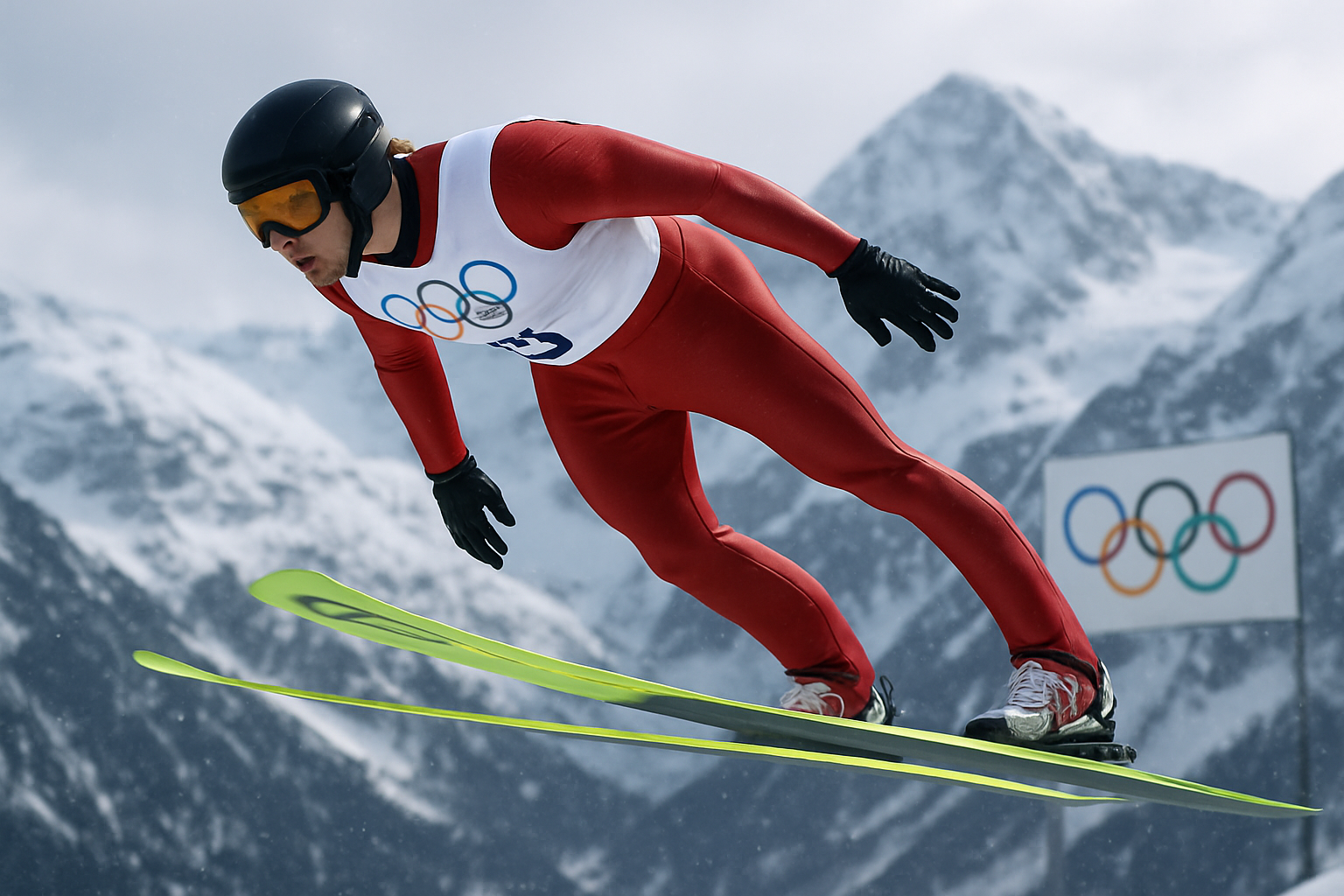
The 2026 Milan-Cortina Winter Olympics face an unprecedented scandal as the World Anti-Doping Agency (WADA) investigates shocking allegations that ski jumpers are injecting hyaluronic acid into their penises to gain competitive advantages through equipment manipulation—representing a new frontier in Olympic cheating that has left sports officials scrambling for answers.
The bizarre controversy erupted just days into the Games, threatening to overshadow athletic achievements as officials grapple with what may be the most unusual doping scandal in Olympic history. Unlike traditional performance-enhancing drug cases, these allegations center on athletes allegedly modifying their bodies specifically to circumvent suit measurement regulations and gain aerodynamic advantages.
The Allegations Explained
According to investigations first reported by German tabloid Bild in January, ski jumpers are allegedly injecting hyaluronic acid or paraffin into their penises before being measured for their competition suits. The larger the athlete's measurements during suit fitting, the looser their aerodynamic racing suits become, potentially adding several meters to their jumping distances through increased "sail effect."
World skiing's governing body, the International Ski Federation (FIS), moved swiftly to address the rumors, but scientists and ski jumpers at the Winter Olympics acknowledge that if true, the scheme would make perfect aerodynamic sense. The larger surface area of a loosely fitting suit creates more air resistance during flight, theoretically extending the athlete's glide distance.
"This is not something WADA is used to dealing with. We're entering uncharted territory where body modification meets equipment regulation."
— WADA Official, speaking on condition of anonymity
The allegations have created what officials describe as a "very delocate problem" for anti-doping authorities, who traditionally focus on biological performance enhancement rather than equipment manipulation schemes involving temporary body modification.
WADA's Response and Investigation
WADA Director-General Olivier Niggli addressed the controversy at a press conference ahead of the Milan-Cortina Games, stating he was not previously aware of any performance-enhancing schemes involving penis enlargement. However, he confirmed that his organization would "certainly look into" the allegations if they become substantiated with evidence.
The timing of the investigation coincides with ongoing challenges at the 2026 Winter Olympics, including infrastructure problems, power outages affecting competitions, and other doping concerns. Italian biathlete Rebecca Passler was already suspended for a positive test involving letrozole and methanol, while controversy surrounds figure skating coach Eteri Tutberidze's accreditation.
This represents a novel category of Olympic integrity violations—neither traditional biological doping nor standard equipment tampering, but rather temporary body modification specifically designed to exploit measurement loopholes in suit regulations.
Technical and Scientific Perspectives
Aerodynamics experts confirm that suit fit plays a crucial role in ski jumping performance. The sport's regulations require suits to fit closely to prevent excessive "parachute effects," but small increases in circumference during measurement could legally allow for looser suits that provide significant competitive advantages.
The scheme allegedly works by temporarily enlarging body measurements at key measurement points, particularly around the waist and chest area where suits are fitted. Hyaluronic acid, commonly used in cosmetic procedures, can provide temporary volume increases that would affect suit measurements while remaining undetectable through traditional drug testing methods.
Scientists note that even small increases in suit looseness can translate to measurably longer jumps. In a sport where medals are often decided by centimeters, any aerodynamic advantage becomes significant. The theoretical soundness of the scheme explains why rumors have spread rapidly through the ski jumping community despite their bizarre nature.
International Media Coverage and Reactions
The story has generated extensive international coverage, with Portuguese media outlet RTP reporting that investigators are examining whether "skiers may be injecting hyaluronic acid into genitals to improve sports performance." The injections are allegedly administered to facilitate the use of larger suits, circumventing FIS equipment regulations.
Russian media has characterized the potential scandal as athletes seeking to increase the "sail capacity" of their suits through "penis enlargement," describing it as a new form of cheating in a sport where equipment manipulation is typically more straightforward. The Russian outlet Kommersant noted that while equipment manipulation is common in ski jumping, this represents an unprecedented biological approach to equipment fraud.
RT reported that "ski jumpers with pumped-up packages can reportedly glide further than their competitors," highlighting the absurd nature of what could become one of the most bizarre Olympic scandals in history.
Historical Context of Olympic Controversies
The 2026 Winter Olympics have already faced numerous challenges, from infrastructure delays to power outages affecting competition venues. The Games, spread across seven venues spanning 400+ kilometers from Milan to Cortina d'Ampezzo, represent the most geographically dispersed Winter Olympics in history.
Previous Olympic controversies have typically involved performance-enhancing drugs, judging scandals, or political tensions. The current allegations represent an entirely new category of Olympic integrity violation—one that combines elements of doping, equipment manipulation, and body modification in ways that existing regulations never anticipated.
The scandal comes during a Winter Olympics already marked by historic firsts, including Saudi Arabia's debut participation, Caribbean bobsleigh teams, and advanced AI integration through Alibaba's Qwen technology. The contrast between technological innovation and this alleged return to crude body modification schemes highlights the complex challenges facing modern Olympic competition.
Regulatory and Legal Implications
The allegations raise complex questions about how anti-doping authorities should classify and investigate body modification schemes designed to circumvent equipment regulations. Traditional drug testing focuses on substances that directly enhance athletic performance, not temporary cosmetic modifications intended to exploit measurement loopholes.
FIS officials are reportedly reviewing their suit measurement and inspection procedures to address potential exploitation of existing regulations. The scandal could force a complete overhaul of how competitive skiing equipment is regulated and monitored.
Legal experts note that if proven, such schemes might fall outside traditional doping violations but could constitute fraud or cheating under Olympic regulations. The unprecedented nature of the allegations means regulators are essentially writing new rules in real-time.
Impact on Olympic Integrity
The penis injection allegations represent a new low in Olympic scandal history, potentially undermining public confidence in competitive integrity just as the Milan-Cortina Games attempt to showcase winter sports to a global audience.
Athletes competing cleanly in ski jumping events face the disturbing possibility that their competitors may have gained advantages through temporary body modification. The psychological impact on clean athletes, who must now question whether competitors achieved results through legitimate training or bizarre enhancement schemes, adds another layer to the controversy.
Olympic officials privately express concern that the allegations, regardless of their ultimate veracity, damage the sport's reputation and distract from genuine athletic achievements at what organizers hoped would be a celebration of winter sports excellence.
Looking Forward
As WADA's investigation continues, the ski jumping community awaits answers that could reshape how Olympic sports approach equipment regulation and body modification. The scandal highlights the lengths to which some athletes may go to gain competitive advantages, even through methods that would have been unimaginable just years ago.
The resolution of these allegations will likely establish precedents for how future Olympic integrity cases involving body modification and equipment manipulation are handled. Win or lose, the 2026 Winter Olympics will be remembered as the Games where Olympic officials had to seriously investigate penis injection scandals.
The broader implications extend beyond ski jumping to any sport where equipment regulations could theoretically be circumvented through temporary body modification. As the investigation unfolds, the Olympic movement faces fundamental questions about the boundaries of acceptable competition and the lengths athletes will go to pursue victory.
Meanwhile, legitimate ski jumping competition continues at venues across northern Italy, with athletes who have trained for years to reach the Olympics now competing under the shadow of the most bizarre doping scandal in Olympic history. The ultimate resolution of these allegations will determine whether the 2026 Milan-Cortina Games are remembered for athletic excellence or for the winter that Olympic officials had to investigate penis injections.