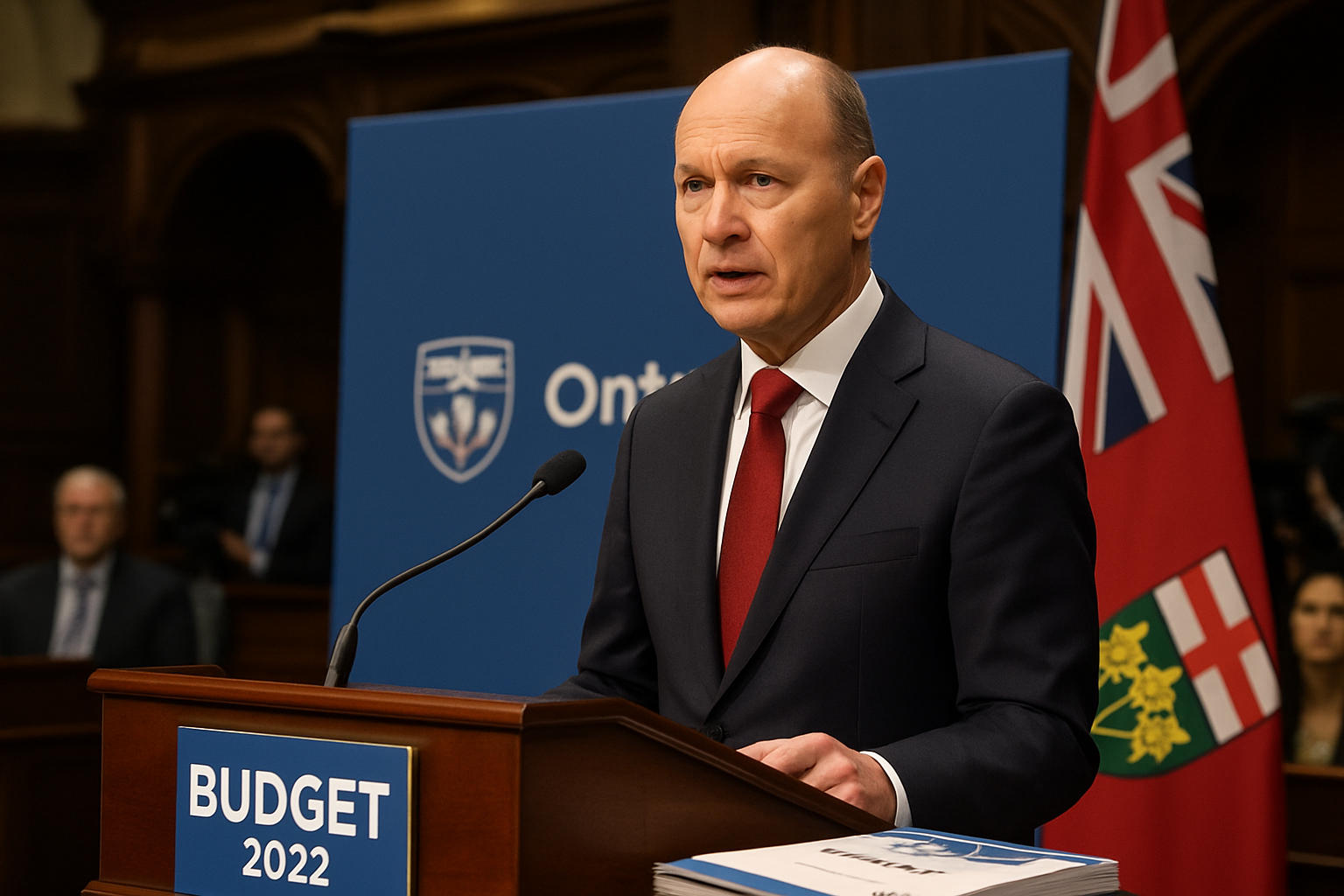
Ontario Finance Minister Peter Bethlenfalvy delivered a sobering budget on March 26, 2026, projecting a record-breaking $13.8 billion deficit for the province as economic uncertainty and looming U.S. trade tensions continue to pressure Canada's most populous province.
The deficit projection represents a significant increase from previous fiscal forecasts and marks a dramatic shift in Ontario's fiscal trajectory under Premier Doug Ford's Progressive Conservative government. The province cited economic uncertainty, particularly regarding potential U.S. tariffs, as the primary driver behind the red ink that will delay any return to balanced books.
Economic Pressures Drive Deficit Projections
Speaking to reporters at Queen's Park before tabling the provincial budget, Bethlenfalvy acknowledged the challenging economic environment facing Ontario. "We're navigating unprecedented global instability," the Finance Minister stated, referencing ongoing trade tensions with the United States that continue to weigh heavily on Ontario businesses and the broader provincial economy.
The budget comes amid mounting concerns over potential U.S. tariffs that could significantly impact Ontario's manufacturing sector, which remains deeply integrated with American supply chains. These trade uncertainties have created volatility in provincial revenue projections, forcing the government to adopt more conservative fiscal assumptions.
Healthcare Investments and Tax Relief Measures
Despite the substantial deficit, the Ford government has committed to increased healthcare spending, allocating additional funding to hospitals across the province. The budget also includes targeted tax relief measures, specifically offering small businesses a tax break designed to stimulate economic growth during uncertain times.
The healthcare investments come as Ontario's medical system continues to face capacity pressures and staffing shortages, issues that have become more acute in recent years. Hospital administrators have welcomed the additional funding, though many argue more substantial long-term investments are needed to address systemic challenges.
"These are necessary investments in the health and economic well-being of Ontarians, even as we navigate challenging fiscal circumstances."
— Peter Bethlenfalvy, Ontario Finance Minister
Context of Provincial Fiscal Challenges
Ontario's deficit projection places it among several Canadian provinces facing significant fiscal challenges. Alberta recently announced a $9.37 billion deficit under Premier Danielle Smith, while British Columbia has projected deficits exceeding $13 billion. This pattern suggests broader structural challenges facing provincial governments across Canada as they balance service delivery demands with constrained revenue growth.
The economic headwinds affecting Ontario include volatile commodity prices, supply chain disruptions, demographic pressures from an aging population, and the ongoing need for infrastructure investments. Additionally, federal-provincial tensions over various policy areas have complicated fiscal planning for provincial governments.
Small Business Support and Economic Stimulus
The budget's small business tax relief measures represent an attempt to stimulate economic activity during a period of uncertainty. Small and medium enterprises, which form the backbone of Ontario's economy, have faced particular challenges from supply chain disruptions and changing consumer patterns.
Economic analysts suggest these measures, while welcome, may have limited impact given the broader structural challenges facing the provincial economy. The effectiveness of such targeted relief will largely depend on how quickly broader economic uncertainties, particularly those related to U.S. trade policy, can be resolved.
Opposition Response and Political Implications
Opposition parties have criticized the Ford government's fiscal management, arguing that the massive deficit represents a failure of economic policy and planning. Critics contend that the government should have better positioned the province for economic volatility through more prudent fiscal management in previous years.
The deficit projection may have significant political implications for the Progressive Conservative government, which has historically positioned itself as fiscally responsible. The challenge will be maintaining public support while explaining why substantial deficits are necessary during current economic conditions.
Looking Ahead: Path to Fiscal Balance
The budget notably lacks a clear timeline for returning to balanced books, marking a departure from previous Conservative fiscal orthodoxy that emphasized rapid returns to fiscal equilibrium. This pragmatic approach reflects the complex economic realities facing not just Ontario, but provincial governments across Canada.
Provincial officials emphasize that the current deficit spending is designed to maintain essential services and support economic growth during turbulent times. However, the lack of a concrete plan for fiscal consolidation has raised questions about long-term debt sustainability and the province's credit rating.
As Ontario moves forward with this expansive budget, the province will need to carefully balance immediate economic support with longer-term fiscal sustainability. The success of this approach will largely depend on how quickly economic conditions stabilize and whether the investments in healthcare and business support generate the anticipated economic returns.
The $13.8 billion deficit represents both the scale of challenges facing Ontario and the government's commitment to maintaining service levels during uncertain times. As global economic conditions continue to evolve, Ontario's fiscal trajectory will serve as a key indicator of how provincial governments can navigate the complex intersection of fiscal responsibility and economic support during periods of sustained uncertainty.