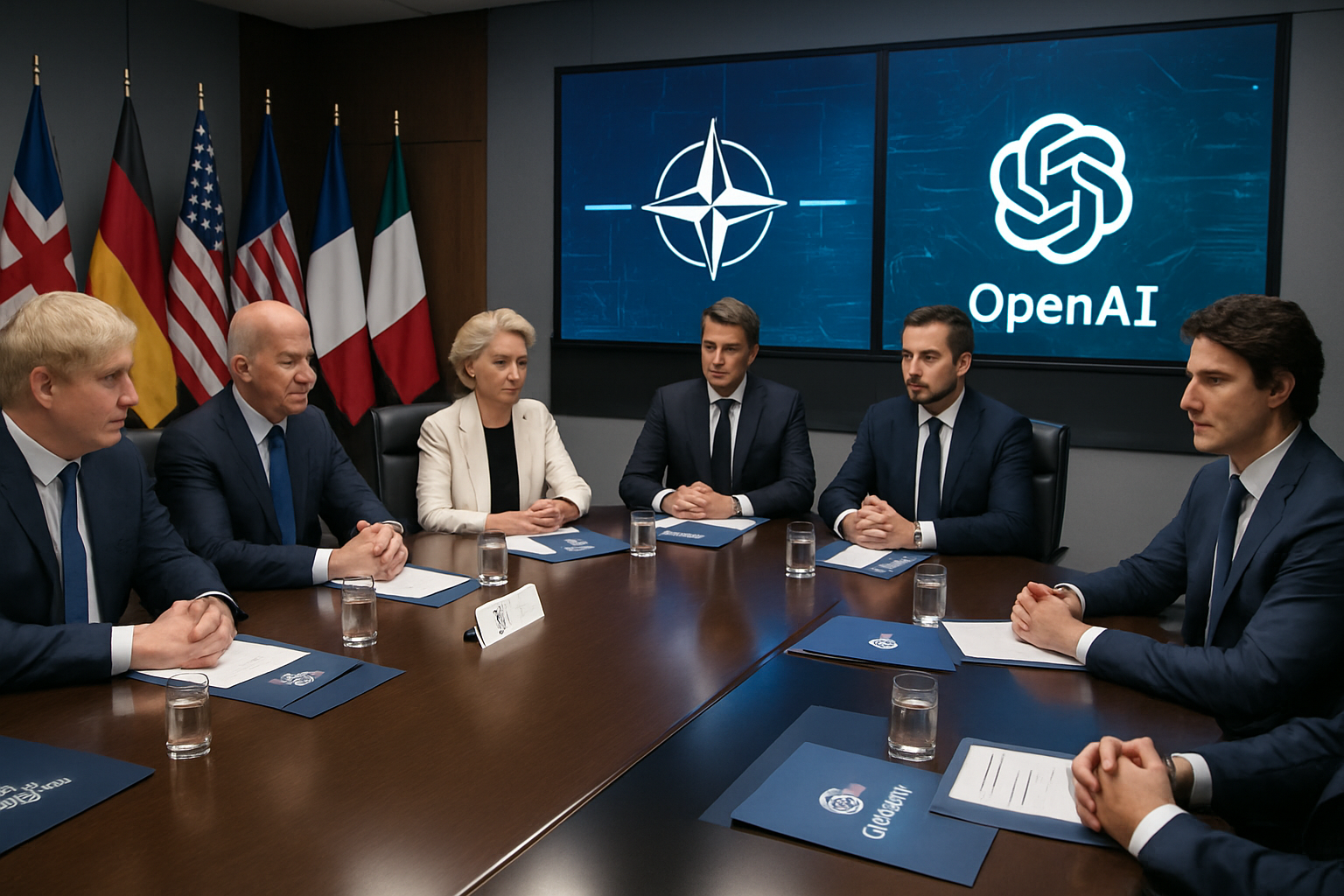
OpenAI is reportedly in advanced negotiations with the North Atlantic Treaty Organization (NATO) for a comprehensive artificial intelligence partnership, marking a potentially transformative expansion of AI integration into Western defense infrastructure.
According to multiple foreign media sources, the San Francisco-based AI company is exploring contractual arrangements with the 32-member military alliance, building upon its established collaboration with the U.S. Department of Defense. The discussions come at a critical juncture in global AI governance, as democratic nations grapple with balancing technological advancement with security imperatives.
Building on Pentagon Success
The potential NATO partnership represents a natural evolution of OpenAI's existing military relationships. The company has successfully integrated its ChatGPT system into Pentagon operations, now serving over 800 million weekly users across U.S. military networks with 10% monthly growth. This deployment has provided a proven framework for AI integration within defense environments while maintaining operational security protocols.
OpenAI CEO Sam Altman confirmed the company's comprehensive Pentagon agreement includes robust security protections, with the company retaining "full discretion over safety stack, deploys via cloud, cleared OpenAI personnel in the loop, strong contractual protections." This approach contrasts sharply with competitors who have faced government pressure to remove safety restrictions.
Strategic Context and Competitive Landscape
The NATO discussions unfold against the backdrop of intensifying AI competition and recent controversies within the sector. The Trump administration's designation of Anthropic as a "supply chain risk" in February 2026 highlighted the growing tensions between AI safety protocols and national security requirements. Anthropic's refusal to remove safety safeguards from its Claude AI system, despite facing the loss of over $200 million in federal contracts, underscored the industry divide over military applications.
OpenAI's pragmatic approach to military collaboration has positioned it advantageously as governments worldwide seek reliable AI partners. The company's willingness to work within established security frameworks while maintaining ethical oversight has resonated with defense officials seeking both capability and accountability.
"The convergence of AI capabilities with alliance security needs represents one of the most significant technological partnerships since the development of nuclear deterrence."
— Defense Technology Analyst, Atlantic Council
Implications for Alliance AI Strategy
A formal OpenAI-NATO partnership would mark the first major AI technology integration at the alliance level, potentially standardizing AI capabilities across member nations. This development occurs as NATO members increasingly recognize artificial intelligence as essential infrastructure rather than experimental technology.
The timing aligns with broader NATO adaptation efforts, including the recent launch of Arctic Sentry operations and enhanced collective defense measures. European allies have demonstrated growing independence in security initiatives, with the UK doubling troop presence in Norway and coordinated European responses to various regional challenges.
Several NATO members have already implemented successful AI integration models in civilian sectors. Canada has deployed AI teaching assistants in universities, Malaysia operates the world's first AI-integrated Islamic school, and Singapore's WonderBot 2.0 demonstrates effective heritage education applications. These civilian successes provide templates for responsible military AI deployment.
Technical and Security Considerations
The potential partnership would need to address significant technical challenges, including standardization across diverse NATO information systems and ensuring compatibility with existing security protocols. The global memory semiconductor crisis, which has driven component prices up sixfold, adds complexity to large-scale AI deployment plans across alliance networks.
Security architecture would likely mirror OpenAI's Pentagon framework, emphasizing cloud deployment with centralized monitoring, cleared personnel oversight, and robust contractual protections. This approach enables civilian oversight while providing military users with advanced AI capabilities for planning, analysis, and operational support.
The integration would also require addressing different national regulatory frameworks. Spain has implemented the world's first criminal executive liability for tech platforms, France has conducted AI company cybercrime raids, and the UN has established an Independent Scientific Panel with 40 experts for AI governance assessment. These varying regulatory approaches would need coordination within alliance structures.
Global AI Governance Context
The discussions occur during a critical inflection point in global AI governance. The Delhi Declaration, signed by 88 countries in February 2026, represents the largest AI diplomatic agreement in history, calling for "safe, reliable, robust" development through voluntary frameworks. However, the agreement's non-binding nature highlights the challenges of creating enforceable international AI standards.
Meanwhile, the "SaaSpocalypse" market disruption has eliminated hundreds of billions in traditional software market capitalization as AI systems replace conventional applications. Chinese advances, including DeepSeek breakthroughs that challenge U.S. dominance, underscore the competitive pressures driving military AI adoption.
The infrastructure crisis affecting Samsung, SK Hynix, and Micron operations until 2027 creates additional urgency around securing reliable AI partnerships. Despite these constraints, major technology companies continue substantial investments, with Alphabet committing $185 billion and Amazon exceeding $1 trillion in AI infrastructure development.
Democratic AI Governance Framework
The potential OpenAI-NATO partnership represents a crucial test of democratic AI governance during great power competition. Success would establish precedents for maintaining civilian oversight while enabling legitimate defense applications. The framework could influence how democratic nations balance innovation with safety governance, commercial interests with human welfare, and national competitiveness with international cooperation.
This democratic approach contrasts with authoritarian AI development models, where civilian oversight mechanisms may be limited. The partnership's structure could provide a template for other democratic alliances seeking to harness AI capabilities while preserving institutional accountability.
Looking Forward
While specific details of the negotiations remain confidential, the potential partnership signals a broader shift toward AI as essential defense infrastructure. The outcome will likely influence similar discussions between technology companies and security organizations worldwide.
The discussions also highlight the evolving relationship between Silicon Valley and traditional defense establishments. As AI becomes increasingly central to national security, the technology sector's role in democratic governance continues to expand, requiring new frameworks for balancing innovation, security, and accountability.
For NATO, successfully integrating AI capabilities while maintaining alliance unity and democratic values represents both an opportunity and a challenge. The potential OpenAI partnership could position the alliance at the forefront of responsible AI deployment, setting standards for how democratic institutions can leverage emerging technologies for collective security.
As these negotiations progress, they will undoubtedly shape the broader conversation about AI governance, military applications, and the future of technology in democratic societies. The outcome may well determine whether AI serves as a force for democratic resilience or becomes another arena for great power competition.