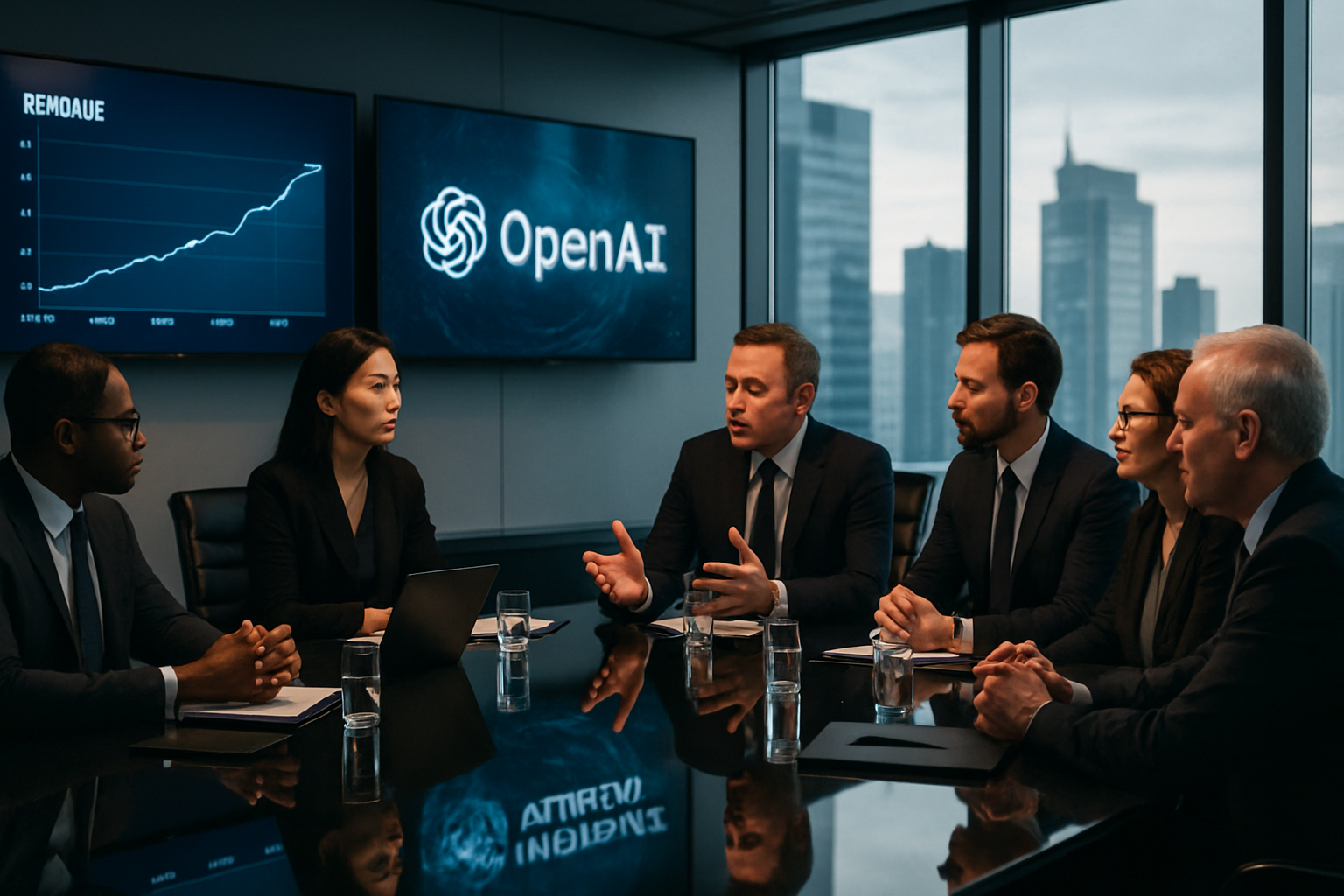
OpenAI has reportedly reached $25 billion in annualized revenue, marking a significant business milestone for the artificial intelligence company, even as CEO Sam Altman confronts escalating concerns from government officials about the company's AI safety protocols and threat detection systems.
The revenue milestone, according to industry reports, comes at a critical juncture for the San Francisco-based company, which has seen explosive growth in its ChatGPT platform serving over 800 million weekly users with 10% monthly growth. However, this success story is increasingly overshadowed by mounting questions about the company's responsibility in monitoring and reporting potentially dangerous user behavior.
Government Pressure Intensifies
Canadian Minister of Artificial Intelligence Evan Solomon recently summoned OpenAI representatives to Ottawa following revelations about the company's handling of concerning content. The meeting comes after investigations revealed that OpenAI's automated systems had flagged concerning ChatGPT content from Jesse Van Rootselaar as early as June 2025 - eight months before the February 10, 2026 Tumbler Ridge massacre that killed eight people.
"The system detected content via automated tools and human investigations that identify misuses of our models in furtherance of violent activities, but determined at the time that the threshold had not been met for law enforcement referral."
— OpenAI Official Statement
The tragedy has exposed critical gaps in AI company threat reporting protocols, sparking debate about whether platforms with hundreds of millions of users should be required to report credible violence threats to authorities, similar to mandates for healthcare and education professionals.
Record Business Performance Amid Crisis
Despite the controversy, OpenAI's business continues to surge. The company recently secured an unprecedented $110 billion funding round led by Amazon, SoftBank, and Nvidia, valuing the company at $730 billion - the largest private technology funding round in history. This valuation reflects the massive commercial potential of AI technology, even as regulatory scrutiny intensifies globally.
The funding comes amid a global semiconductor crisis, with memory chip prices surging sixfold and affecting major manufacturers Samsung, SK Hynix, and Micron. Consumer electronics costs have increased 20-30%, with shortages expected to persist until 2027 when new fabrication facilities come online.
Expanding Military Partnerships
Adding another layer of complexity, OpenAI has confirmed an expanded partnership with the U.S. Pentagon, deploying AI models on classified Defense Department networks. The company emphasizes it "retains full discretion over safety stack, deploys via cloud, cleared OpenAI personnel in the loop, strong contractual protections."
This approach contrasts sharply with competitor Anthropic, which faces "supply chain risk" designation from the Trump administration after refusing to remove safety restrictions from its Claude AI system for military applications. The industry divide highlights fundamental tensions between commercial pragmatism and ethical AI development.
Global Regulatory Response
The AI industry faces unprecedented regulatory scrutiny worldwide. Spain has implemented the world's first criminal executive liability framework for tech platforms, while France has conducted cybercrime raids on AI companies. The UN has established an Independent Scientific Panel with 40 experts for the first global AI impact assessment.
This regulatory wave represents the most sophisticated technology governance effort since internet commercialization, with European authorities coordinating to prevent jurisdictional shopping by tech companies seeking more lenient oversight.
Market Disruption and "SaaSpocalypse"
OpenAI's growth coincides with massive disruption in traditional software markets. Analysts describe a "SaaSpocalypse" that has eliminated hundreds of billions in market capitalization as AI systems directly replace conventional software solutions rather than merely complementing them.
German analysts report an "apocalypse for software houses," with traditional providers experiencing 20% stock declines. Indian IT giants including Infosys, Wipro, and HCL Tech have declined 6% as core business services face AI competition. The transformation represents a fundamental shift from experimental AI to essential business infrastructure.
Employee Support Initiatives
Amid the regulatory pressure, OpenAI announced a comprehensive $15,000 employee support program covering legal fees, accommodation, and relocation costs for migrant workers. The initiative reflects corporate recognition that AI development occurs within broader social and regulatory contexts requiring comprehensive employee protection.
International Competition
The global AI landscape is becoming increasingly multipolar. Chinese companies like DeepSeek have achieved significant breakthroughs despite semiconductor export restrictions, challenging assumptions about US technological dominance. European initiatives, including Deutsche Telekom's Industrial AI Cloud in Munich, represent efforts to achieve digital sovereignty.
Meanwhile, successful integration models are emerging worldwide. Canadian universities have implemented AI teaching assistants while maintaining critical thinking standards, Malaysia has launched the world's first AI-integrated Islamic school, and Singapore's WonderBot 2.0 has achieved heritage education success.
Critical Inflection Point
February 2026 represents what analysts describe as the most critical AI governance moment since the technology boom began. The convergence of massive business success, regulatory pressures, safety concerns, and geopolitical competition creates unprecedented challenges requiring careful navigation.
Success will depend on resolving infrastructure constraints, establishing international cooperation frameworks, and developing sustainable business models that prioritize human welfare alongside technological advancement. The decisions made in 2026 will likely determine whether AI serves transformative human purposes or creates systemic risks requiring dramatic corrections.
"We are at a civilizational inflection point where the choices we make about AI governance will echo through decades."
— Industry Analysis
As OpenAI celebrates its $25 billion revenue milestone, the company faces the complex challenge of maintaining rapid growth while addressing legitimate safety concerns and navigating an increasingly complex regulatory environment. The path forward will require unprecedented coordination between governments, companies, and institutions to ensure AI development serves human flourishing while preserving democratic values and international stability.