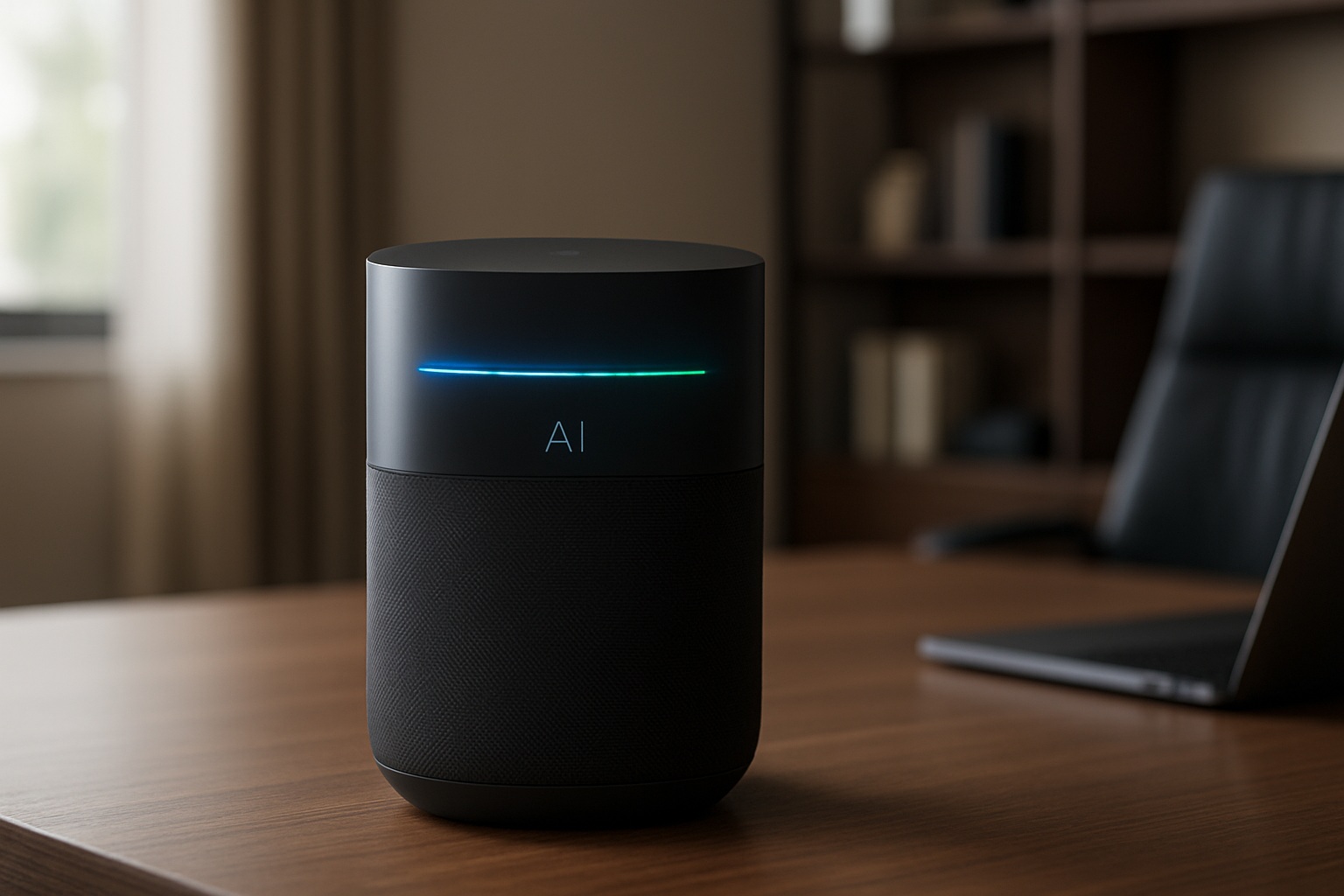
OpenAI is preparing to revolutionize the smart speaker market with the announcement of its first hardware device, designed in collaboration with Apple's legendary former design chief Johnny Ive, marking a pivotal expansion beyond software into consumer electronics.
The artificial intelligence company, known for its groundbreaking ChatGPT platform that serves over 800 million weekly users, confirmed plans to develop a smart speaker that will serve as the cornerstone of a broader hardware ecosystem. According to Austrian technology publication Der Standard, this device represents "the starting shot of a whole series of similar hardware" from OpenAI.
Johnny Ive's Design Legacy Meets AI Innovation
The collaboration with Johnny Ive, the design mastermind behind iconic Apple products including the iPhone, iPad, and iMac, signals OpenAI's serious commitment to premium hardware aesthetics and functionality. Ive, who left Apple in 2019 to establish his own design firm LoveFrom, brings decades of experience in creating consumer electronics that seamlessly blend form and function.
Industry analysts view this partnership as strategically significant, given Ive's track record of transforming complex technology into intuitive, elegant consumer products. His involvement suggests OpenAI is positioning itself to compete directly with established players like Amazon's Echo, Google's Nest, and Apple's HomePod rather than entering as a budget alternative.
Strategic Hardware Expansion Amid Industry Transformation
OpenAI's move into hardware comes during a critical inflection point for the technology industry. The company has demonstrated exceptional growth, with ChatGPT experiencing 10% monthly user growth and its coding product Codex achieving 50% weekly expansion, described by CEO Sam Altman as "insane" growth rates.
The timing coincides with broader industry shifts toward integrated AI experiences. Recent memory from our analysis reveals that Meta has announced plans for an AI-powered smartwatch, while Apple is developing various AI-enhanced devices including smart glasses and camera-equipped AirPods, indicating a sector-wide push toward AI-first hardware.
However, the hardware initiative faces significant infrastructure challenges. The global semiconductor crisis, with memory chip prices surging sixfold and affecting major manufacturers like Samsung, SK Hynix, and Micron, could impact production timelines and costs. These supply constraints are expected to persist until 2027 when new fabrication facilities come online.
Competitive Landscape and Market Positioning
OpenAI's entry into the smart speaker market directly challenges established ecosystems from Amazon, Google, and Apple. Each of these companies has invested billions in voice assistant technology and smart home integration, creating high barriers to entry for newcomers.
Amazon's Alexa ecosystem dominates the market through early adoption and extensive third-party integrations, while Google leverages its search capabilities and AI expertise through Google Assistant. Apple's HomePod focuses on premium audio quality and seamless iOS integration, though it holds a smaller market share.
OpenAI's competitive advantage lies in its advanced conversational AI capabilities. ChatGPT has demonstrated superior natural language understanding compared to existing voice assistants, potentially offering more sophisticated and helpful interactions for users seeking complex assistance beyond simple commands.
Technology Integration and Innovation Potential
The smart speaker represents OpenAI's first step toward creating a comprehensive AI hardware ecosystem. Unlike existing voice assistants that rely heavily on cloud processing for basic queries, OpenAI's device could leverage the company's advanced language models for more nuanced, context-aware conversations.
This approach aligns with broader industry trends toward edge computing and on-device AI processing, reducing latency and improving privacy. The integration of Johnny Ive's design philosophy with OpenAI's AI capabilities could create products that feel more natural and intuitive than current voice assistants.
Industry observers note that successful hardware requires not just innovative technology but also robust manufacturing, distribution, and customer support infrastructure—areas where software-focused companies often struggle during their hardware transitions.
Market Implications and Industry Impact
OpenAI's hardware ambitions come amid what analysts term a "SaaSpocalypse"—market disruption that has eliminated hundreds of billions in software company valuations as AI threatens traditional business models. This transition from software-as-a-service to AI-powered alternatives creates both opportunities and challenges for companies expanding their offerings.
The move also reflects broader competitive dynamics in the AI industry. Chinese AI breakthrough DeepSeek has challenged US technological dominance, while European initiatives like Deutsche Telekom's Industrial AI Cloud in Munich represent regional efforts toward AI sovereignty. OpenAI's hardware expansion can be seen as consolidating its competitive position across multiple technology domains.
Regulatory considerations add complexity to the hardware launch. European authorities are intensifying AI oversight, with Spain implementing criminal executive liability frameworks and France conducting cybercrime raids on AI companies. The UN has established an Independent Scientific Panel with 40 experts for global AI assessment, indicating growing international coordination on AI governance.
Strategic Challenges and Success Factors
Several critical factors will determine OpenAI's hardware success. Manufacturing expertise, supply chain management, and consumer electronics distribution represent significant operational challenges for a company primarily focused on software development.
The global memory crisis compounds these challenges, potentially affecting both production costs and device performance. Consumer electronics prices have increased 20-30% due to semiconductor shortages, which could impact market positioning and pricing strategies.
Additionally, OpenAI must navigate complex relationships with existing hardware partners and platforms. The company's ChatGPT integration into military systems through Pentagon collaboration demonstrates the strategic importance of maintaining multiple partnership channels while expanding into potentially competitive hardware markets.
Future Implications for AI Hardware Market
OpenAI's entry signals a broader transformation in the technology industry, where AI capabilities increasingly drive hardware design rather than serving as supplementary features. This shift represents a fundamental change from traditional consumer electronics toward AI-first devices designed around conversational interfaces and intelligent assistance.
Success in the smart speaker market could provide OpenAI with valuable consumer data, hardware development experience, and manufacturing partnerships essential for broader hardware ambitions. The Johnny Ive collaboration suggests long-term commitment to design excellence and premium market positioning.
The initiative also reflects growing recognition that AI software advantages require corresponding hardware innovations to fully realize their potential. Edge computing, privacy protection, and seamless user experiences increasingly depend on tight integration between AI software and hardware design.
As OpenAI prepares for this significant expansion, the technology industry watches closely to see whether software-focused AI companies can successfully transition to comprehensive technology platforms encompassing both software and hardware innovation. The smart speaker launch may prove to be either the beginning of a major industry realignment or a cautionary tale about the complexities of hardware market entry.