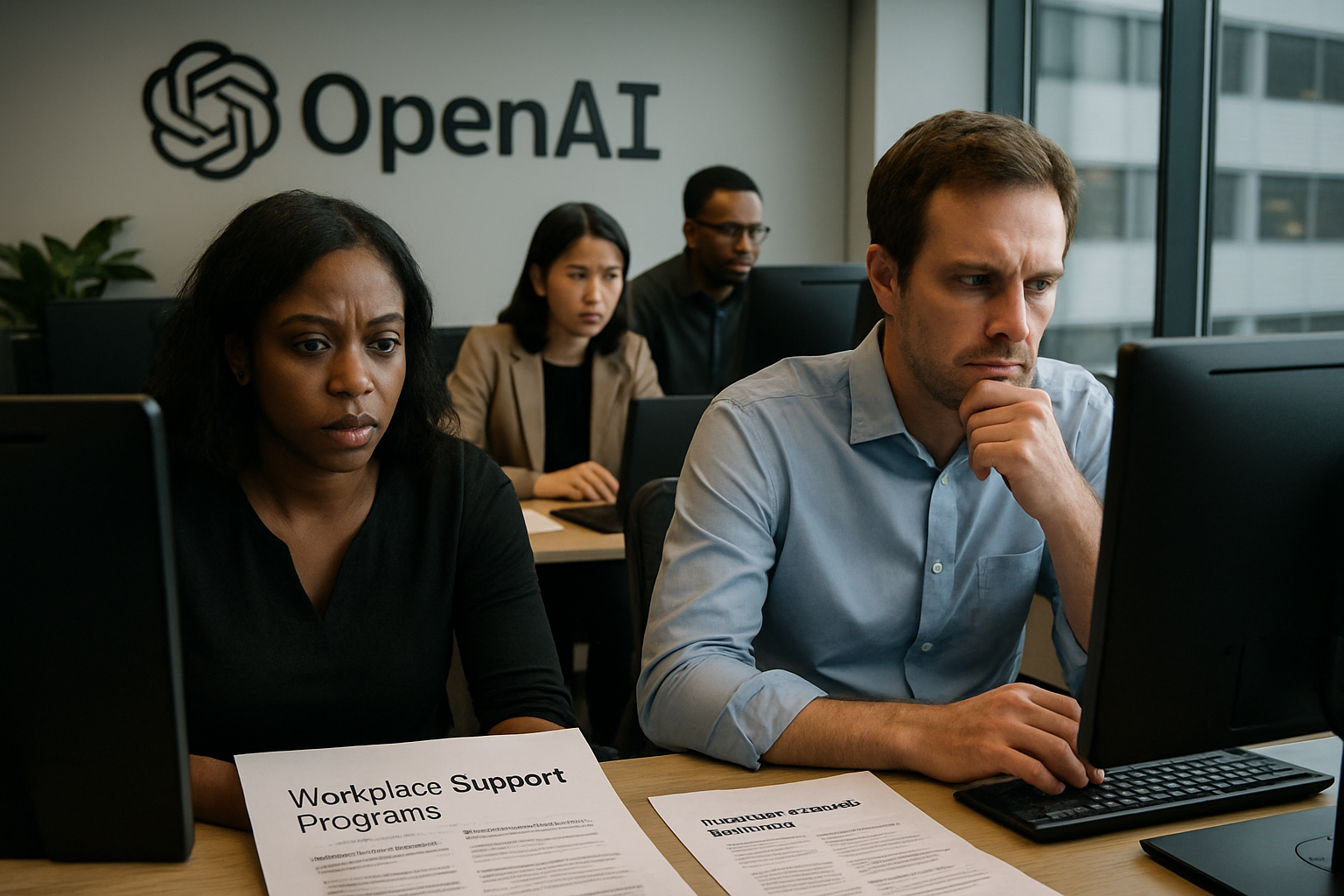
OpenAI CEO Sam Altman announced a comprehensive workplace support program offering up to $15,000 in assistance to migrant employees, including legal fees, accommodation, and relocation costs, as the company faces mounting pressure over AI safety protocols following revelations about the Tumbler Ridge school shooting investigation.
The announcement comes as Canadian authorities revealed that OpenAI's automated abuse detection systems had flagged concerning content from Jesse Van Rootselaar's ChatGPT account eight months before the February 10, 2026, massacre that killed eight people, yet the company determined the threshold had not been met to alert the Royal Canadian Mounted Police (RCMP).
Employee Support Initiative Details
According to sources from Clarín, OpenAI's new support program represents a significant expansion of employee benefits amid global regulatory pressures. The initiative specifically targets migrant workers within the company's workforce, addressing legal documentation, housing assistance, and emergency relocation needs.
The program launches as OpenAI serves over 800 million weekly ChatGPT users with 10% monthly growth, according to recent company reports. This expansion coincides with the company's transition from experimental AI applications to essential infrastructure across multiple sectors.
"These platforms are undermining the mental health, dignity, and rights of our children. The state cannot allow this. The impunity of these giants must end."
— Prime Minister Pedro Sánchez, announcing criminal investigations into AI platforms
Tumbler Ridge Investigation Fallout
The workplace support announcement comes amid revelations that OpenAI's AI safety protocols may have significant gaps. Canadian Minister of Artificial Intelligence and Digital Innovation Evan Solomon confirmed that OpenAI representatives have been summoned to Ottawa following the Tumbler Ridge mass shooting investigation.
The massacre, which occurred in the small British Columbia community of 2,400 residents, highlighted critical questions about AI companies' responsibilities when their systems detect potential violence threats. Van Rootselaar had documented mental health issues, including multiple apprehensions under the Mental Health Act, yet continued to have access to firearms that were previously seized and returned to the household.
OpenAI's automated systems identified concerning content related to "furtherance of violent activities" but company officials determined the threshold for law enforcement notification had not been met. This decision-making process has come under intense scrutiny as investigators examine systemic failures that may have contributed to the tragedy.
Global Regulatory Response Intensifies
The controversy unfolds against a backdrop of unprecedented global AI regulation. Spain has implemented the world's first criminal executive liability framework for social media platforms, while France has conducted cybercrime raids on AI companies. The United Nations has established an Independent International Scientific Panel with 40 experts to provide the first fully independent global AI impact assessment.
European authorities are coordinating comprehensive platform accountability measures, with multiple jurisdictions implementing age restrictions and safety protocols. The regulatory momentum has created what industry observers describe as the most significant technology governance transformation since the internet's commercialization.
Industry Safety Concerns Mount
The Tumbler Ridge case exposes broader concerns about AI threat detection protocols. Former Anthropic security researchers have resigned with warnings that "the world is in peril" due to AI development outpacing safety measures. These departures highlight growing tensions within leading AI companies between commercial pressures and safety considerations.
OpenAI faces additional challenges as the Pentagon pressures AI companies to deploy systems on classified networks without standard safety restrictions. The company's military AI integration occurs alongside reports of unauthorized AI use in sensitive operations, creating complex ethical dilemmas about the appropriate use of civilian AI technologies.
Educational Success Models Emerge
Despite safety concerns, successful AI integration models continue to emerge globally. Canadian universities have implemented AI teaching assistants while maintaining critical thinking standards. Malaysia launched the world's first AI-integrated Islamic school, combining artificial intelligence with traditional learning approaches. These examples demonstrate that responsible AI deployment remains possible with proper safeguards and human-centered approaches.
Infrastructure and Market Challenges
OpenAI's employee support initiative launches during a global semiconductor crisis, with memory chip prices experiencing a sixfold surge affecting Samsung, SK Hynix, and Micron operations. This "memory crisis" creates significant infrastructure bottlenecks expected to persist until 2027 when new fabrication facilities come online.
The broader AI industry faces market volatility dubbed the "SaaSpocalypse," which has eliminated hundreds of billions in market capitalization as AI systems replace traditional software solutions. Despite these challenges, major companies continue massive investments, with Alphabet committing $185 billion and Amazon over $1 trillion to AI development.
International Cooperation Frameworks
The Delhi Declaration, signed by 88 countries following the AI Impact Summit 2026 in New Delhi, represents the largest diplomatic agreement on artificial intelligence in history. The voluntary framework calls for "safe, reliable, and robust" AI development through international cooperation rather than binding commitments.
However, the United States has rejected centralized global governance frameworks, with White House adviser Michael Kratsios declaring that "AI adoption cannot lead to a brighter future if it is subject to bureaucracies and centralised control." This position complicates unified international responses to AI safety challenges.
Looking Forward: Critical Decisions Ahead
February 2026 represents what experts describe as the most critical AI inflection point since the technology boom began. The convergence of workplace safety initiatives, regulatory intensification, infrastructure challenges, and international cooperation efforts illustrates the complex landscape facing the industry.
Success in navigating these challenges requires unprecedented coordination between governments, technology companies, educational institutions, and civil society. The balance between innovation acceleration and safety governance, commercial interests and human welfare, will determine whether AI fulfills its transformative promise or creates systemic societal disruption.
OpenAI's employee support program represents one response to these pressures, demonstrating corporate recognition that AI development occurs within broader social and regulatory contexts. However, the company's handling of the Tumbler Ridge situation continues to raise fundamental questions about AI companies' moral and legal obligations in an era when their systems have unprecedented access to private human thoughts and communications.
As the investigation continues, the case serves as a catalyst for examining AI safety protocols, violence prevention systems, and the democratic oversight of technology companies at a time when artificial intelligence transitions from experimental to essential infrastructure worldwide.