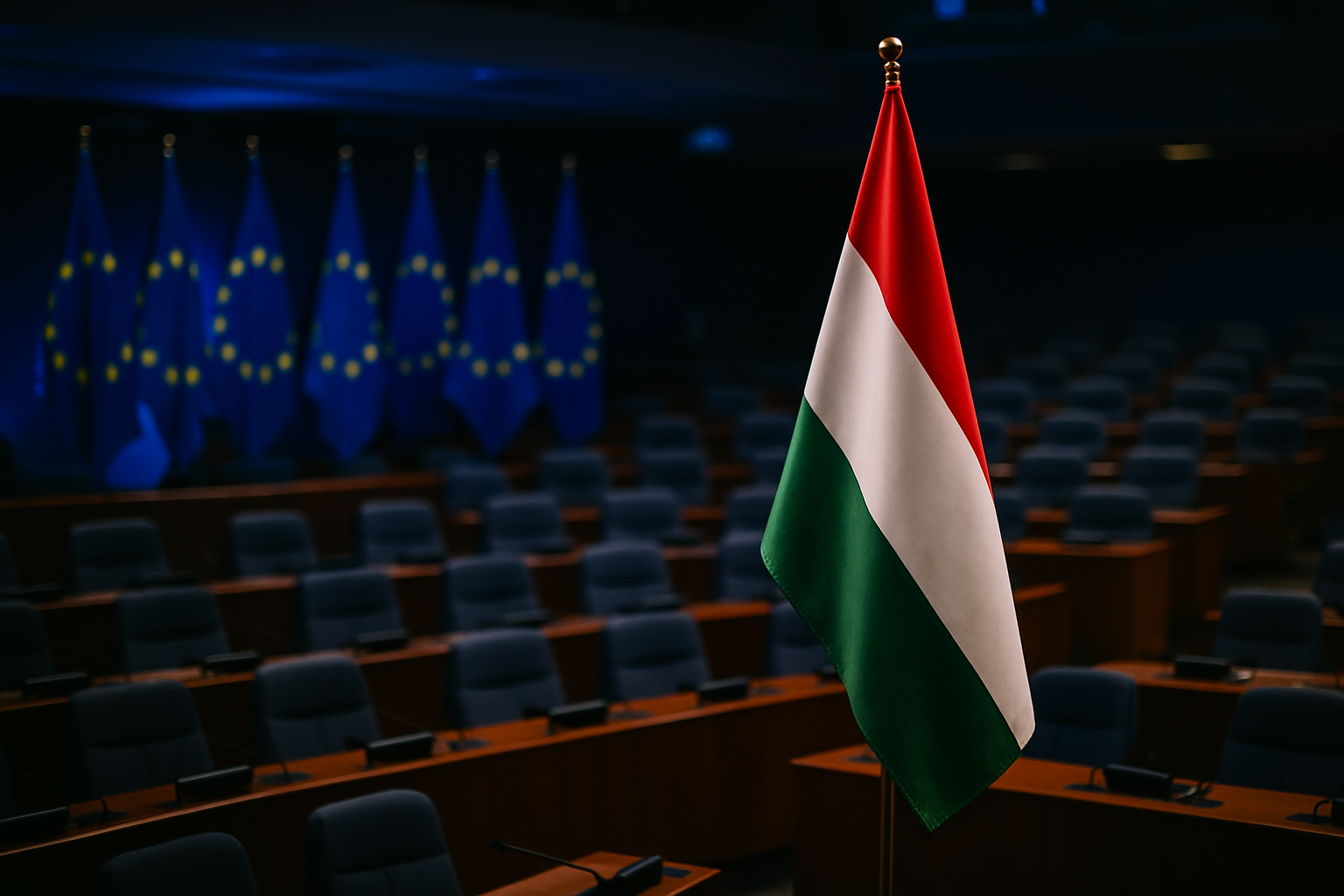
European Union leaders failed to persuade Hungary's Viktor Orbán to lift his blockade of a massive €90 billion loan package for Ukraine during intense summit negotiations in Brussels on Thursday, leaving the critically needed funding in limbo as the war-torn nation faces mounting military and economic pressures.
The Hungarian Prime Minister remained inflexible despite a 90-minute session where EU heads of state and government made "heavy accusations" against him, according to German media reports. European Council President António Costa had taken Orbán "to task" in what sources described as an unprecedented confrontation, but the Hungarian leader held firm to his position.
"Hungary's position is very simple: we will help Ukraine when we have our oil," Orbán declared, linking his veto directly to the ongoing Druzhba pipeline dispute that has strained relations between Budapest and Kyiv since late January.
The Druzhba Pipeline Crisis
The €90 billion aid package—the largest EU financial assistance ever proposed for a single nation—has been held hostage by a complex energy dispute that began when the Druzhba oil pipeline stopped operating on January 27, 2026. Hungary claims Ukraine deliberately halted Russian oil transit as "political blackmail," while Ukrainian officials maintain that Russian drone attacks damaged critical infrastructure, necessitating repairs.
Slovakia has joined Hungary in opposing the aid package, declaring an oil emergency in February and releasing 250,000 tons from its strategic reserves to keep the Slovnaft Bratislava refinery operational. Both countries remain the only EU members still dependent on Russian oil under special sanctions exemptions granted during the initial sanctions regime implementation.
"The EU cannot become Budapest's hostage."
— Kestutis Budrys, Lithuanian Foreign Minister
The pipeline crisis has exposed fundamental vulnerabilities in European energy architecture and highlighted the persistent divisions within the EU over how to balance national energy interests against collective security commitments.
Unprecedented European Divisions
The breakdown in Brussels represents the deepest institutional crisis within the EU since Russia's invasion of Ukraine began. Despite broad European Parliament approval of the loan package by a vote of 458-140-44, the requirement for unanimous Council approval gives Hungary effective veto power over the entire initiative.
Germany's foreign policy leadership has openly criticized Hungary's use of institutional mechanisms to block collective action, while several member states have begun exploring enhanced cooperation procedures that would allow willing nations to proceed without Hungarian participation—a significant departure from traditional EU consensus-based decision-making.
European Council President Costa issued an unprecedented direct letter to Budapest demanding that Hungary honor its previous commitments to European solidarity, marking a dramatic escalation in institutional pressure that has failed to move Orbán from his position.
Military Context and Timing
The aid package deadlock comes at a critical moment for Ukraine's military situation. Russian forces have accelerated territorial gains, capturing 481 square kilometers in January 2026 compared to 260 square kilometers in December 2025—an 85% increase that represents the fastest pace of Russian advances in months.
Ukraine's President Volodymyr Zelensky has disclosed that 55,000 Ukrainian soldiers have been officially confirmed killed since the invasion began, with a "large number" still classified as missing in action. International research estimates suggest actual military casualties could be two to three times higher when including undocumented losses.
The military pressure coincides with Russia's continued "energy terrorism" strategy, which has left over 1,170 buildings in Kyiv without adequate heating during harsh winter conditions. Ukrainian nuclear plants have been forced to halt electricity production for the first time since the conflict began, creating unprecedented risks for civilian infrastructure.
Electoral Politics and International Support
Orbán's defiance comes as he faces the most challenging electoral battle since returning to power in 2010. His Fidesz party is trailing opposition coalitions in polling for the first time in over a decade ahead of April 12, 2026 parliamentary elections. The crisis with Brussels provides domestic political benefits by demonstrating independence from EU pressure while maintaining support from the Trump administration.
Secretary of State Marco Rubio recently visited Budapest, declaring that Trump is "profoundly attached to your success" and characterizing Orbán's potential victory as "our victory"—representing unprecedented American intervention in EU member state elections.
"He is blackmailing Ukraine and the entire European Council."
— Ulf Kristersson, Swedish Prime Minister
The Trump administration's support provides Orbán with alternative international legitimacy amid the friction with Brussels, allowing him to maintain his position despite mounting European pressure.
Nuclear Governance Crisis
The aid package crisis unfolds against the backdrop of an unprecedented nuclear governance crisis. The New START treaty between the United States and Russia expired on February 5, 2026, marking the first time in over 50 years that the two superpowers lack bilateral nuclear constraints. Together, they control approximately 80% of the world's nuclear weapons.
UN Secretary-General António Guterres has described the situation as a "grave turning point" with nuclear risks at their "highest level in decades." The restored military communications between Washington and Moscow represent the only remaining formal diplomatic channel between the superpowers, adding urgency to resolving the broader European crisis.
Diplomatic Breakthrough Paradox
The aid package deadlock creates a paradox with recent diplomatic breakthroughs that had raised hopes for peace negotiations. The historic exchange of 314 prisoners in February—the first such swap in five months—and the restoration of US-Russia military communications after a four-year suspension represented the most significant diplomatic progress since the invasion began.
Geneva peace talks in February achieved "significant progress" on ceasefire monitoring mechanisms, building momentum toward a potential June 2026 summit in Washington with possible presidential-level engagement. However, the indefinite postponement of trilateral Ukraine-Russia-US negotiations due to the Iran crisis has stalled this diplomatic track.
European divisions over the aid package risk undermining Ukraine's negotiating position and signaling weakened Western resolve to Moscow at a critical diplomatic juncture.
Enhanced Cooperation Alternative
Faced with Hungarian obstruction, EU leaders are accelerating discussions about enhanced cooperation mechanisms that would allow willing member states to proceed with aid delivery without requiring unanimity. This approach would represent a fundamental shift in EU decision-making procedures and could set a precedent for bypassing individual member state vetoes in security matters.
The enhanced cooperation option would need to preserve the legal framework for EU action while ensuring that Ukrainian support can be delivered effectively. However, such a move would also acknowledge the limits of consensus-based decision-making in crisis situations and could have long-term implications for European integration.
Stakes for European Security
The resolution of this crisis will determine the trajectory of European integration for decades to come. Success in maintaining unity while delivering promised aid would strengthen the EU's credibility as a global security actor and demonstrate that European institutions can adapt to extraordinary circumstances while preserving democratic legitimacy.
Failure to resolve the deadlock could signal broader fragmentation within Europe when facing external pressure, undermining the democratic solidarity that has served as the foundation of the European project. With 89% of Europeans demanding greater unity according to recent polling, institutional mechanisms must prove capable of translating popular will into effective action.
The stakes extend beyond immediate policy outcomes to fundamental questions about European governance: whether democratic institutions can adapt to 21st-century security challenges while maintaining member state sovereignty principles, and whether collective action capabilities remain credible in the face of authoritarian pressure.
As European leaders prepare for continued negotiations, the outcome will influence not only Ukraine's ability to defend itself but also the broader question of whether democratic governance can effectively respond to hybrid warfare tactics that exploit institutional vulnerabilities. The crisis represents a critical test of European resilience and institutional innovation under the most challenging circumstances since World War II.