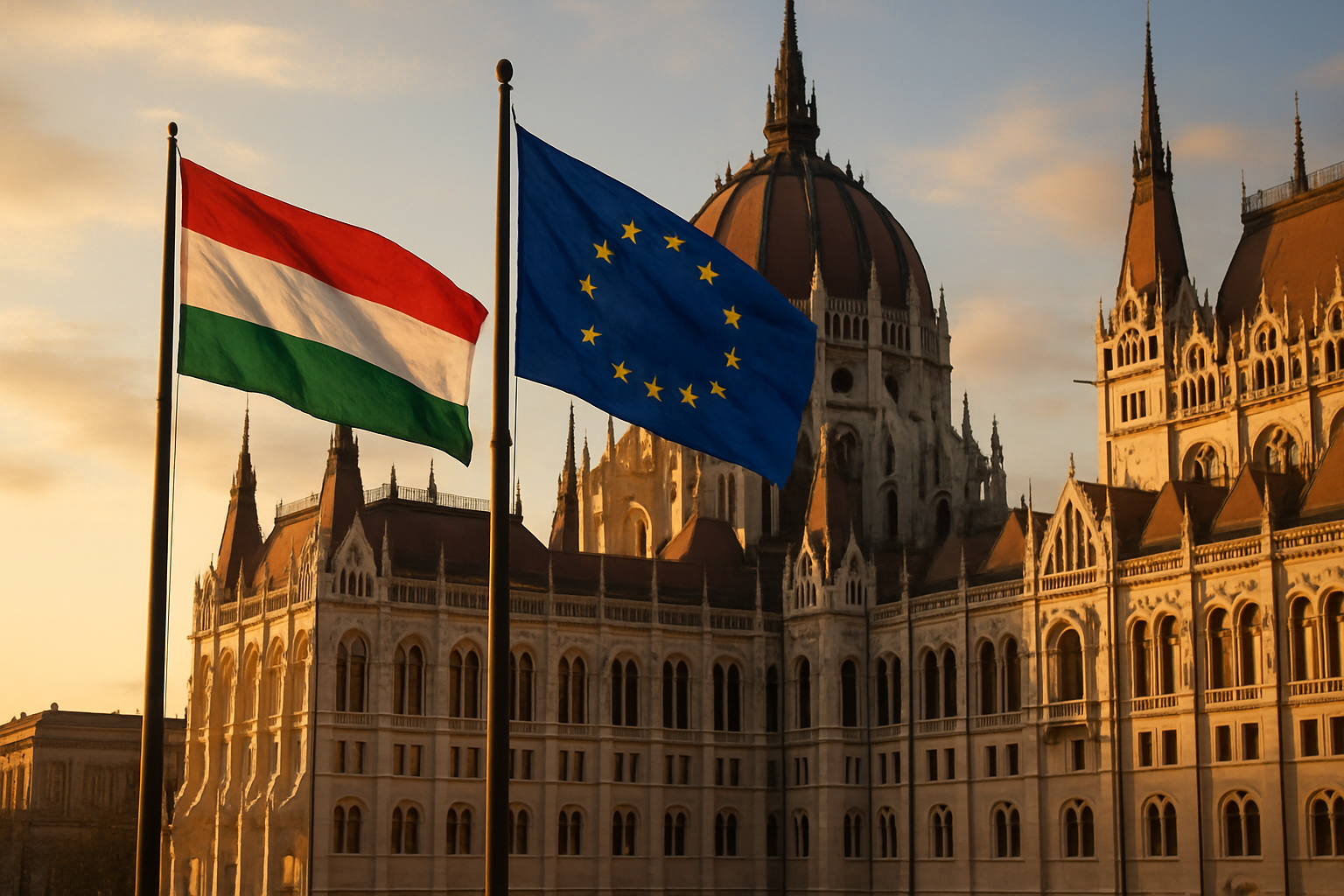
Viktor Orbán's 16-year authoritarian rule in Hungary came to a dramatic end on April 12, 2026, as opposition leader Péter Magyar's Tisza Party achieved a stunning landslide victory with a constitutional supermajority, winning 138 of 199 parliamentary seats in what represents the most significant democratic transformation in Central Europe since the fall of communism.
Record voter turnout of 80% - the highest since Hungary's 1989 transition to democracy - delivered a resounding rejection of Orbán's nationalist policies and authoritarian governance. Fidesz collapsed to just 55 seats, marking the party's worst performance since Orbán returned to power in 2010.
Democratic Watershed and Generational Shift
Magyar declared "We have liberated Hungary" as tens of thousands of Hungarians celebrated in Budapest's streets, waving both Hungarian and European Union flags in scenes reminiscent of the country's democratic awakening decades earlier. The Chain Bridge was illuminated and fireworks lit up the Danube River as citizens marked what many called their "second independence."
Perhaps most remarkably, "Generation Orbán" - voters aged 18-30 who came of age during his rule - decisively rejected the nationalist messaging they grew up with. Over 70% of young voters supported Magyar's pro-European vision, demonstrating that authoritarian indoctrination had failed to take hold among Hungary's youth.
"In 1848 and 1956, our revolutions continued in blood. The Russians came, but they could never defeat us. Orbán cannot do this either."
— Péter Magyar, Prime Minister-elect
Constitutional Supermajority Enables Democratic Reforms
The Tisza Party's two-thirds parliamentary majority provides Magyar with the constitutional power to comprehensively reverse Orbán's authoritarian legacy. Immediate priorities include restoring judicial independence, dismantling media oligarchies controlled by Fidesz allies, implementing wealth taxes on the political elite, and initiating Hungary's euro adoption process.
Magyar announced that his first official visit as Prime Minister would be to Poland, symbolically reconnecting Hungary with Central Europe and the broader European project that Orbán had systematically undermined through years of confrontation with Brussels.
EU Crisis Resolution and Economic Recovery
Hungary's €90 billion Ukraine aid blockade - which had created the deepest institutional crisis in European Union history - was lifted immediately following the election results. The European Commission's frozen €19 billion in Hungarian funding over rule-of-law concerns is expected to be restored within days, providing crucial resources for the country's democratic reconstruction.
Financial markets responded positively to the democratic transition, with the Hungarian forint appreciating 1.9% to a four-year high against the euro. Investors expressed optimism about Hungary's return to European integration and the end of prolonged rule-of-law disputes that had deterred foreign investment.
European Commission President Ursula von der Leyen welcomed the results, declaring that "Hungary has chosen Europe, and the country has found its European path again." French President Emmanuel Macron hailed it as a "victory for democratic participation," while Ukrainian President Volodymyr Zelensky welcomed Hungary's "constructive approach" toward European unity.
Foreign Interference Backfires
The election was marked by unprecedented dual foreign interference that ultimately backfired spectacularly. Investigative journalist Szabolcs Panyi revealed through VSquare reporting the first concrete evidence of Russian operative teams actively supporting Fidesz - representing the first documented case of Kremlin agents directly participating in European electoral campaigns.
Simultaneously, the Trump administration provided explicit political backing through US Vice President JD Vance's Budapest visit just five days before the election, where he condemned EU "shameless interference" while declaring Orbán a "model for Europe." This marked the most direct American intervention in an EU member state election in modern history.
However, Hungarian voters decisively rejected these external manipulations, with exit polls showing that foreign interference actually mobilized opposition voters who saw it as an attack on Hungarian sovereignty and democratic self-determination.
Digital Resistance Overcomes Media Control
A crucial factor in the opposition's success was breaking through Orbán's extensive media control through digital platforms and international coverage. Independent outlets like Márton Gulyás's "Partizán" platform built alternative information channels that reached millions of Hungarians, particularly younger demographics who consume news primarily online.
Magyar's "Greatest National March" in March 2026 drew an estimated 500,000 participants - the largest opposition demonstration since 2010. The massive turnout, organized largely through social media, demonstrated that civil society had found ways to mobilize despite systematic restrictions on traditional media outlets.
Geopolitical Implications
Orbán's defeat represents a strategic blow to Vladimir Putin, who loses his most reliable ally within the European Union. Hungary had served as Moscow's primary vehicle for blocking EU sanctions and aid packages, while Orbán's authoritarian governance model provided legitimacy for other illiberal movements across Europe.
Right-wing populist parties across the continent now lose their most successful template for mainstream political acceptance. From the Alternative for Germany to France's National Rally, European far-right movements must reassess their strategies without the Hungarian model of electoral success combined with systematic democratic erosion.
The peaceful democratic transition also strengthens the European democratic model globally, providing hope for similar opposition movements facing authoritarian pressure worldwide. It demonstrates that well-established authoritarian systems can be defeated through united opposition, credible leadership, and clear democratic alternatives.
Peaceful Power Transfer
In a mark of Hungary's institutional resilience, Orbán conceded defeat on election night, acknowledging that "the Hungarian people have spoken" and promising a peaceful transition of power. This conclusion to an era characterized by systematic attacks on press freedom, judicial independence erosion, and civil society restrictions provides a foundation for democratic rebuilding.
The outgoing Prime Minister's acceptance of electoral results, despite years of authoritarian governance, demonstrates that democratic norms retained sufficient strength to ensure constitutional continuity even during political transformation.
Challenges Ahead
While Magyar's victory provides the tools for democratic restoration, implementing comprehensive reforms after 16 years of systematic institutional erosion will require sustained effort and careful navigation. The new government must rebuild democratic institutions while avoiding the polarization that could undermine long-term stability.
International observers will closely monitor whether the constitutional supermajority is used to strengthen democratic principles or merely transfer power from one dominant party to another. Success or failure will influence similar democratic movements globally and affect European integration for decades to come.
Historic Significance
April 12, 2026, will be remembered as a template for 21st-century democratic resilience. The record participation demonstrates that electoral competition remains effective against authoritarianism when combined with united opposition, credible leadership, and clear alternatives to the status quo.
Hungary's democratic renewal begins a new chapter not just for the country, but for European integration and the global struggle between democratic and authoritarian governance models. The peaceful revolution led by Hungarian voters provides proof that authoritarian drift can be reversed through institutional channels rather than extra-legal resistance.
As celebrations continued into the night across Budapest, Magyar's victory speech captured the historic moment: "Today, Hungary has not just changed its government - it has reclaimed its European identity and democratic future."