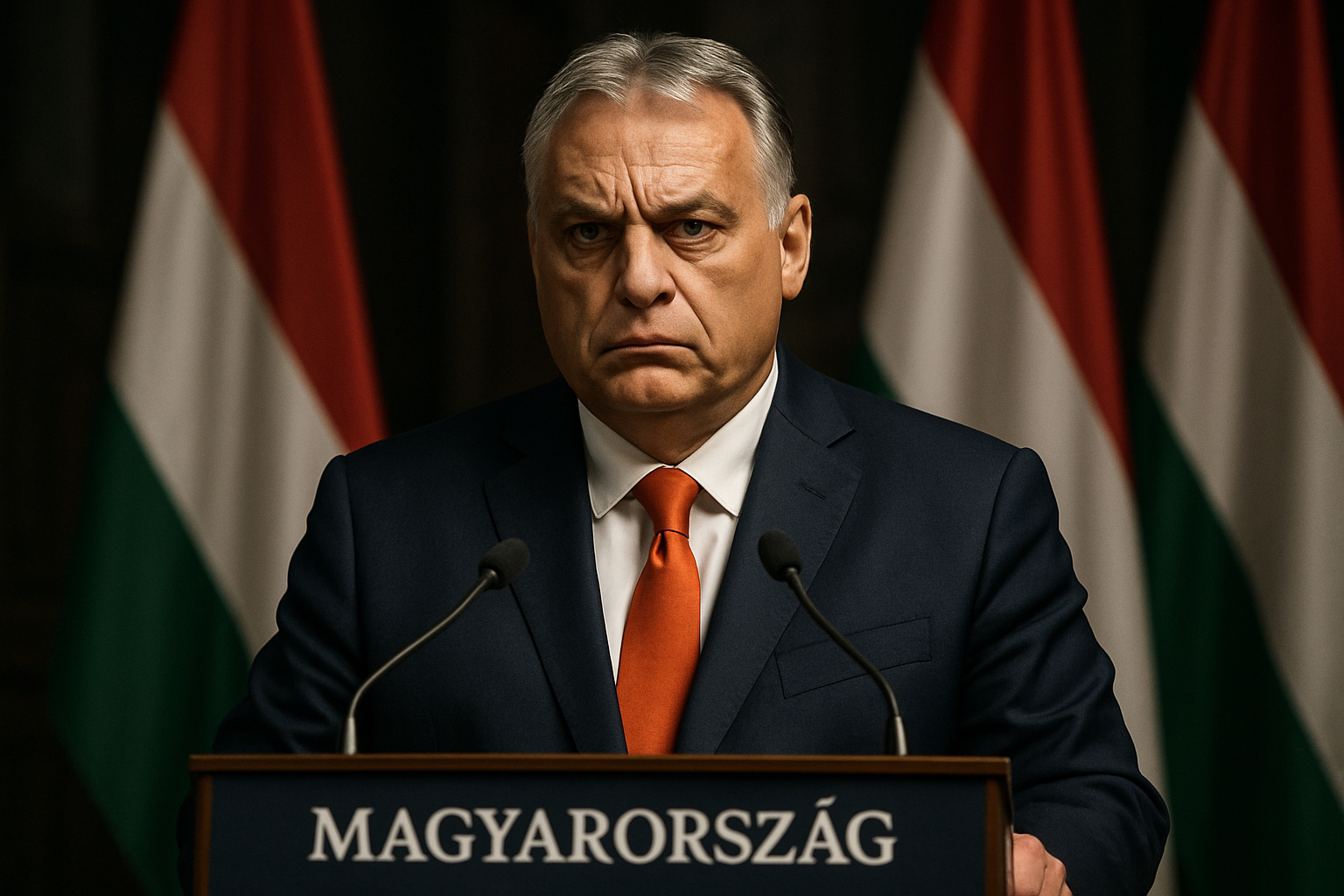
Hungarian Prime Minister Viktor Orban faces the most significant electoral challenge of his 14-year tenure as opposition forces gain unprecedented momentum and independent media outlets successfully circumvent government control ahead of what analysts are calling the most consequential election since 1989.
For the first time since returning to power in 2010, Orban's Fidesz party trails opposition coalitions in multiple polling organizations, creating genuine electoral uncertainty that has sent shockwaves through Hungary's political establishment and European capitals alike.
Media Independence Emerges Despite Government Pressure
Despite extensive government control over traditional media outlets, Hungarian online news platforms are increasingly escaping Orban's influence, providing alternative information channels that challenge the ruling party's narrative dominance. This digital resistance represents a crucial shift in Hungary's information landscape, where independent journalism has thrived despite systematic pressure on press freedom.
The emergence of independent online media has coincided with growing public appetite for alternative viewpoints, particularly among younger demographics who consume news primarily through digital platforms. This generational shift has undermined one of Fidesz's key advantages—its near-monopoly over information distribution in rural and traditional media markets.
Opposition Consolidation Under Péter Magyar
The opposition surge centers around Péter Magyar's Tisza Party, which has successfully consolidated disparate anti-government forces under a pro-European platform. Magyar, a former government insider, has positioned his movement as a credible alternative to Orban's nationalist approach, promising wealth taxes, euro adoption, and stronger EU and NATO ties.
In a remarkable display of opposition strength, Magyar organized the "Greatest National March" in Budapest, drawing an estimated 500,000 participants in the largest anti-government demonstration since 2010. The massive turnout, timed to coincide with Hungary's national holiday celebrating the 1848 revolution, sent a clear signal of growing dissatisfaction with Fidesz rule.
"In 1848 and 1956, our revolutions continued in blood. The Russians came, but they could never defeat us. Orbán cannot do this either, who in his final desperation has called upon the KGB tsar."
— Péter Magyar, Tisza Party Leader
International Interference and Domestic Pressure
The electoral campaign has been marked by unprecedented foreign interference, with investigative journalist Szabolcs Panyi revealing concrete evidence of Russian operative teams operating in Budapest to support Fidesz. This represents the first documented case of Kremlin agents actively participating in European electoral campaigns.
Simultaneously, the Trump administration has provided explicit political backing through high-profile diplomatic visits. US Secretary of State Marco Rubio declared Trump "profoundly attached to your success," while Vice President JD Vance conducted a controversial two-day Budapest visit just days before the election, condemning EU "bureaucrats in Brussels" for "shameless election interference."
This dual foreign intervention—Russian operational support combined with American political endorsement—has created an unprecedented international dimension to Hungarian domestic politics, raising serious questions about electoral sovereignty and democratic integrity.
Economic and European Union Tensions
Orban's confrontational stance toward the European Union has intensified during the campaign period. Hungary maintains a blockade of a historic €90 billion Ukraine aid package over disputes regarding the Druzhba oil pipeline, creating the deepest institutional crisis within the EU since its formation.
European Council President António Costa issued an unprecedented direct letter demanding Budapest honor its commitments, while Lithuanian Foreign Minister Kestutis Budrys warned that "the EU cannot become Budapest's hostage." These tensions have accelerated discussions about enhanced cooperation mechanisms that would allow other member states to bypass Hungarian vetoes—a fundamental departure from traditional EU consensus decision-making.
The European Commission has frozen approximately €19 billion in funding to Hungary over rule of law concerns, representing one of the largest financial penalties ever imposed on an EU member state. Intelligence restrictions have also been imposed following allegations that Foreign Minister Péter Szijjártó leaked EU Council details to Russian Foreign Minister Sergei Lavrov.
Democratic Institutions Under Strain
The electoral crisis has exposed significant strain on Hungary's democratic institutions. Media environment evolution has challenged traditional Fidesz advantages, while opposition parties have demonstrated improved capacity to reach voters beyond government-controlled information channels.
International observers are closely monitoring the election as a template-setting moment for 21st-century democracy under foreign interference. The outcome will influence not only Hungary's relationship with the European Union but also broader questions about democratic governance, institutional resilience, and the effectiveness of international cooperation frameworks.
Stakes for European Integration
The April 12, 2026 election carries implications far beyond Hungary's borders. An opposition victory would likely restore Hungary to mainstream EU alignment, lift the Ukraine aid blockade, and remove Brussels' most persistent internal critic. Such an outcome could strengthen European unity at a critical moment when 89% of Europeans demand greater integration according to recent Eurobarometer polling.
Conversely, Orban's survival with significant foreign backing could embolden similar interference operations across the continent and accelerate the implementation of enhanced cooperation mechanisms that would fundamentally alter European decision-making structures.
The election represents the most significant potential transition in Hungarian politics since the communist era ended, with outcomes that will reverberate through European capitals and influence democratic governance patterns across Central and Eastern Europe for decades to come.
A Critical Test for Democratic Resilience
As Hungary approaches its electoral crossroads, the contest between Orban's sovereignty-focused nationalism and Magyar's pro-European integration platform embodies broader tensions facing democratic societies worldwide. The ability of Hungarian institutions to conduct credible elections despite foreign interference, media manipulation, and intense polarization will provide crucial insights into democratic resilience under contemporary pressures.
Senior EU officials have characterized the moment as Europe "writing the template for 21st-century crisis management," with the world watching whether democratic institutions can adapt while preserving fundamental European values. Success in channeling political tensions through electoral competition rather than extra-legal means would strengthen the European model globally, while failure could accelerate fragmentation and undermine the foundational cooperation principles that have underpinned European success since 1945.