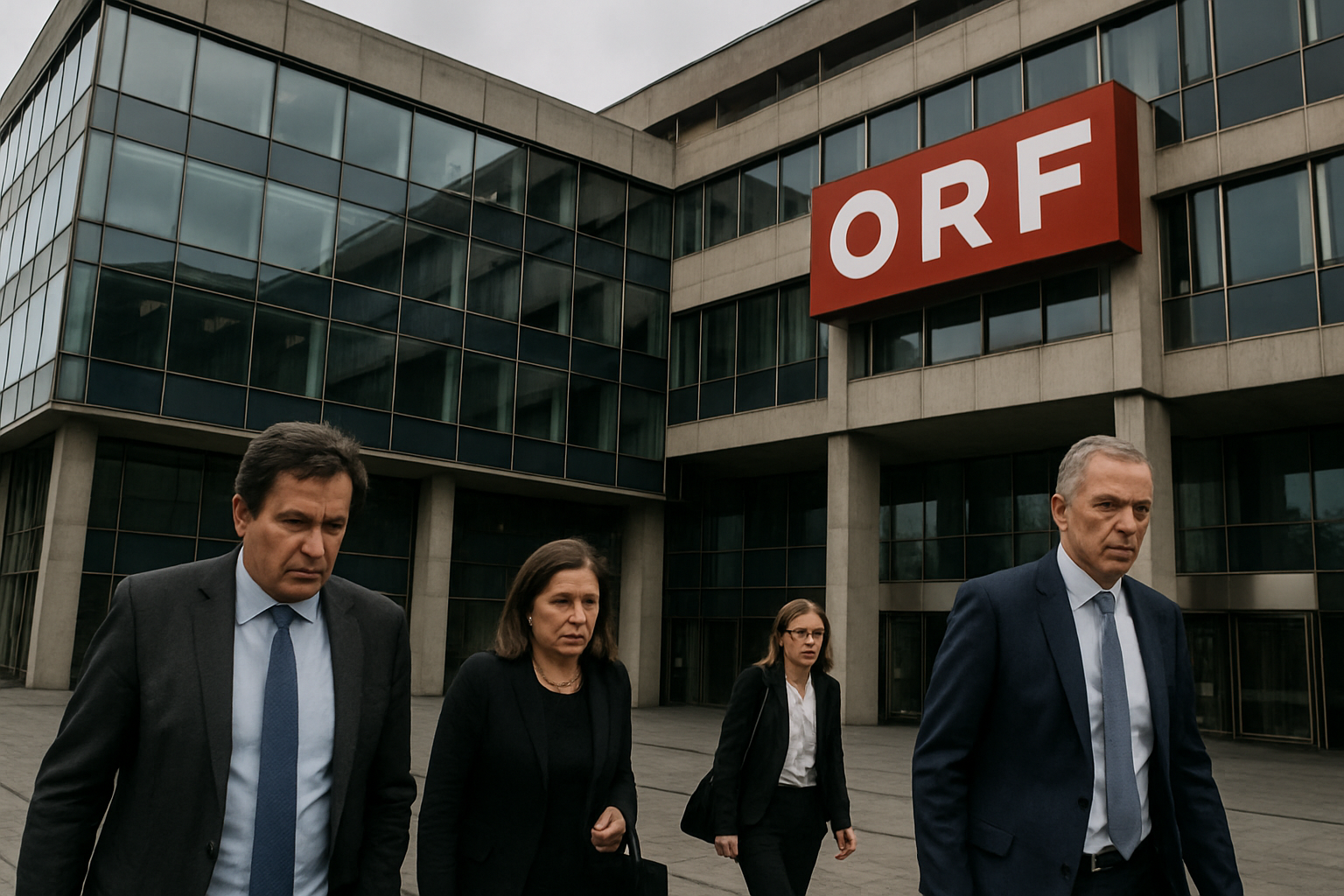
Austria's public broadcaster ORF is facing its most serious leadership crisis in decades after Director-General Roland Weissmann resigned with immediate effect on March 9, 2026, following sexual harassment allegations from a female employee.
The resignation comes amid mounting pressure from the Foundation Council, which had issued an ultimatum demanding Weissmann's departure within days after receiving detailed workplace misconduct allegations relating to incidents allegedly occurring in 2022.
Foundation Council Chairman Heinz Lederer and Deputy Chairman Gregor Schütze received the resignation notice directly from Weissmann, who categorically denied the allegations but acknowledged his position had become "untenable" given the circumstances.
Timeline of Crisis
The crisis began when a female ORF employee came forward with detailed allegations of sexual harassment and inappropriate workplace conduct against Weissmann. The allegations, which reportedly date back to 2022, prompted an immediate investigation by the Foundation Council.
Swiss media outlet NZZ reported that the accusations emerged just months before the Eurovision Song Contest, which Austria is scheduled to host, adding significant pressure to resolve the situation quickly to maintain the broadcaster's international reputation.
According to sources familiar with the matter, Weissmann initially attempted to weather the crisis but recognized that his continued presence would damage ORF's credibility and operational effectiveness.
Foundation Council Response
Foundation Council Chairman Heinz Lederer emphasized that the search for Weissmann's successor would prioritize candidates with a "public-service approach" and demonstrated commitment to improving "corporate culture" within Austria's dominant public broadcaster.
"Weissmann apparently saw no possibility for a solution,"
— Heinz Lederer, ORF Foundation Council Chairman
The Foundation Council acted swiftly to maintain institutional integrity, recognizing that prolonged uncertainty could undermine public confidence in ORF's independence and editorial standards during a critical period for Austrian media.
Impact on Austrian Broadcasting
ORF serves as Austria's primary public broadcaster, reaching millions of viewers through television, radio, and digital platforms. The organization plays a crucial role in Austrian democracy by providing independent news coverage, cultural programming, and public service content.
The leadership crisis occurs at a particularly sensitive time, with Austria preparing to host the Eurovision Song Contest and facing broader challenges in the evolving media landscape. Industry observers note that maintaining public trust is essential for ORF's continued effectiveness as a public service broadcaster.
The resignation represents part of a broader trend across European media organizations, where accountability standards have evolved rapidly and institutions face heightened scrutiny regarding workplace conduct and leadership behavior.
Search for New Leadership
The Foundation Council must now move quickly to identify and appoint an interim leader while conducting a comprehensive search for a permanent successor. The selection process will likely focus on candidates with strong editorial credentials, management experience, and a demonstrated commitment to organizational reform.
Lederer indicated that the successful candidate must possess both the technical expertise to navigate Austria's competitive media environment and the leadership skills necessary to rebuild staff morale and public confidence.
The crisis highlights evolving accountability standards within media organizations, where misconduct allegations receive swift institutional responses rather than being minimized or overlooked.
Broader European Context
This case may serve as a template for other European public broadcasters handling senior executive accountability issues. The Foundation Council's decisive action demonstrates how democratic institutions can respond to credible misconduct allegations while preserving organizational mission and public trust.
Media governance experts suggest that ORF's handling of the crisis could influence approaches at similar public service broadcasters across Europe, particularly regarding the balance between due process and institutional protection.
The swift resolution also reflects changing societal expectations about workplace behavior and the responsibility of media organizations to maintain the highest ethical standards, given their role in democratic society.
Looking Forward
The selection of Weissmann's successor will be critical for ORF's future trajectory in serving the Austrian public within an increasingly complex and competitive media environment. The new leadership must address both immediate operational needs and longer-term strategic challenges.
Success will be measured by the organization's ability to maintain editorial independence, rebuild internal cohesion, and preserve public confidence while adapting to technological and economic pressures facing all traditional broadcasters.
The crisis ultimately represents a test of institutional resilience, demonstrating whether Austria's public broadcasting system can effectively navigate leadership transitions while upholding democratic values and professional standards essential to its mission.