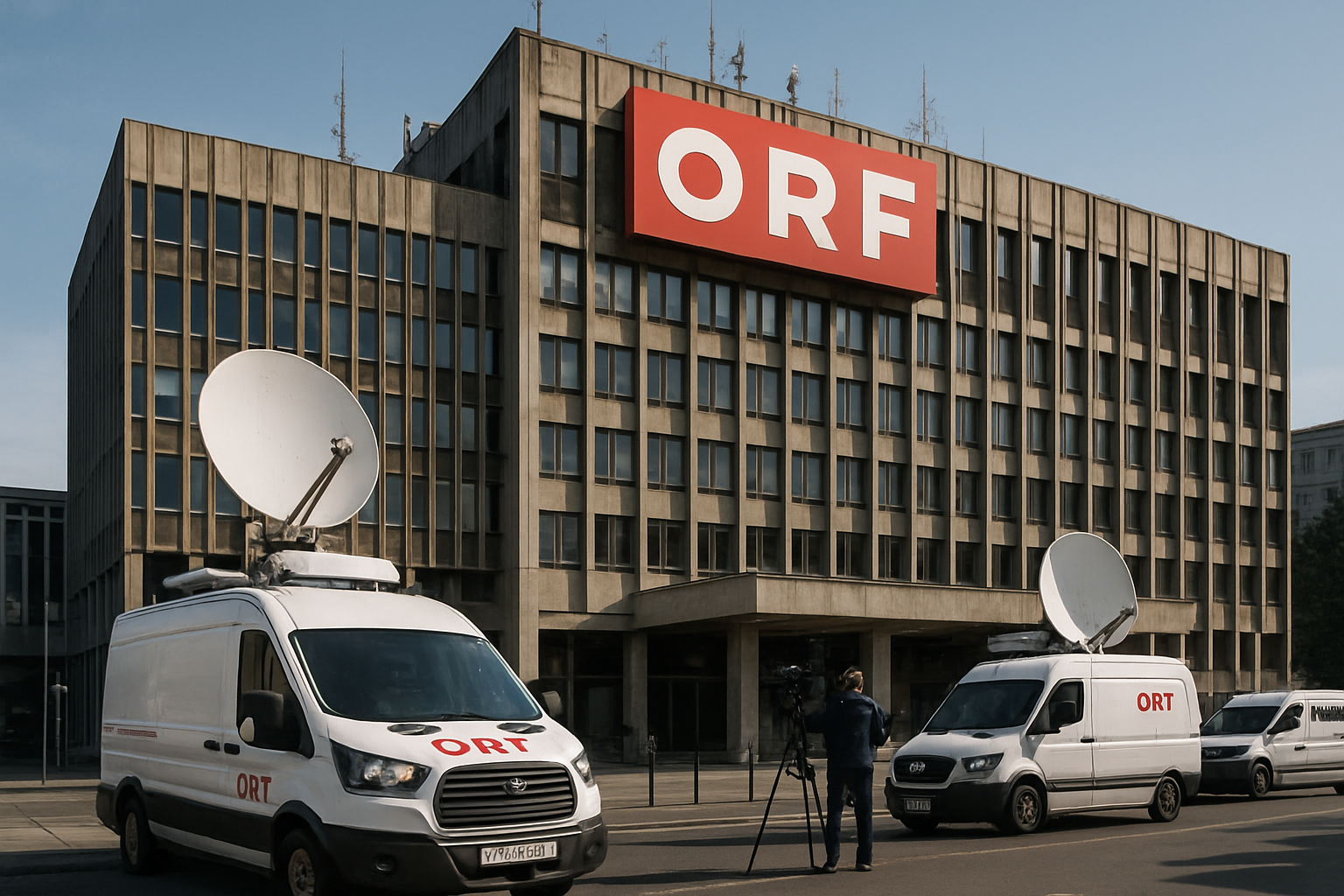
Roland Weißmann, director-general of Austria's public broadcaster ORF, resigned with immediate effect on March 9, 2026, following allegations of misconduct that reportedly prompted the Foundation Council to demand his departure within days.
The abrupt resignation comes after a female employee raised serious allegations concerning incidents that allegedly occurred in 2022, which Weißmann has categorically denied. The director-general informed Foundation Council Chairman Heinz Lederer and Deputy Chairman Gregor Schütze of his decision yesterday, marking a dramatic end to his tenure at the helm of Austria's most prominent media organization.
Allegations and Investigation
According to reports from Der Standard, a female ORF employee has come forward with accusations regarding Weißmann's conduct during 2022. While the specific nature of the allegations has not been fully disclosed, sources suggest they relate to inappropriate workplace behavior that created a hostile environment for staff members.
The Foundation Council, ORF's governing body, reportedly gave Weißmann an ultimatum to resign within a matter of days after the allegations surfaced, indicating the seriousness with which the board viewed the situation. The swift action suggests that internal investigations may have substantiated concerns about the director-general's conduct.
"The Foundation Council has acted decisively to maintain the integrity and reputation of Austria's public broadcasting service."
— Media Industry Source
Weißmann's Response and Denial
Throughout the process, Weißmann has maintained his innocence, strongly disputing the allegations made against him. However, the mounting pressure from the Foundation Council and the potential impact on ORF's reputation appears to have influenced his decision to step down rather than engage in a prolonged dispute.
The timing of the resignation, coming so swiftly after the allegations emerged, suggests that Weißmann may have calculated that his position had become untenable regardless of the ultimate outcome of any formal investigation.
Impact on ORF Operations
As Austria's public service broadcaster, ORF plays a crucial role in the country's media landscape, providing television, radio, and digital content to millions of Austrians. The sudden departure of its chief executive creates significant uncertainty about the organization's leadership and strategic direction.
The Foundation Council will now need to move quickly to appoint an interim leader and begin the process of finding a permanent replacement. This transition comes at a challenging time for public broadcasters across Europe, who face increasing competition from streaming platforms and changing audience habits.
Broader Context of Media Leadership
Weißmann's resignation is part of a broader pattern of leadership changes in major cultural and media institutions across Europe. Recent months have seen significant upheavals in various organizations, with executives facing increased scrutiny over workplace conduct and institutional management.
The case highlights the evolving standards of accountability in media organizations, where allegations of misconduct are increasingly met with swift institutional responses rather than prolonged internal processes that might damage public trust.
Foundation Council's Next Steps
The ORF Foundation Council, comprising representatives from various Austrian political parties and civil society organizations, will need to navigate the immediate aftermath of Weißmann's departure while maintaining operational continuity. The body's quick response to the allegations demonstrates a commitment to addressing workplace misconduct promptly.
The search for a new director-general will likely involve extensive vetting to ensure that future leadership maintains the highest standards of professional conduct. This process will be closely watched by Austrian media observers and the broader European broadcasting community.
Implications for Austrian Broadcasting
As Austria's dominant public broadcaster, ORF's leadership crisis has implications beyond the organization itself. The broadcaster plays a vital role in Austrian democracy, providing independent news coverage and cultural programming that shapes public discourse.
The swift resolution of this leadership crisis will be essential to maintaining public confidence in ORF's independence and integrity. Any prolonged uncertainty could provide ammunition for critics of public broadcasting and potentially impact future funding decisions.
European Broadcasting Sector Challenges
The incident occurs against the backdrop of significant challenges facing European public broadcasters, including budget pressures, technological disruption, and increased political scrutiny. Leadership stability is crucial for these organizations as they navigate an increasingly complex media environment.
ORF's handling of this crisis may serve as a template for other public broadcasters facing similar challenges, demonstrating the importance of swift action when allegations of misconduct emerge at senior levels.
Looking Forward
The immediate priority for ORF will be ensuring continuity of operations while the Foundation Council manages the leadership transition. The organization's ability to maintain its programming schedule and editorial standards during this period will be crucial for preserving public trust.
The broader implications of this resignation extend beyond Austria, potentially influencing how other public broadcasting organizations handle senior executive accountability and workplace conduct standards. The swift action taken by the Foundation Council may set new expectations for institutional responses to misconduct allegations.
As Austria's media landscape continues to evolve, the selection of Weißmann's successor will be critical for ORF's future direction and its ability to serve the Austrian public effectively in an increasingly competitive media environment.