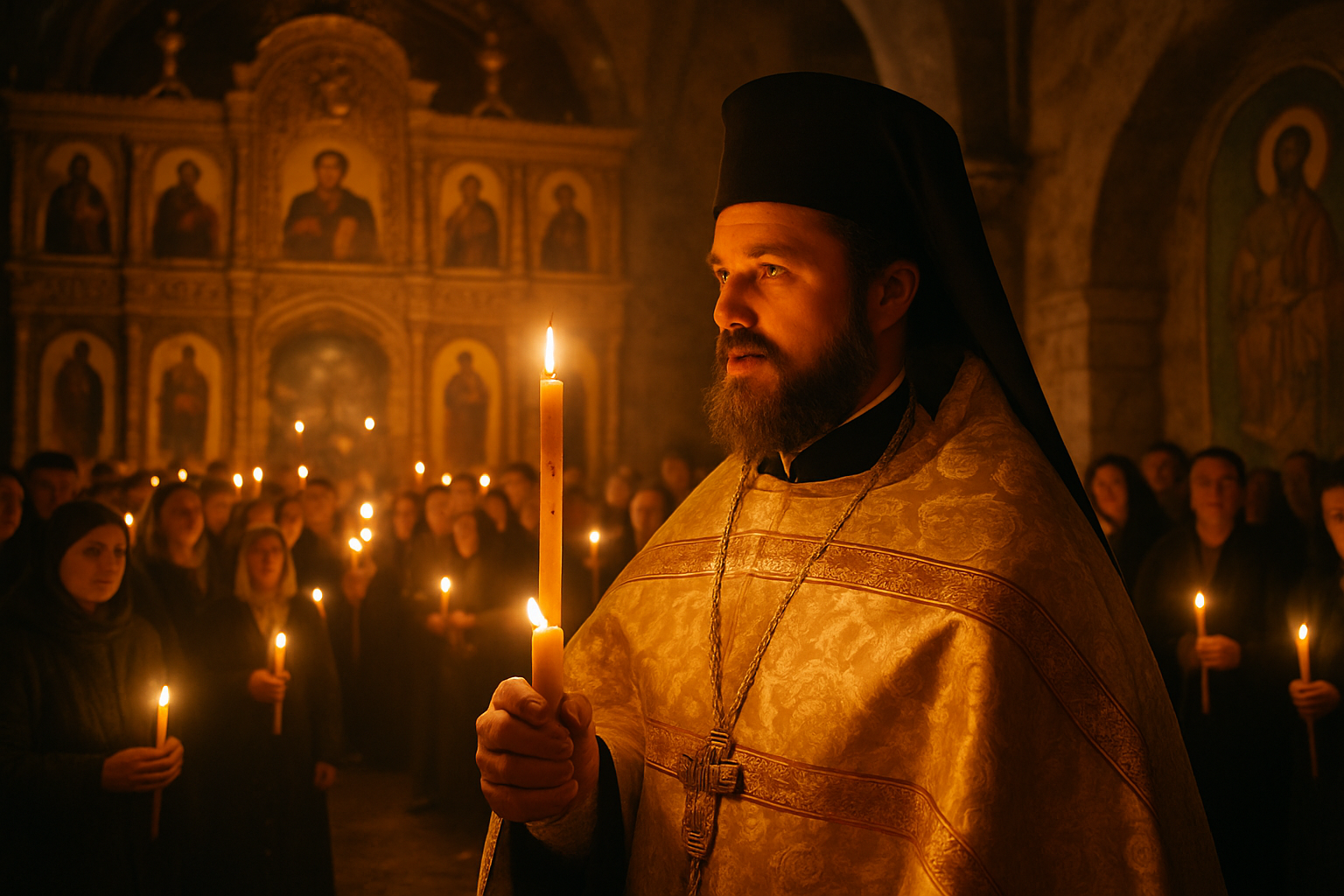
Orthodox Christian communities across the globe celebrated Easter 2026 with profound spiritual ceremonies, highlighted by the sacred arrival of Holy Fire from Jerusalem's Church of the Holy Sepulchre, demonstrating remarkable unity of faith amid a year marked by international tensions.
The celebrations, observed by over 260 million Orthodox Christians worldwide, showcased the enduring power of ancient traditions to unite believers across geographical and political boundaries. From Eastern Europe to the Middle East, and from immigrant communities in North America to established parishes worldwide, the faithful gathered to commemorate the resurrection of Jesus Christ according to the Julian calendar.
Sacred Flame Journeys Across Continents
The arrival of the Holy Fire proved to be the centerpiece of this year's Orthodox Easter observances. In Cyprus, the sacred flame arrived with official honors on Holy Saturday aboard an AEGEAN Airlines flight from Tel Aviv, landing at Larnaca International Airport at 16:55. Three priests transported the Holy Light to the island, where it was received by government representatives in a ceremony that highlighted both religious devotion and national pride.
Romania similarly welcomed the Holy Fire as it arrived in Bucharest on Saturday evening, brought from Jerusalem by the Superior of Romanian Patriarchate Establishments in the Holy Places, Protosingelos Ioan Meiu. The sacred flame was distributed to representatives from various dioceses at Henri Coandă International Airport, before being received by Patriarch Daniel in a solemn procession at the Cathedral.
"The Church is comfort, harbor, warmth," said Bishop Meletius of Znepole, Rector of the Sofia Theological Seminary, speaking to the spiritual significance of Easter during these turbulent times. "We celebrate Easter in troubled times, against the backdrop of two continuing wars, yet the Church sings that death has been defeated."
— Bishop Meletius, Sofia Theological Seminary
Celebrations Amid Global Tensions
The 2026 Orthodox Easter celebrations gained particular poignancy as they occurred during a brief ceasefire in Ukraine, where President Putin had declared a 36-hour humanitarian pause from April 11-12 to honor the Orthodox Easter weekend. This temporary respite in the ongoing conflict allowed Ukrainian Orthodox communities to observe their holiest day with reduced fear of bombardment, though violations of the ceasefire were reported in several regions.
The significance of the Holy Fire ceremony at Jerusalem's Church of the Holy Sepulchre was not lost on the global Orthodox community. Despite heightened security measures and regional tensions, 2,700 faithful gathered in the ancient sanctuary where, according to Orthodox tradition, the sacred flame miraculously appears each Holy Saturday. The ceremony proceeded under what Greek media described as "an atmosphere of devotion amid draconian security measures."
Cultural Traditions and Community Bonds
In Canada's Ukrainian diaspora community, Orthodox Easter took on special significance as these communities maintained their cultural and religious heritage while supporting their homeland. At St. Demetrius the Great Martyr Ukrainian Catholic Church in Toronto, priests conducted traditional basket blessing ceremonies on April 4, illuminating the continuity of faith traditions despite geographical distance from ancestral lands.
The celebrations demonstrated how Orthodox communities have successfully adapted their centuries-old traditions to contemporary circumstances. While most Canadians had already concluded their Easter observances according to the Western calendar, Orthodox and Eastern Catholic communities gathered for their own sacred celebrations, highlighting the rich diversity within Christianity itself.
Sacred Traditions in Modern Times
The arrival and distribution of the Holy Fire exemplified how ancient religious practices continue to resonate in the modern world. Aircraft specially equipped to transport the sacred flame made journeys to Orthodox nations, where the fire was then distributed to parishes across entire countries. This logistical achievement—combining traditional religious observance with modern transportation—illustrated the adaptive nature of faith communities.
Bulgarian Orthodox communities emphasized the theme of forgiveness as central to their Easter celebrations, describing it as a liberating act that allows individuals to move forward "lighter, calmer, freer." This message of spiritual renewal resonated particularly strongly during a year that has witnessed significant international conflicts and humanitarian crises.
Global Unity Through Shared Faith
The worldwide nature of Orthodox Easter celebrations in 2026 demonstrated the global reach of Eastern Christianity. From the ancient churches of Georgia and Greece to newer Orthodox communities in Qatar and other Gulf states, believers participated in liturgies that have remained essentially unchanged for over a millennium.
The celebrations also highlighted the interfaith dimensions of Easter observance in many regions. In Canada, Ukraine, and other multicultural societies, Orthodox Easter contributed to the broader tapestry of religious diversity while maintaining its distinctive theological and liturgical character.
Religious Freedom and Sacred Spaces
The successful conduct of Holy Fire ceremonies and Easter services worldwide stood in contrast to recent restrictions on religious observances in some conflict zones. The ability of Orthodox communities to maintain their traditional celebrations, despite various challenges, underscored the importance of religious freedom and the protection of sacred spaces during times of international tension.
The Qatar-based Al Jazeera coverage of the Holy Fire ceremony noted the return of Christians to Jerusalem's Holy Sepulchre as regional restrictions were eased, highlighting how religious observances often serve as barometers of broader social and political conditions.
Messages of Hope and Renewal
Orthodox leaders worldwide used their Easter messages to address contemporary challenges while maintaining focus on the central Christian message of resurrection and renewal. The emphasis on hope, forgiveness, and spiritual transformation provided comfort to communities facing various hardships, from economic difficulties to the trauma of ongoing conflicts.
The celebration of Orthodox Easter 2026 ultimately served as a powerful testament to the enduring strength of religious traditions and their capacity to provide meaning, community, and hope during challenging times. Despite the geographical distances separating Orthodox communities and the political tensions affecting many regions, the shared observance of Easter demonstrated the unifying power of faith.
As Orthodox Christians worldwide concluded their Easter celebrations, the message remained clear: ancient traditions continue to offer profound spiritual resources for contemporary challenges, while the bonds of faith transcend political boundaries and cultural differences. The successful celebration of Orthodox Easter 2026, marked by the sacred journey of the Holy Fire and the devotion of millions of believers, reinforced the enduring relevance of religious observance in an interconnected but often divided world.