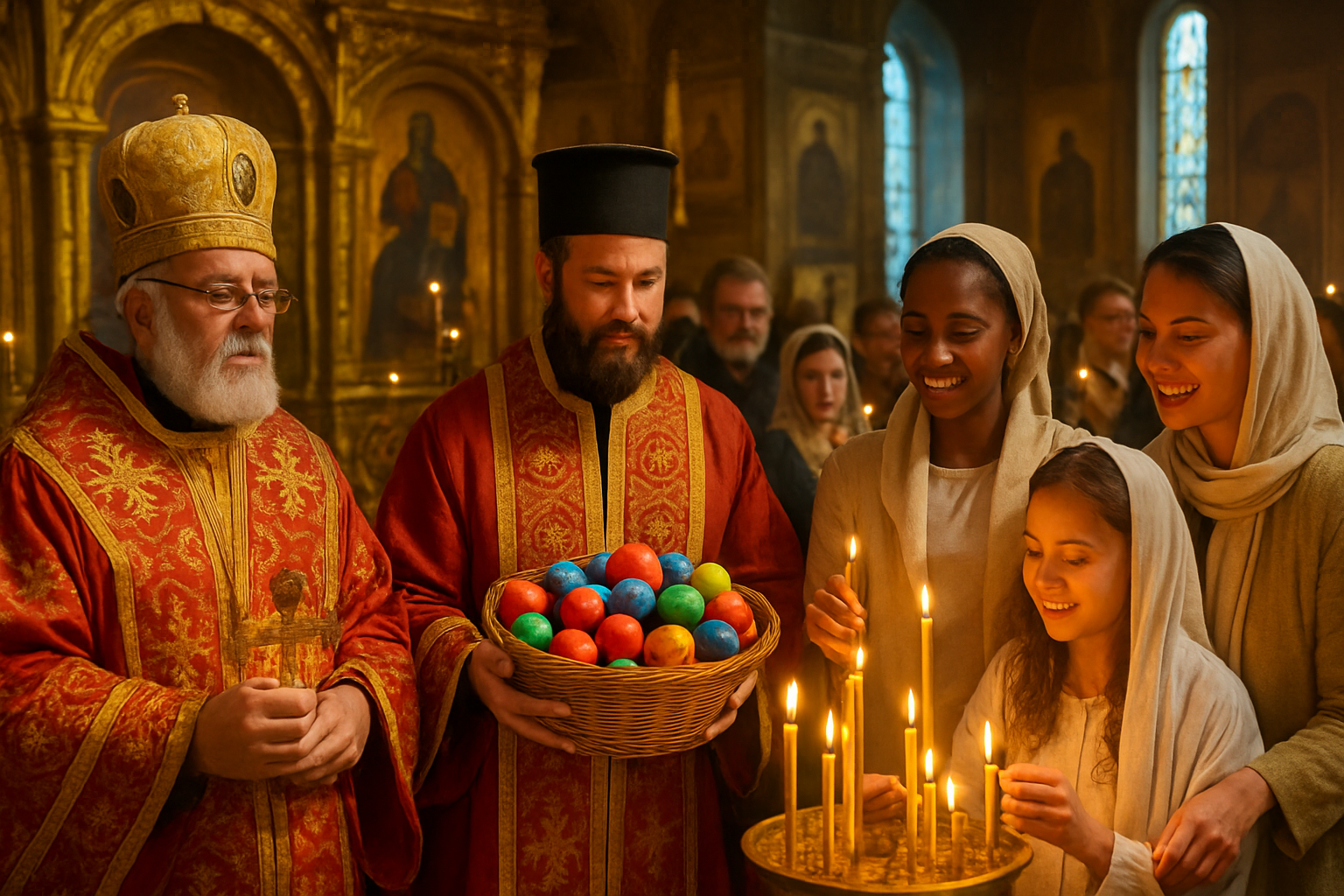
Orthodox Christians and Eastern-rite Catholic communities across the globe celebrated Easter on April 12, 2026, with vibrant traditions and powerful messages of unity from religious and political leaders spanning from Eastern Europe to the Middle East and Central Asia.
The celebrations came as over 260 million Orthodox Christians worldwide observed one of Christianity's most sacred holidays, demonstrating remarkable spiritual resilience amid ongoing global conflicts and challenges. Leaders from Bulgaria to Jordan delivered messages emphasizing hope, renewal, and the enduring power of faith to unite communities across geographical and political boundaries.
Eastern European Leaders Call for Unity
In Bulgaria, political figures used the occasion to deliver messages of national unity and spiritual renewal. Former President Rumen Raddev, now leader of "Progressive Bulgaria," extended Easter greetings to Bulgarians, emphasizing the need for spiritual strength and positive change in society. His message focused on personal and national responsibility for the future during a time when public expectations for stability and progress remain high.
"Christ is risen! Today Bulgarians are united in our wishes for health, love and goodness..."
— Rumen Raddev, Former Bulgarian President
President Iliyana Yotova similarly addressed the Bulgarian nation with a festive Easter message, wishing health and blessed days for the Bulgarian people both at home and abroad. Her message highlighted the significance of faith, hope, and unity in the contemporary world, particularly during what she termed "difficult times."
In Bosnia and Herzegovina, Orthodox communities marked the day as the most significant celebration in the Orthodox liturgical calendar, with the resurrection of Christ serving as the foundation of Christian faith that transcends cultural boundaries.
Ukraine Celebrates Despite Ongoing Conflict
Ukrainian President Volodymyr Zelensky and First Lady Olena Zelenska extended Easter greetings to Ukrainians as the country marked what Ukrainian sources described as one of the most important holidays of the year for Orthodox Christians and Greek Catholics alike. The celebrations took on special significance as Ukraine continues to face security challenges, with religious observances providing moments of spiritual respite for communities under pressure.
The Ukrainian celebrations demonstrated the resilience of Eastern-rite Christian traditions, maintaining their spiritual character despite external challenges. Orthodox Christians and Greek Catholics across Ukraine participated in Easter services that have remained largely unchanged for centuries, connecting contemporary believers with their ancestral faith traditions.
Regional Leaders Bridge Communities
Azerbaijan's First Vice-President Mehriban Aliyeva shared an Easter message on her official Instagram account, demonstrating the inclusive approach of Azerbaijani leadership toward the country's diverse religious communities. This gesture was particularly significant in a nation where Orthodox Christians represent a minority population, highlighting the government's commitment to religious accommodation and interfaith harmony.
In Jordan, Christians celebrated Easter with traditional church services and family gatherings, marking one of the most important Christian holidays. The celebrations began with prayers in various churches throughout the kingdom, followed by traditional family reunions that form the cornerstone of Easter observances in the region.
Jordanian Christians had previously observed Palm Sunday the week before, commemorating Christ's entry into Jerusalem in the buildup to Easter celebrations. The continuity of these ancient traditions in the Middle Eastern context provides a direct link to Christianity's origins in the region.
Central Asian Recognition
Kazakhstan demonstrated its commitment to religious diversity as President Kasym-Jomart Tokayev extended Easter greetings, acknowledging the significance of the holiday for the country's Orthodox Christian population. This recognition reflects Kazakhstan's broader policy of supporting religious freedom and cultural diversity within its borders.
The presidential greeting emphasized the role of Easter as a celebration that brings communities together, reinforcing social cohesion and mutual understanding among Kazakhstan's diverse population. The gesture illustrates how political leadership can support religious observance while maintaining the secular character of state institutions.
Ancient Traditions in Modern Context
This year's Easter celebrations occurred against the backdrop of global challenges, including ongoing conflicts and economic pressures affecting communities worldwide. However, the resilience of Orthodox Easter traditions demonstrated their enduring capacity to provide meaning, hope, and community connection even during difficult circumstances.
The celebrations featured traditional elements that have characterized Orthodox Easter for centuries: the Holy Fire ceremony, red-painted eggs symbolizing Christ's sacrifice and believers' faith in renewal, special Easter breads and foods, and liturgical services that connect modern believers with nearly two millennia of Christian tradition.
Religious leaders across the affected regions emphasized themes of forgiveness, reconciliation, and spiritual renewal. As one Bulgarian religious figure noted, Easter represents not just the celebration of Christ's resurrection, but also an invitation for believers to experience personal transformation and spiritual growth.
Technology Enhances Traditional Celebrations
Modern Orthodox Easter celebrations successfully integrated contemporary technology with ancient spiritual practices. Digital platforms enabled separated families to participate virtually in egg-decorating sessions and traditional meal preparations, while social media helped younger generations learn traditional techniques from elderly relatives across distances.
Mobile applications provided coordination for family gatherings and recipe sharing, enhancing rather than replacing human connections. This technological integration enabled diaspora communities worldwide to maintain cultural connections while preserving the authentic communal aspects of Easter celebrations.
Global Impact and Cultural Preservation
The 2026 Orthodox Easter celebrations demonstrated the sophisticated international coordination that has become characteristic of major religious observances. Building on successful patterns established earlier in the year during the simultaneous Ramadan-Lent convergence affecting 4.5 billion believers, Orthodox communities showed how ancient spiritual traditions can maintain their essential character while adapting to contemporary realities.
Economic impacts extended beyond religious communities, supporting cultural tourism, hospitality sectors, and traditional artisan networks. The celebrations generated substantial activity in regions where Orthodox Christianity represents significant cultural heritage, creating sustainable economic benefits while preserving authenticity.
Success factors for these celebrations included authentic cultural preservation, strategic technology integration that enhanced rather than replaced traditions, community engagement ensuring local ownership of cultural assets, and international cooperation sharing techniques and support across borders.
Looking Forward
Orthodox Easter 2026 established important precedents for religious observance resilience during global challenges. The success of maintaining traditional celebrations despite various pressures reinforced the enduring relevance of religious practice in an interconnected but often divided world.
The celebrations provided a framework for faith communities to preserve their heritage while adapting to modern realities through international cooperation, technological integration, and cultural preservation. Ancient religious traditions continue offering spiritual resources for contemporary challenges while creating bonds of faith that transcend cultural and political differences.
As Orthodox communities worldwide concluded their Easter celebrations, the common themes of renewal, hope, and community unity resonated across continents, demonstrating the enduring power of shared spiritual traditions to bring meaning and connection to believers facing an uncertain but hopeful future.