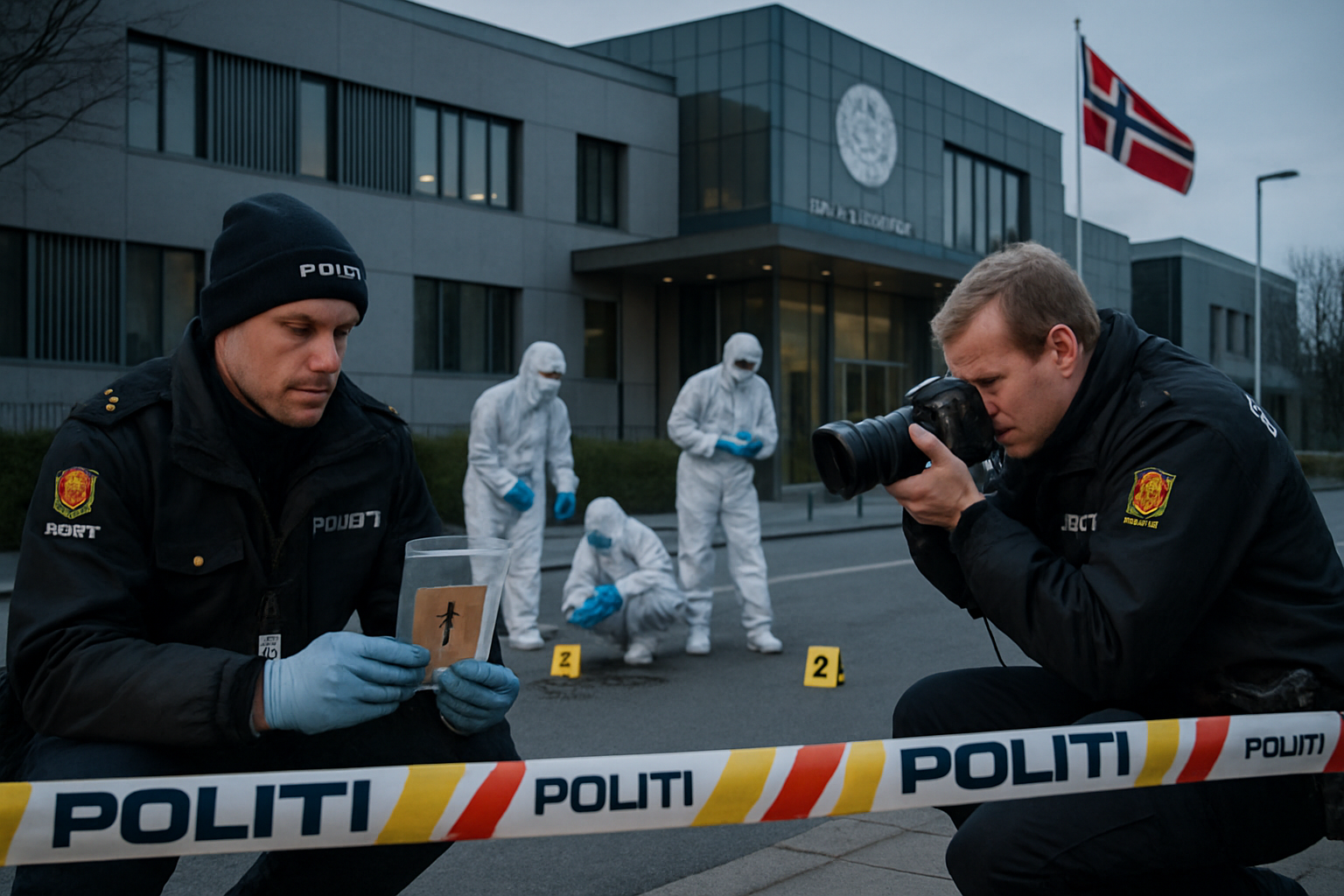
Norwegian police have intensified their investigation into the explosion that occurred near the US Embassy in Oslo on March 8, 2026, releasing surveillance images of a suspected perpetrator while conducting a comprehensive terrorism inquiry into the incident.
The explosion struck outside the embassy's consular entrance at approximately 1:00 AM Sunday morning, causing minor structural damage but no injuries. Norwegian Police Security Service (PST) has taken the lead on what authorities are treating as a potential terrorist attack, marking a significant security incident in the traditionally stable Nordic nation.
Investigation Developments
According to multiple Nordic media sources, Norwegian police have released images captured by surveillance cameras showing a suspect in connection with the bombing. The photographs, obtained from security footage, are being distributed as part of an active manhunt for the individual believed responsible for the attack.
Police Incident Commander Michael Dellemyr confirmed that authorities received multiple reports of a "bang" around 1:00 AM, with the explosion subsequently confirmed at the US Embassy facility. The device used in the attack has been identified as an incendiary explosive, though specific details about its composition remain part of the ongoing investigation.
Finnish authorities reported that the explosion was caused by a "homemade explosive device," indicating the attack involved improvised weaponry rather than sophisticated military-grade materials. This detail suggests the perpetrator may have constructed the device using commercially available materials, a common tactic among domestic terrorists.
Enhanced Security Response
The Norwegian response to the incident has been comprehensive, involving multiple agencies and specialized units. Police have cordoned off the crime scene with security tape while forensic teams conduct detailed examinations of the blast site. Technical analysis units are working to identify explosive residue and reconstruct the attack sequence.
Specialized police dogs, drone surveillance, and helicopter patrols have been deployed as part of the search for the suspected perpetrator. The extensive resource deployment demonstrates the seriousness with which Norwegian authorities are treating this incident, particularly given its targeting of diplomatic infrastructure.
Prime Minister Jonas Gahr Støre condemned the attack as "very serious and completely unacceptable," emphasizing Norway's commitment to protecting diplomatic facilities. Enhanced security measures have been implemented throughout Oslo, with increased police presence around the embassy and other diplomatic facilities serving as visible deterrents to further incidents.
International Context and Timing
The bombing occurs against a backdrop of heightened global tensions, particularly following the recent Middle East crisis that has affected US diplomatic facilities worldwide. The timing of the Oslo attack, coming during a period of increased threats against American diplomatic missions, raises questions about potential international connections.
However, Norwegian authorities have been careful not to link the incident directly to broader international conflicts. Per-Ivar Iversen of the Oslo Police District emphasized that there is currently "no information about exactly what happened or who may be involved," maintaining investigative objectivity while the inquiry continues.
The attack represents a concerning development for Nordic security, which has traditionally been characterized by stability and low terrorism threats. The targeting of diplomatic installations in stable allied nations underscores the need for continued vigilance and enhanced counter-terrorism capabilities even in democratic societies with strong security records.
Historical Context
This incident builds upon previous security challenges facing the US Embassy in Oslo. Earlier investigations revealed sophisticated threats including mysterious videos and digital security breaches that had coincided with physical security incidents. The pattern suggests ongoing vulnerabilities that require comprehensive security reviews.
The March 8 explosion follows documented concerns about the embassy's security posture, with previous incidents involving both physical infrastructure threats and digital infiltration attempts. These patterns indicate potential systematic targeting by actors with both technical capabilities and local operational knowledge.
Norwegian security services have demonstrated professional competence in handling complex security threats while maintaining democratic values and international cooperation commitments. The current investigation represents another test of these capabilities in an increasingly complex global security environment.
Investigation Methodology
The PST-led investigation is pursuing multiple avenues simultaneously, including analysis of surveillance footage, witness interviews, and examination of explosive device components. The release of suspect images represents a significant development, indicating authorities have identified a person of interest through security camera analysis.
Forensic teams are conducting detailed examinations of the blast site to determine the exact type of explosive device used and its method of deployment. This technical analysis will be crucial for understanding the perpetrator's capabilities and potential connections to other incidents or networks.
International cooperation protocols have been activated, with coordination between Norwegian police and US federal law enforcement agencies. This collaboration reflects the serious nature of attacks on diplomatic facilities and the need for comprehensive intelligence sharing to identify potential threats.
Security Implications
The Oslo embassy attack demonstrates the persistent vulnerability of diplomatic installations to terrorist threats, even in highly secure environments. The incident highlights the challenges facing security services in protecting diplomatic facilities while maintaining public access and democratic openness.
For Norway as a NATO ally and strong US partner, the attack represents a direct challenge to the country's commitment to diplomatic protection. The professional security response demonstrates Norwegian capabilities for handling serious threats while maintaining transparency and democratic accountability.
The incident may influence security protocols at diplomatic facilities throughout the Nordic region, potentially leading to enhanced protective measures and revised threat assessment procedures. The balance between accessibility and security remains a constant challenge for democratic societies hosting international diplomatic missions.
Community Impact
Local residents and workers have been advised to avoid the embassy area during the ongoing investigation, with authorities prioritizing public safety while conducting their inquiry. The incident has created heightened awareness of security concerns among Oslo's civilian population.
The attack's impact extends beyond immediate physical damage to include psychological effects on the local community and international diplomatic personnel. Maintaining public confidence in security measures while conducting thorough investigations requires careful balance and transparent communication.
Community cooperation has proven crucial in the investigation, with witness reports and surveillance footage from local businesses contributing to the development of suspect images. This collaboration between authorities and civilians exemplifies the democratic approach to counter-terrorism that characterizes Norwegian society.
Looking Forward
As the investigation continues, Norwegian authorities face the challenge of identifying and apprehending the suspected perpetrator while preventing potential follow-up attacks. The release of surveillance images marks an escalation in the public phase of the investigation, indicating confidence in the evidence collected.
The incident serves as a reminder of the ongoing terrorist threats facing democratic societies and their institutions, even in traditionally stable regions like Scandinavia. Success in resolving this case will provide important lessons for diplomatic security management and counter-terrorism cooperation.
The Norwegian response to this attack will likely influence security protocols and international cooperation mechanisms for protecting diplomatic facilities in democratic societies. The investigation's outcome may serve as a template for addressing similar incidents while preserving fundamental democratic values and international partnerships.