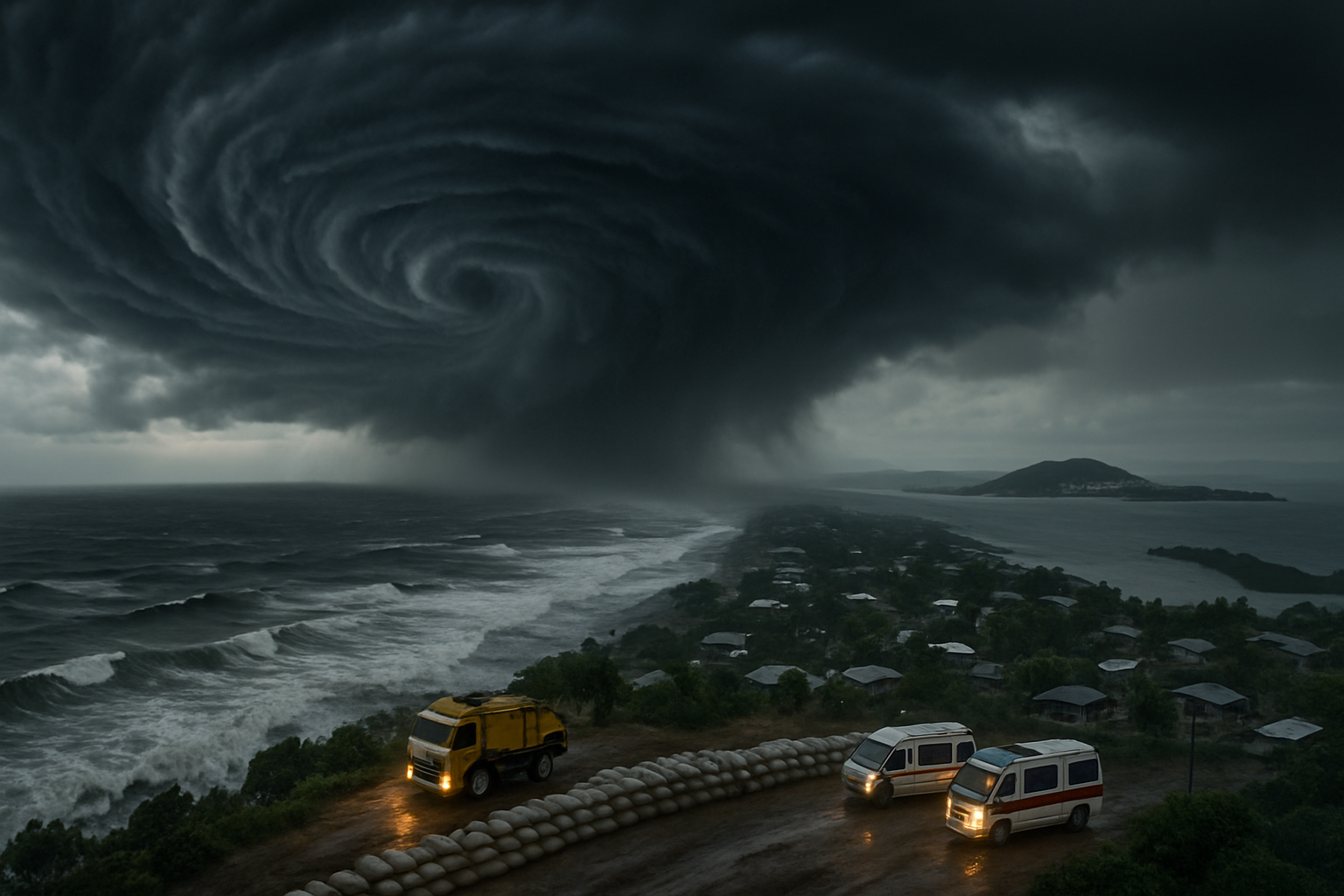
A massive Category 4 tropical cyclone is bearing down on Far North Queensland as emergency services across Australia and Papua New Guinea grapple with an unprecedented series of extreme weather events that have exposed critical vulnerabilities in Pacific region infrastructure and emergency response systems.
Severe Tropical Cyclone Maila, currently positioned approximately 1,300 kilometers from the Australian coast, has resumed its southwestward trajectory toward Far North Queensland with sustained winds reaching 260 kilometers per hour. The Bureau of Meteorology forecasts the system will cross the coast beginning Monday, potentially impacting communities still recovering from previous cyclonic activity over recent weeks.
Compound Climate Emergency Unfolds
The crisis occurs during the 23rd consecutive month of global temperatures exceeding 1.5°C above pre-industrial levels—the longest sustained period of extreme warming in recorded human history. This unprecedented atmospheric instability has created what climate scientists describe as a "climate volatility paradox," where sustained global warming enables both record heat and devastating regional extreme weather through disrupted circulation patterns.
Papua New Guinea is simultaneously confronting multiple environmental challenges, with local administrations awaiting comprehensive ward reports on the full extent of Cyclone Maila's damages to communities and infrastructure. The island nation has also been dealing with the aftermath of Cyclone Maya, which forced communities in East New Britain to take response measures into their own hands as traditional emergency services became overwhelmed.
"Communities recovering from a giant storm just weeks ago can expect another drenching with the risk of flooding."
— Bureau of Meteorology Warning
Infrastructure Under Unprecedented Strain
The convergence of multiple severe weather systems across the Pacific region has exposed critical weaknesses in emergency response mechanisms designed for sequential rather than concurrent disasters. Emergency services in both Australia and Papua New Guinea are operating at or beyond capacity limits, with traditional mutual aid mechanisms proving inadequate for simultaneous multi-regional crises.
Transportation networks, power grids, and communication systems built to withstand historical weather patterns are repeatedly failing as extreme weather exceeds operational parameters. The situation reflects a broader global pattern where infrastructure designed for stable climate conditions faces cascading failures under current volatile weather patterns.
In Papua New Guinea, the convergence of Cyclones Maila and Maya has created what emergency management experts identify as "compound disasters"—multiple emergency types occurring simultaneously across vast geographic areas, fundamentally challenging traditional resource allocation and response capabilities.
Regional Impact Assessment
New Zealand's MetService has issued explanatory guidance about tropical cyclone categories and formation processes, as the Pacific basin experiences an unusually active cyclone season. The educational initiative comes as Cyclone Vaianu, another significant weather system, continues to develop east of the region.
The Australian Bureau of Meteorology's warnings emphasize the particular vulnerability of communities that experienced destructive weather events in recent weeks. Areas around Far North Queensland face the challenge of preparing for another major impact while still managing recovery operations from previous storms.
Agricultural sectors across both nations face mounting losses as extreme weather destroys crops and disrupts supply chains during critical growing seasons. The tourism industry, vital to both economies, confronts extended cancellations and infrastructure damage during what should be peak operational periods.
Emergency Response Evolution
The crisis has forced a fundamental reconsideration of emergency management approaches across the Pacific region. Traditional frameworks assuming sequential disasters affecting isolated areas have proven inadequate for the current reality of simultaneous extreme weather across multiple countries and territories.
Australian Fire and Emergency Services Authority (AFAC) officials note a shift from isolated regional disasters to multiple concurrent incidents requiring different specializations, fundamentally straining response capabilities designed for historical weather patterns. This evolution parallels similar challenges faced by emergency services globally as climate volatility increases.
Community resilience has emerged as a critical factor, with local populations in both Australia and Papua New Guinea developing hybrid approaches combining traditional knowledge with modern emergency preparedness. Social media platforms have become essential for emergency communication when traditional systems become overwhelmed.
Climate Science Context
January 2026 confirmed as the hottest month in recorded history, extending an unprecedented warming streak that has fundamentally altered Earth's atmospheric systems beyond natural recovery mechanisms. The World Meteorological Organization indicates a 50-60% probability of El Niño development during July-September 2026, potentially driving temperatures into unprecedented territory through a combination of baseline warming and natural cycle amplification.
The current Pacific cyclone activity demonstrates how human-induced climate change has overridden natural cooling mechanisms, including La Niña effects that historically moderated regional weather patterns. This "climate override" has created compound environmental effects across multiple systems simultaneously, requiring transformative adaptation approaches rather than reactive crisis management.
Economic and Social Implications
Recovery timelines have shifted from traditional expectations of weeks to months or years, representing a fundamental change in disaster response planning. The concept of "building back better" has evolved from an optional enhancement to an essential survival strategy for communities facing repeated extreme weather events.
Mental health services across the region report increased demand as climate anxiety and repeated trauma affect families potentially losing generational properties multiple times within a decade. Vulnerable populations, including elderly residents and those with respiratory conditions, face disproportionate impacts from the compounding environmental stresses.
Small businesses and agricultural operations confront extinction threats from recurring disruptions that exceed their capacity to recover between events. The traditional economic assumption that regions can recover fully between disasters no longer applies to current climate volatility patterns.
International Cooperation Challenges
Environmental challenges increasingly transcend national boundaries as atmospheric systems and ocean currents transport climate effects globally. Traditional cooperation mechanisms designed for stable regions assisting others during isolated emergencies are being tested by simultaneous disasters across multiple continents.
The Pacific crisis occurs within a broader pattern of global extreme weather that has overwhelmed international mutual aid systems. European Union Civil Protection mechanisms have been repeatedly activated, with recent assistance packages to Sweden and Denmark representing the largest coordinated European weather response on record, yet proving insufficient for the scale and simultaneity of current challenges.
Adaptation Watershed Moment
April 2026 represents what climate experts describe as a critical watershed moment between reactive crisis management and transformative infrastructure adaptation. Current conditions provide a preview of routine circumstances expected in the 2030s without comprehensive climate adaptation investment.
The window for effective climate action continues to narrow as ecological systems approach critical thresholds that could trigger irreversible changes affecting global food security, climate stability, and human settlement patterns. Additional weather systems developing in both Atlantic and Pacific regions suggest the current pattern of extreme frequency and intensity may persist, potentially establishing a "new normal" that permanently challenges traditional emergency response frameworks.
Technology-tradition integration has emerged as a successful adaptation strategy, with effective responses requiring sophisticated synthesis of cutting-edge meteorological forecasting, satellite monitoring, and environmental DNA analysis combined with traditional ecological knowledge and community-based management systems.
Looking Forward
The convergence of extreme weather, infrastructure vulnerabilities, and emergency response limitations underscores the urgent need for coordinated international action. The tools, knowledge, and cooperation frameworks exist for comprehensive environmental protection, but success depends on unprecedented speed of coordination and sustained international cooperation.
As Cyclone Maila continues its approach toward Australian shores and Papua New Guinea assesses ongoing damages, the broader question facing the Pacific region—and indeed the global community—is whether humanity can organize and implement solutions rapidly enough to maintain planetary habitability during Earth's most environmentally challenging period in recorded history.
The choices made in coming weeks and months may prove decisive for climate resilience strategies that will affect generations, as the international community confronts the reality that environmental protection must be recognized as essential infrastructure for human prosperity and planetary sustainability.