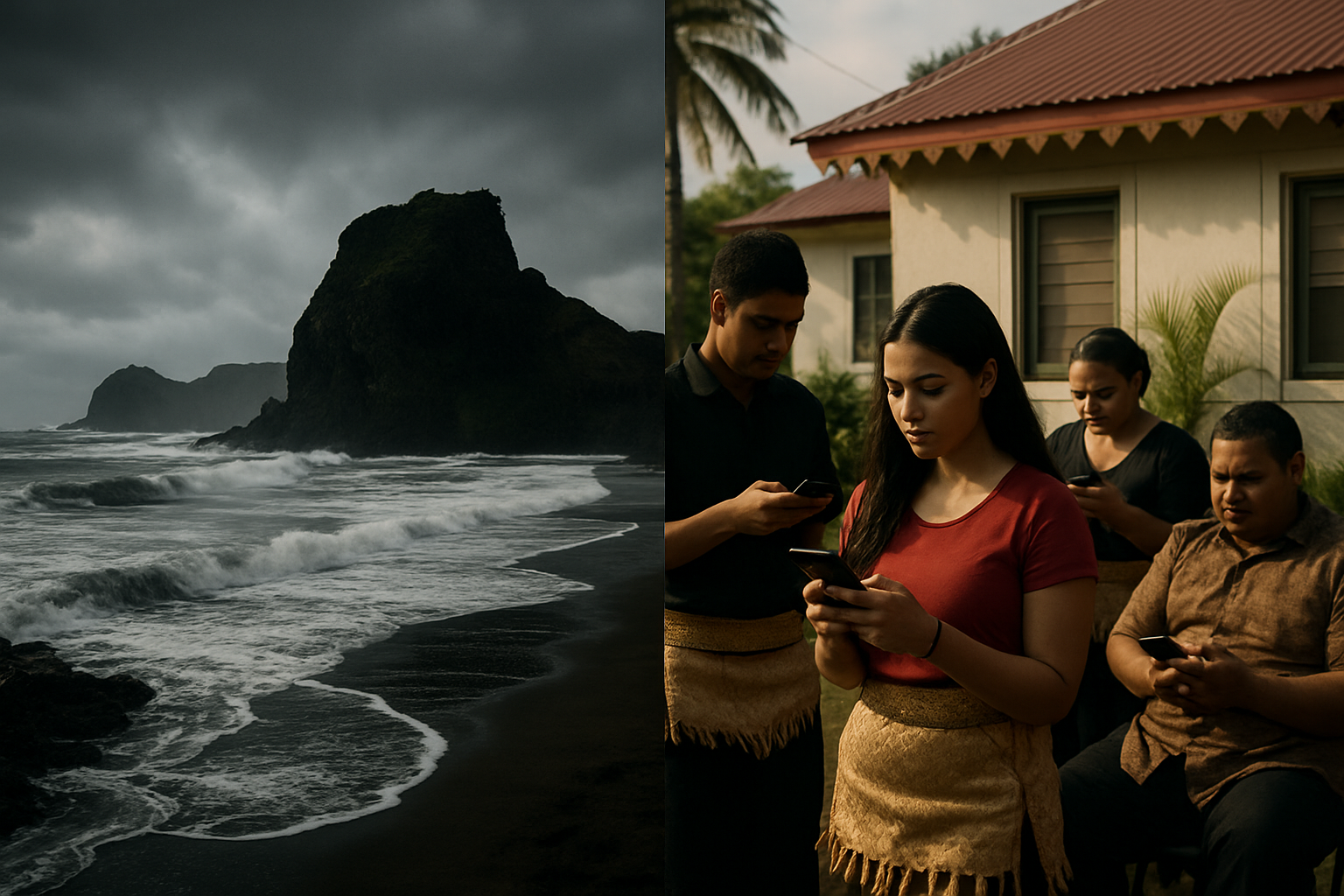
The Pacific Island community is confronting a stark duality of challenges in March 2026, as Tongan families in Auckland mourn the tragic loss of Manitisa Pāhulu at Piha beach while authorities in Tonga crack down on escalating online harassment, revealing the complex pressures facing diaspora and homeland communities alike.
Tragic Loss Shakes Auckland's Tongan Community
The Tongan community in Auckland is reeling from the death of Manitisa Pāhulu, who perished following a fishing incident at Piha beach that triggered one of New Zealand's most extensive search operations in recent months. The tragedy unfolded when Pāhulu was swept off rocks while fishing south of Piha on a Sunday, prompting a coordinated land, sea, and air search effort by emergency services.
The incident has sent shockwaves through New Zealand's vibrant Pacific Islander community, with tributes pouring in for Pāhulu from across the diaspora network. The dangerous conditions at Piha, known for its powerful surf and treacherous rock formations, have long posed risks to recreational fishers, but this latest tragedy has particularly affected the tight-knit Tongan community that has made Auckland home.
"The loss of Manitisa represents not just a family tragedy, but a community grief that resonates across our Pacific networks,"
— Community Leader, Auckland Tongan Association
The extensive search operation that preceded the tragic discovery demonstrated the remarkable coordination between New Zealand's emergency services, involving helicopters, marine vessels, and ground teams combing the rugged coastline. However, the powerful surf conditions and rocky terrain that make Piha a spectacular but dangerous fishing location ultimately claimed another life.
Homeland Confronts Rising Digital Harassment Crisis
While the Auckland diaspora grieves, authorities in Tonga are grappling with a different but equally concerning challenge: a surge in online harassment cases that has prompted police action against two individuals accused of misusing electronic communication services.
Tonga Police confirmed that on February 23, 2026, a 56-year-old resident of Te'ekiu was arrested for allegedly using electronic communication services to "menace, harass, or cause harm" to others. This case represents part of a broader pattern of online harassment that has been escalating across Pacific Island nations as social media penetration increases and digital literacy evolves.
The arrests highlight the complex intersection of traditional Pacific Islander community values with the challenges posed by modern digital communication platforms. Pacific Island societies have historically relied on face-to-face communication and community mediation to resolve conflicts, but the anonymity and reach of social media platforms have created new avenues for harassment that traditional conflict resolution mechanisms struggle to address.
Broader Pacific Islander Community Pressures
These concurrent developments illuminate broader systemic challenges facing Pacific Island communities both in diaspora and homeland contexts. The tragic loss at Piha reflects the ongoing vulnerabilities faced by Pacific Islander communities in New Zealand, who often engage in traditional fishing practices in environments that can be unforgiving to those unfamiliar with local conditions.
Research indicates that Pacific Islander communities in New Zealand face disproportionate risks in recreational and subsistence activities, partly due to economic pressures that drive families to supplement household resources through fishing and gathering, combined with limited familiarity with New Zealand's unique coastal hazards.
Meanwhile, the online harassment cases in Tonga represent the challenges Pacific Island nations face as they navigate rapid digital transformation without corresponding infrastructure for digital governance and cyber-safety education. The Kingdom of Tonga, like many Pacific Island nations, has experienced explosive growth in internet connectivity and social media usage, but legal frameworks and enforcement mechanisms have struggled to keep pace.
Digital Transformation Challenges in Pacific Communities
The online harassment arrests in Tonga occur within a broader context of Pacific Island nations wrestling with the implications of digital transformation. Facebook and other social media platforms have become central to community communication across Pacific Island societies, but they have also created new vectors for interpersonal conflict and community tension.
Pacific Island communities traditionally rely on extended family networks, chiefly systems, and religious organizations to mediate disputes and maintain social harmony. However, the anonymity and reach of digital platforms can bypass these traditional authority structures, creating conflicts that spill over from online spaces into physical communities.
The cases in Tonga may represent early indicators of challenges that could affect Pacific Island communities globally as digital integration accelerates. The arrests demonstrate Tongan authorities' commitment to addressing online harassment, but they also highlight the need for comprehensive digital literacy programs that help community members navigate online interactions responsibly.
Diaspora-Homeland Connection Complexities
The simultaneous occurrence of tragedy in Auckland and digital governance challenges in Tonga illustrates the interconnected nature of modern Pacific Island community experiences. Diaspora communities maintain strong connections to homeland through social media and digital communication, meaning that online harassment in Tonga can affect family members and community networks in Auckland, while tragedies in New Zealand reverberate through digital networks back to Pacific Island homelands.
This digital interconnectedness creates both opportunities and vulnerabilities for Pacific Island communities. While technology enables diaspora families to maintain cultural connections and provide financial support to homeland communities, it also means that conflicts and tragedies in one location can have immediate emotional and social impacts across vast geographic distances.
"Our communities are no longer separated by ocean distances when it comes to sharing both our joys and our sorrows,"
— Pacific Island Community Researcher
Economic and Social Implications
The dual challenges facing Pacific Island communities have significant economic and social implications. Fishing-related tragedies like the one at Piha often affect families who depend on subsistence and recreational fishing to supplement household income, creating economic hardship alongside emotional trauma.
Similarly, online harassment can have economic impacts when it disrupts business relationships, community cooperation, or family remittance networks that are crucial for Pacific Island household stability. The interconnected nature of Pacific Island communities means that digital conflicts can undermine the social trust that supports informal economic networks.
Both issues highlight the need for targeted support services that understand the cultural and economic realities of Pacific Island communities. This includes coastal safety education programs tailored to Pacific Islander fishing practices, as well as digital literacy initiatives that help community members navigate online interactions while maintaining cultural values of respect and community harmony.
Looking Forward: Community Resilience and Adaptation
Despite these challenges, Pacific Island communities demonstrate remarkable resilience in adapting to complex modern circumstances while maintaining cultural connections. The outpouring of support for Manitisa Pāhulu's family in Auckland demonstrates the strength of diaspora community networks, while Tonga's proactive approach to online harassment shows institutional adaptation to digital governance challenges.
Moving forward, addressing these dual challenges will require coordinated approaches that recognize the interconnected nature of Pacific Island community experiences. This includes developing safety education programs for diaspora communities engaging in traditional practices in new environments, as well as digital governance frameworks that preserve Pacific Island values of community harmony while protecting individuals from online harassment.
The events of March 2026 serve as a reminder that Pacific Island communities continue to navigate complex pressures as they maintain cultural identities while adapting to globalized, digitally connected environments. The resilience and community solidarity demonstrated in response to both tragedies and governance challenges suggest that these communities possess the cultural resources needed to address contemporary challenges while preserving the values that define Pacific Island societies.
International Implications and Support Systems
These developments also underscore the importance of international cooperation in addressing challenges that affect Pacific Island communities across national boundaries. New Zealand's role as home to significant Pacific Islander diaspora populations creates responsibilities for ensuring that safety education and community support services are culturally appropriate and accessible.
Similarly, the digital governance challenges facing Tonga and other Pacific Island nations may benefit from international cooperation in developing cyber-safety frameworks that respect Pacific Island cultural values while providing effective protection against online harassment. The global nature of social media platforms means that solutions developed in one Pacific Island nation can inform approaches in others, creating opportunities for regional cooperation in digital governance.
As Pacific Island communities continue to navigate the complexities of maintaining cultural identity in globalized contexts, the experiences of March 2026 provide important insights into both the vulnerabilities and resilience that characterize these communities in the contemporary world.