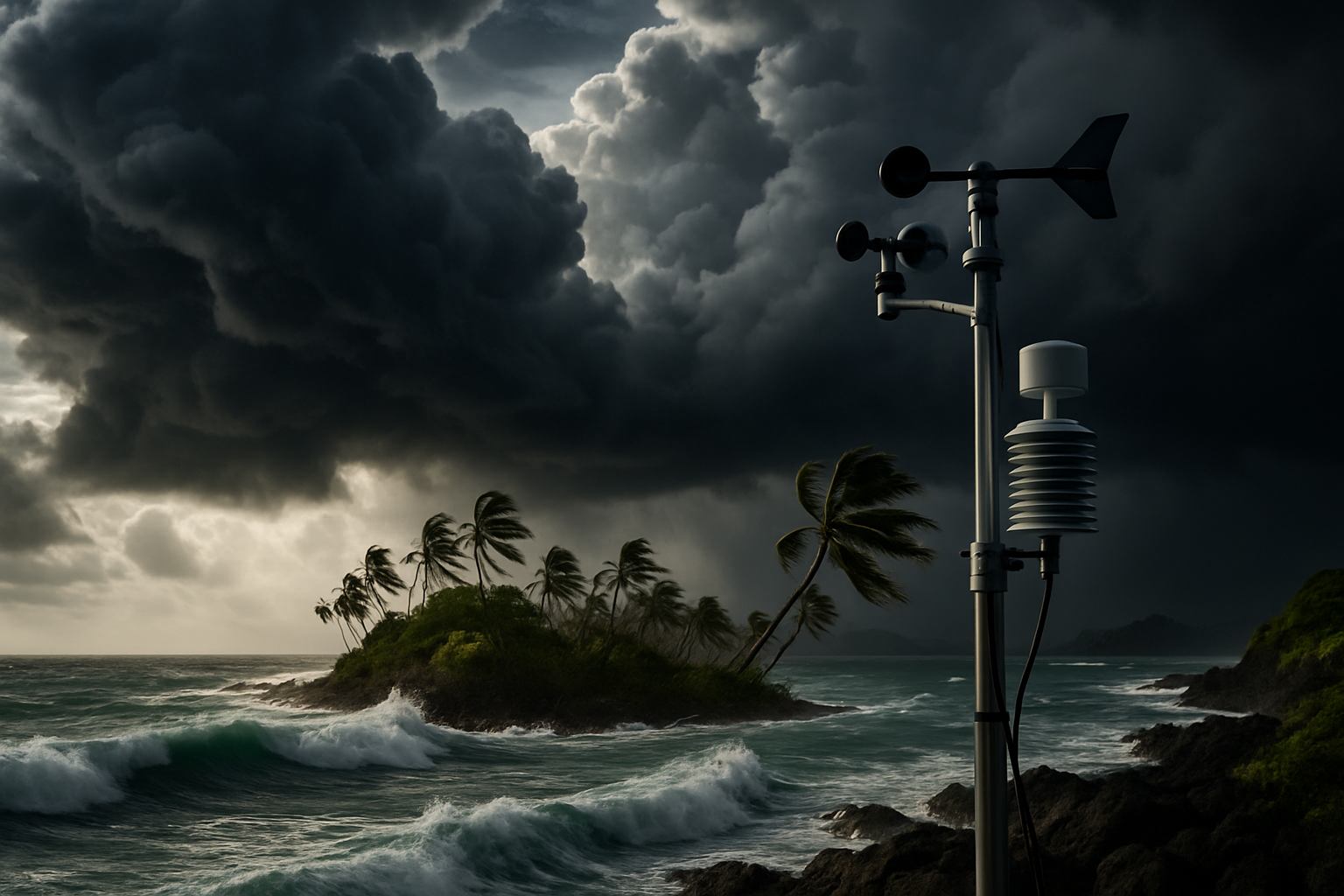
Pacific island nations across Micronesia and Papua New Guinea are confronting dangerous tropical storm activity as authorities issue urgent weather warnings during what has become the 24th consecutive month of global temperatures exceeding 1.5°C above pre-industrial levels—the longest sustained extreme warming period in recorded human history.
Tropical Storm Sinlaku (04W) has emerged as the latest threat to the Micronesia region, with preparedness information being rapidly disseminated as the system moves slowly through Pacific waters. The Marianas Variety News & Views reports that the storm poses significant risks to communities already stressed by repeated extreme weather events throughout 2026.
Emergency Warnings Across the Pacific
The National Weather Service has issued comprehensive warnings as Sinlaku continues its deliberate progression through the region. The storm's slow movement compounds the threat, allowing it to potentially intensify while subjecting affected areas to prolonged periods of dangerous conditions.
Simultaneously, Papua New Guinea faces its own severe weather crisis as Severe Tropical Cyclone Maila reaches Category 3 intensity, threatening Milne Bay and Bougainville provinces. The Post Courier reports that this powerful system represents a significant threat to communities still recovering from previous weather disasters in the region.
"The compound nature of these disasters—multiple emergency types occurring concurrently across vast geographic areas—fundamentally challenges traditional resource allocation."
— Emergency Management Expert, AFAC
Historical Context of Crisis
The current storm activity occurs within the broader context of unprecedented global climate volatility. Recent memory data reveals that Pacific islands have been repeatedly battered by extreme weather throughout 2026, with Papua New Guinea experiencing multiple emergency declarations and infrastructure failures.
The region has witnessed a pattern of intensifying tropical cyclones, including the devastating impacts of previous systems that have tested emergency response capabilities to their limits. Emergency services across the Pacific are operating at or beyond capacity, with traditional mutual aid mechanisms proving inadequate for simultaneous multi-regional disasters.
Infrastructure Under Siege
Pacific island infrastructure, much of it designed for historical climate patterns that no longer exist, faces mounting challenges. Transportation networks, power grids, and communication systems repeatedly fail as extreme weather exceeds operational parameters. The recovery timelines have fundamentally shifted from weeks to months or years, representing a permanent change in disaster response approaches.
Papua New Guinea's Connect PNG program remains severely underfunded despite its vital importance for national integration across 800+ languages, remote mountain valleys, and scattered islands. This infrastructure deficit compounds the challenges during emergency situations when connectivity becomes crucial for coordinating response efforts.

Climate Science Behind the Crisis
The World Meteorological Organization has identified a 50-60% probability of El Niño development during July-September 2026, potentially driving record global temperatures through baseline warming plus natural cycle amplification. This climate volatility paradox enables sustained global warming while generating devastating regional extreme weather through disrupted atmospheric circulation and polar vortex patterns.
January 2026 remains the hottest month ever recorded, demonstrating how human-induced climate change has fundamentally overridden natural cooling mechanisms, including La Niña effects. This unprecedented warming creates conditions that enable more intense tropical cyclones while simultaneously disrupting traditional seasonal patterns that communities have relied upon for generations.
Emergency Response Evolution
Traditional emergency response mechanisms designed for sequential disasters prove inadequate when multiple regions face simultaneous crises. The Australian Fire and Emergency Services Authority (AFAC) has identified this shift toward "compound disasters"—multiple emergency types occurring concurrently rather than sequentially—as fundamentally challenging to traditional response frameworks.
Regional cooperation efforts, while improved since the devastating 2004 Indian Ocean tsunami, face unprecedented stress as multiple Pacific island nations require assistance simultaneously. The scale of current challenges has exposed critical gaps in international mutual aid systems that historically assumed stable regions could assist others during isolated emergencies.
Community Resilience and Innovation
Despite overwhelming challenges, Pacific island communities demonstrate remarkable resilience through hybrid approaches that integrate traditional knowledge with modern technology. Weather monitoring systems combine sophisticated satellite data with generations of traditional ecological knowledge, creating more effective early warning systems.
Communities have strengthened networks through successive weather events, with households equipped with satellite communications, generators, and community support systems. This enhanced preparedness represents an evolution in community resilience, though it comes at significant psychological and economic cost to families facing repeated threats to their homes and livelihoods.
Economic and Social Impact
The agricultural and tourism sectors face mounting losses as extreme weather destroys crops and disrupts supply chains during critical seasons. Mental health services report increased demand related to climate anxiety and repeated trauma as families confront the prospect of losing homes multiple times within a decade.
The concept of "building back better" has evolved from an optional enhancement to an essential survival strategy. Traditional seasonal patterns that guided infrastructure design, agricultural planning, and emergency preparedness for centuries no longer provide reliable frameworks for community planning.
Looking Forward: Adaptation Imperatives
April 2026 represents a watershed moment for global climate preparedness, with Pacific island nations at the forefront of climate adaptation challenges. The choice between reactive crisis management and transformative infrastructure adaptation has become critical for community survival.
Current conditions provide a preview of routine circumstances expected in the 2030s without comprehensive climate adaptation investment. Environmental challenges transcend political boundaries, making unilateral adaptation efforts insufficient and requiring unprecedented international cooperation.
Urgent International Cooperation Required
The window for effective climate action continues to narrow as ecological systems approach critical thresholds that could trigger irreversible changes to global food security, climate stability, and human settlements. Pacific island nations, despite contributing minimally to global emissions, bear disproportionate impacts from climate change effects.
Success requires unprecedented speed in coordination, sustained international cooperation, and political commitment to environmental protection as essential infrastructure for human prosperity and planetary sustainability. The tools, knowledge, and cooperation frameworks exist for comprehensive protection—the question remains whether humanity can organize and implement solutions rapidly enough to maintain planetary habitability during Earth's most environmentally challenging period in recorded history.
"The climate action window is narrowing rapidly. What we decide in the coming months will be decisive for climate resilience strategies affecting generations."
— Pacific Climate Adaptation Expert
As Tropical Storm Sinlaku and Cyclone Maila continue their threatening approach, Pacific island communities prepare with the hard-won knowledge that traditional emergency response approaches must evolve to match the scale and frequency of 21st-century climate challenges. Their experiences provide crucial lessons for coastal communities worldwide as the planet enters an era of permanent climate volatility.