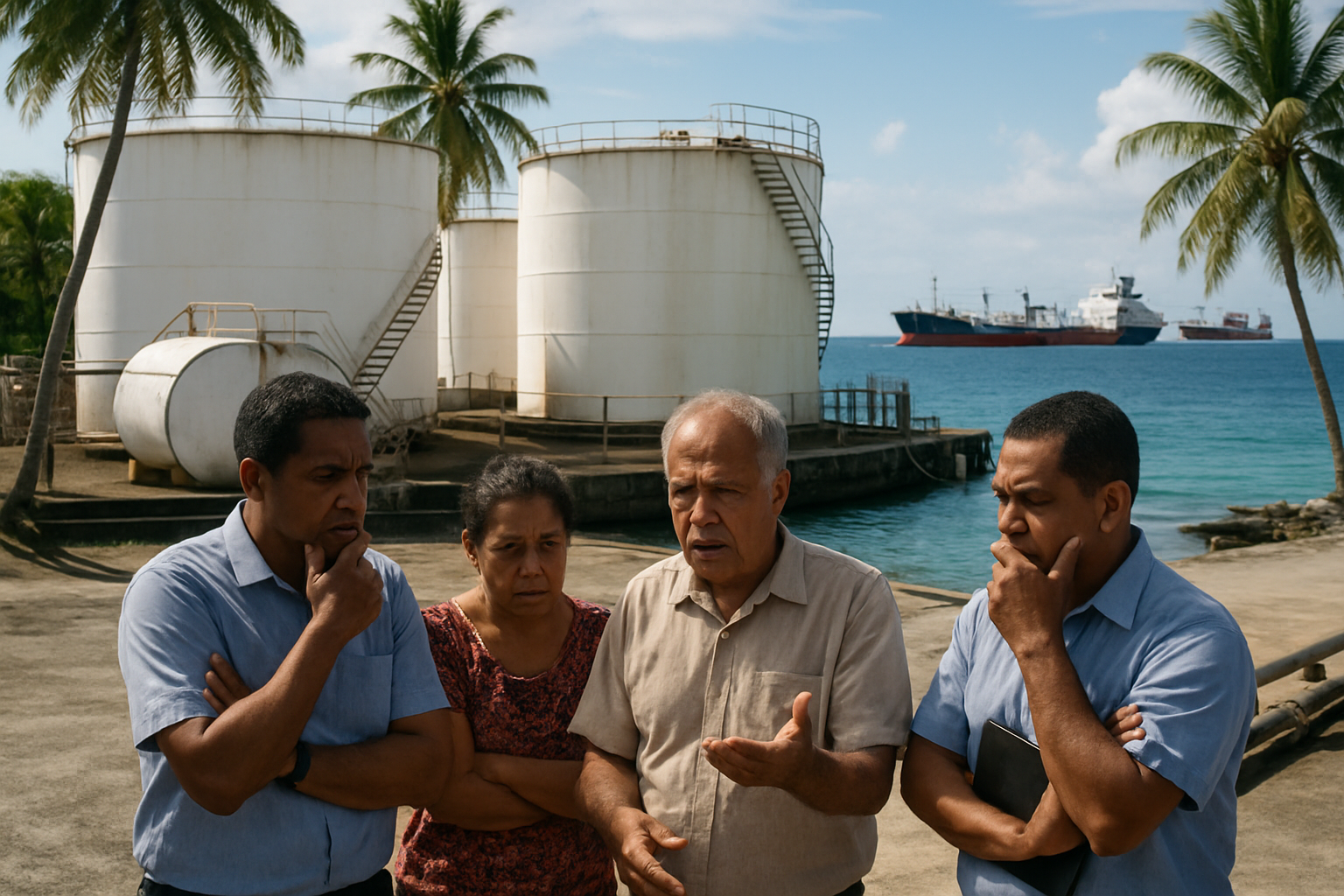
Pacific Island nations are confronting severe shortages of food and medicine as the global fuel crisis, triggered by Iran's closure of the Strait of Hormuz, continues to devastate supply chains and drive up costs for essential goods across the region.
Far-flung Pacific nations are reeling from the impact of the unprecedented global fuel crisis as authorities scramble to manage energy supplies while families must grapple with fuel restrictions and dramatically higher costs for food and access to healthcare. The crisis has created a ripple effect across the Pacific, where remote island communities are particularly vulnerable to supply chain disruptions.
Global Fuel Crisis Reaches Pacific Waters
The ongoing crisis stems from Iran's Revolutionary Guard declaring the Strait of Hormuz "unsafe for shipping," effectively blocking approximately 20 percent of the world's oil and liquefied natural gas flows through the critical 21-mile waterway. This action, taken amid the escalating US-Israeli conflict with Iran, has sent shockwaves through global energy markets and supply chains.
Oil prices have surged to historic levels, with Brent crude reaching peaks of $119.50 and WTI recording an 18.98% jump to $108.15 - the first time prices have breached $100 per barrel since 2022. The International Energy Agency has responded with the largest strategic petroleum reserve release in its 50-year history, deploying 400 million barrels from 32 countries.
Regional Coordination Amid Crisis
Pacific nations are working together to maintain fuel supply stability despite the global shortage. Tonga's Prime Minister Lord Fakafanua has received assurances about fuel supply security through the Singapore-Fiji shipping route, demonstrating the critical importance of regional cooperation during this crisis.
The coordination efforts highlight how interconnected Pacific energy security needs have become, with smaller island nations dependent on larger regional hubs like Fiji and New Zealand for reliable fuel supplies. However, even these larger nations are struggling under the pressure of the global crisis.
New Zealand Considers Emergency Measures
New Zealand, a crucial supplier to many Pacific islands, is facing its own severe fuel challenges. Petrol prices have breached the historic NZ$3.32 per liter mark, with economists forecasting potential increases to NZ$4 per liter. Prime Minister Christopher Luxon is considering "Muldoon-era" emergency measures, including car-free days and petrol sale limits - the most significant intervention since the 1970s oil crisis.
The New Zealand government's preparations for a "prolonged Iran conflict" scenario underscore the gravity of the situation. Air New Zealand has already cut over 1,000 flights affecting 44,000 passengers due to jet fuel costs surging 122% from $85-90 to $150-200 per barrel.
Australia Scrambles for Solutions
Australia, another key Pacific partner, is implementing emergency measures as Prime Minister Anthony Albanese announced that extra diesel fuel is on the way from Asian suppliers. BP and Viva have each secured two additional cargoes, totaling just over 200 million litres, with deliveries expected in late May or early June.
However, the crisis has already severely impacted Australian communities, with hundreds of service stations running dry across Queensland, New South Wales, Victoria, and South Australia. Petrol prices have surged past $2.50 per liter, approaching the $3 threshold in some regions.
Indonesia Struggles with Subsidy Pressures
Indonesia's state energy company Pertamina has increased prices for non-subsidized fuel products, potentially pushing more households towards subsidized fuel grades. This move underscores the government's challenging balancing act: allowing market-priced fuels to rise with global crude costs while protecting subsidized products used by lower-income communities.
The situation in Indonesia is particularly critical as economists warn that the shift could lead to tighter supplies and added pressure on a state budget already strained by politically sensitive energy costs. This highlights the broader challenge facing developing nations across the Pacific region.
Agricultural Sector Under Pressure
The fuel crisis is also affecting agricultural production in key regional suppliers. In Bolivia, agricultural sector representatives are demanding 90 million liters of diesel between April and June to guarantee the completion of the summer campaign and harvest. The sector has sown around 1.5 million hectares with harvest progress at approximately 60%.
This agricultural pressure could have significant implications for Pacific food security, as many island nations rely heavily on imports for basic foodstuffs. The combination of higher fuel costs for shipping and potential production shortfalls in agricultural regions creates a perfect storm for food price inflation across the Pacific.
Aviation and Transport Networks Strained
The Pacific region's aviation networks, crucial for both passenger travel and cargo shipments, are facing unprecedented strain. Over 18,000 flights have been cancelled worldwide - the most extensive disruption since COVID-19. Eight countries in the Middle East have simultaneously closed their airspace, creating what experts describe as an "aviation black hole" that severely impacts Europe-Asia flight corridors.
Airlines serving Pacific routes are implementing emergency fuel surcharges and reducing capacity. The situation is particularly challenging for island communities that depend on air transport for medical emergencies, essential supplies, and maintaining connections with the outside world.
Financial Markets Reflect Regional Stress
Financial markets across the Pacific region are showing signs of extreme stress. Pakistan's KSE-100 recorded its largest single-day decline in history at -8.97%, while South Korea's KOSPI triggered circuit breakers with a -12% fall, pushing the Korean won to 17-year lows.
Central banks including the European Central Bank and Bank of Japan are coordinating emergency liquidity measures, but traditional monetary policy tools are proving limited in effectiveness against these structural geopolitical disruptions.
Long-term Energy Security Implications
The crisis has exposed dangerous vulnerabilities in Pacific energy security architecture. The 21-mile Strait of Hormuz represents a single-point failure in modern logistics, with no realistic alternatives for handling the massive volumes of oil and LNG that normally transit the waterway daily.
Energy experts, including Samuel Ciszuk, describe this as "the most severe energy security crisis in decades, with single-chokepoint vulnerabilities completely exposed." The situation demonstrates how regional conflicts can instantly become global economic emergencies in our interconnected world.
Government Response and International Cooperation
Pacific governments are implementing unprecedented emergency measures. Multiple nations have abandoned traditional free-market principles to protect consumers through price controls, strategic reserve releases, and enhanced regulatory oversight. Hungary has implemented immediate price caps for "war-driven explosions," while France has deployed 500 fuel inspectors to prevent price manipulation.
The crisis represents what UN Secretary-General António Guterres has called "the greatest test of multilateral cooperation in the modern era." Success in containing the escalation could provide a framework for future nuclear crisis resolution, while failure might accelerate military solutions and reshape Middle Eastern geopolitics for decades.
Looking Forward: Recovery and Resilience
Recovery timelines remain uncertain as they depend entirely on military and diplomatic resolution of the Iran conflict, unlike weather-related disruptions that follow predictable patterns. The situation has highlighted the urgent need for fundamental transformation of global energy architecture to reduce dependence on strategic chokepoints in volatile regions.
For Pacific Island nations, this crisis serves as a stark reminder of their vulnerability to external shocks and the critical importance of regional cooperation, strategic reserves, and supply chain diversification. The lessons learned from this crisis will likely influence energy security planning and international cooperation frameworks for decades to come.
As the crisis continues to unfold, Pacific communities are demonstrating remarkable resilience while adapting to new realities of energy insecurity. However, the human cost of geopolitical instability in our energy-dependent world has never been clearer, making the case for urgent transformation toward more resilient and diversified energy systems across the Pacific region.