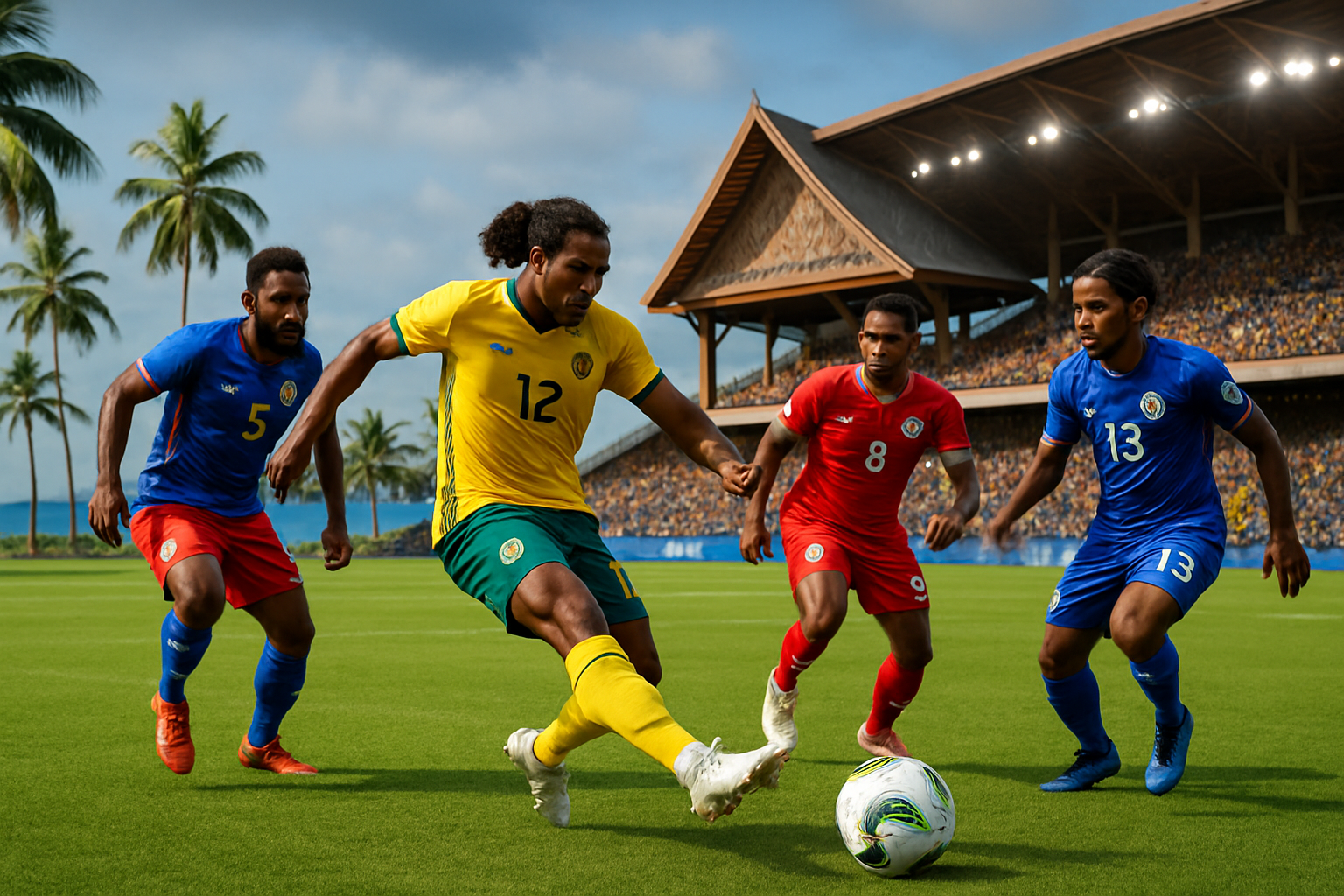
The Oceania Football Confederation has launched an ambitious new professional soccer league spanning Australia, New Zealand and the Pacific islands, marking a historic milestone for regional sports development despite mounting questions about its long-term financial sustainability.
The OFC Pro League represents the most significant investment in Pacific soccer infrastructure in decades, promising to transform the sporting landscape across nations from Fiji to Samoa. However, industry analysts warn that previous attempts at regional professional leagues have struggled with geographic challenges, limited television revenue, and fan engagement difficulties.
Breaking Barriers for Pacific Nations
For Pacific island nations, the new league represents unprecedented opportunities for local talent development and international exposure. Countries like Vanuatu, Tonga, and the Solomon Islands have long struggled to develop professional pathways for their most promising players, often seeing talent migrate to Australian and New Zealand academies at young ages.
"This changes everything for our young players," said a source familiar with the league's development. "For the first time, we have a genuine professional competition that allows Pacific talent to develop at home while competing at the highest regional level."
The league structure accommodates the unique geographic challenges of the Pacific, with innovative scheduling that minimizes travel costs while maximizing competitive opportunities. Teams will participate in regional divisions before advancing to confederation-wide playoffs, a format designed to build local rivalries while maintaining international standards.
Infrastructure and Investment Challenges
Despite the optimistic launch, significant concerns remain about the league's commercial viability. The vast distances between participating nations create logistical nightmares that have historically doomed similar ventures. Travel costs alone could consume substantial portions of team budgets, particularly for smaller Pacific island participants.
Television revenue, crucial for modern professional leagues, faces additional challenges in the Pacific market. Limited media infrastructure across many participating nations, combined with small population bases, raises questions about broadcast deals that could sustain professional operations.
The timing coincides with global sports infrastructure investments exceeding $570 billion in 2026, including major developments across Asia-Pacific. However, experts note that successful leagues require sustained financial commitment often spanning decades, not just initial investment enthusiasm.
Learning from Regional Sports Development
Recent Pacific sporting initiatives provide both encouragement and cautionary tales for the new league. Papua New Guinea's preparations for 2028 NRL entry demonstrate that Pacific nations can meet professional sporting standards with adequate support. However, the massive infrastructure investments required—including stadium upgrades, training facilities, and administrative systems—highlight the scale of commitment necessary.
The success of Pacific athletes in established competitions offers hope. Australian rugby league has benefited enormously from Pacific island talent, while New Zealand continues producing world-class soccer players despite limited domestic professional opportunities. The new league aims to capture this talent pipeline while keeping players closer to home.
Cultural and Economic Implications
Beyond sporting considerations, the league carries significant cultural weight for Pacific communities. Soccer remains the world's most popular sport, and professional competition could strengthen cultural connections across the region while providing economic opportunities in nations with limited industrial bases.
Tourism potential represents another economic dimension. Successful regional competitions could attract international visitors, particularly from Asia-Pacific markets interested in unique sporting experiences. The challenge lies in developing infrastructure capable of supporting both professional sport and tourism simultaneously.
Youth development programs integrated with the professional league structure could address broader social challenges across Pacific communities. Structured sporting pathways often provide educational and employment opportunities extending far beyond athletic careers.
Technical and Competitive Standards
Maintaining competitive standards across diverse participating nations presents ongoing challenges. Teams from Australia and New Zealand enter with established professional structures, while Pacific island participants may require significant development support to reach equivalent levels.
The league's governance structure attempts to address these disparities through salary cap mechanisms, development support programs, and graduated entry requirements. However, competitive balance remains crucial for maintaining fan interest and commercial viability across all participating markets.
International recognition by FIFA and the Asian Football Confederation could provide crucial legitimacy for the competition. Professional status would enable player transfers to established global leagues, creating additional revenue streams and development incentives.
Sustainability Questions
Industry observers point to numerous failed regional professional leagues as cautionary examples. The North American Soccer League, various African confederations, and even some European second-tier competitions have struggled with financial sustainability despite initial optimism.
The Pacific's unique challenges—extreme distances, limited media markets, and infrastructure constraints—may prove even more difficult to overcome than obstacles faced by previous ventures. Success requires not just sporting excellence but sophisticated business planning and sustained financial commitment from stakeholders across multiple nations.
"The question isn't whether Pacific soccer deserves professional competition—it absolutely does. The question is whether the economic fundamentals can support sustainable operations across such a geographically dispersed region."
— Regional Sports Industry Analyst
Looking Forward
The OFC Pro League's launch represents a bold experiment in regional sports development, with implications extending far beyond soccer. Success could provide templates for other Pacific sporting ventures, while failure might discourage investment in regional professional competition for decades.
Early indicators will include television viewership figures, attendance patterns, and most critically, the financial health of participating clubs after the initial novelty period subsides. Sustainable success requires building genuine fan engagement across multiple markets while maintaining competitive standards attractive to global soccer audiences.
The league's survival may ultimately depend on its ability to balance ambitious regional integration goals with practical commercial realities. Pacific soccer has enormous potential, but transforming that potential into sustainable professional competition remains the ultimate test of this groundbreaking initiative.
As the inaugural season progresses, the sporting world will watch closely to see whether the Pacific can defy geographic and economic constraints to establish lasting professional soccer success, potentially reshaping regional sports development for generations to come.