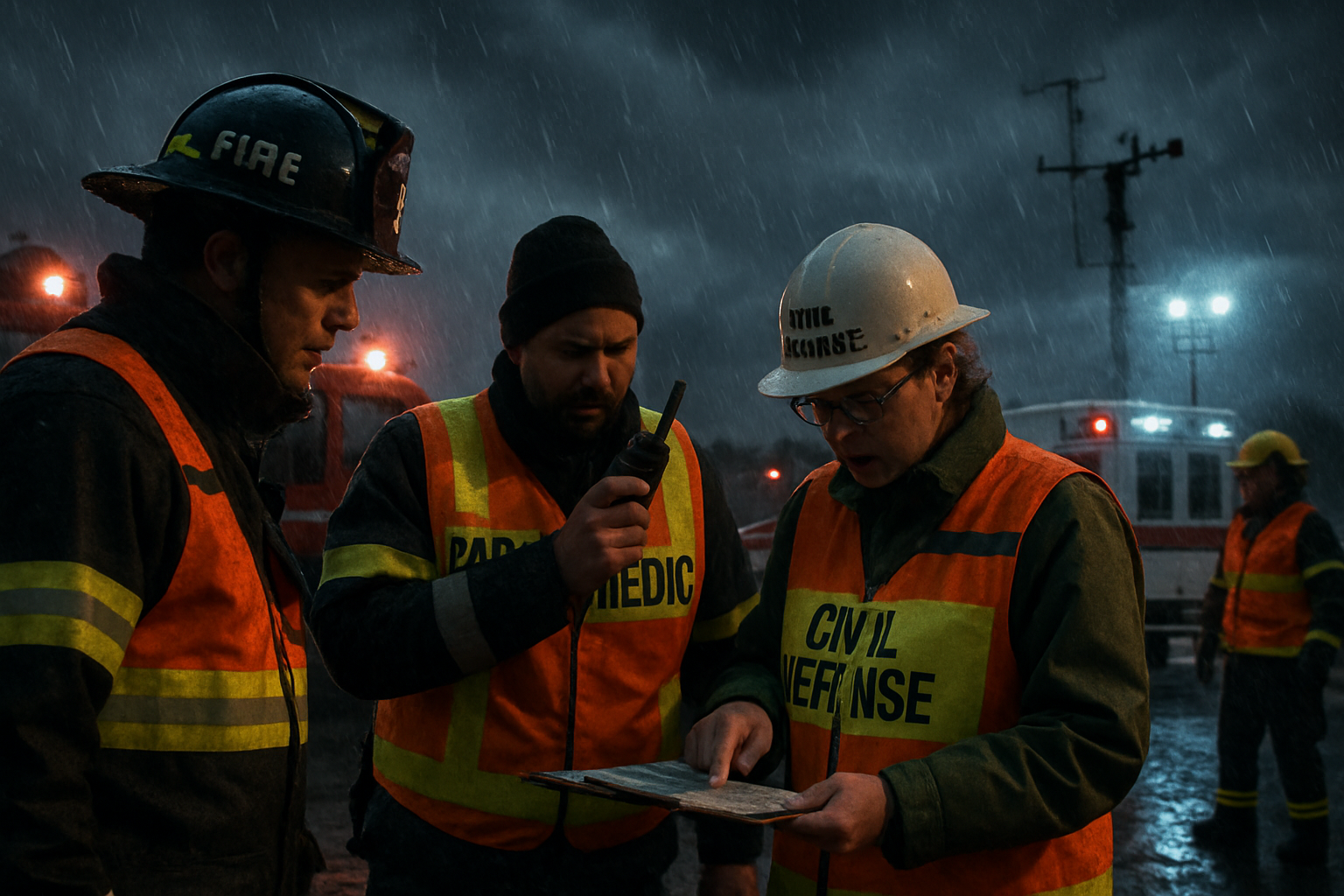
A coordinated crisis is unfolding across the Pacific region as three major weather emergencies simultaneously test government response systems, with Australia battling extreme fire danger, Fiji preparing for widespread flooding, and Malaysia managing dangerous heat conditions in what experts describe as an unprecedented convergence of climate-related disasters.
The crisis encompasses over 50 million people across the region, with emergency services deploying resources on multiple fronts as extreme weather events strain infrastructure and challenge traditional response capabilities. The timing coincides with January 2026 being confirmed as the hottest month in recorded history, highlighting the accelerating pace of climate-related emergencies facing the Asia-Pacific region.
Australia's Fire Emergency Reaches Critical Phase
Victoria state authorities have declared a Total Fire Ban across most regions as the driest conditions in nearly 20 years combine with dangerous wind patterns to create what fire officials describe as "extreme" danger ratings. The ban affects all regions except the South-West and East Gippsland Fire Districts, where fire danger remains at "high" levels.
Meteorological data reveals a concerning pattern of warm conditions accompanied by north-westerly winds, followed by gusty south-westerly changes that historically create the most dangerous fire weather scenarios. The Country Fire Authority has activated all available resources, with over 260 firefighters already deployed to battle out-of-control blazes in the Mount Lofty Ranges and Fleurieu Peninsula regions.
"We're seeing conditions that remind us of some of our worst fire seasons, but the duration and intensity of the dry period is unprecedented for this time of year."
— Victorian Emergency Services Official
The fire emergency comes as Australia's east coast experiences what meteorologists describe as a convergence of high-pressure systems and warming ocean temperatures, creating persistent dry conditions that have left vegetation critically vulnerable. Emergency management authorities report that several homes are feared lost, though full damage assessments await safer access conditions.
Fiji Braces for Nationwide Flooding Risk
Simultaneously, Fiji's National Weather Forecasting Centre in Nadi has issued a comprehensive heavy rain alert covering the entire Fiji group, warning of imminent threats from thunderstorms, flash flooding, and dangerous weather conditions expected to persist for several days.
The alert specifically targets eastern Viti Levu, including the crucial Greater Suva to Nausori-Tailevu North corridor, along with multiple interior and coastal regions across the archipelago. Weather officials report that a trough of low pressure is generating conditions that could produce "isolated heavy downpours" with flooding potential across densely populated areas.
Authorities have activated emergency response protocols across affected regions, with particular concern for low-lying coastal areas and communities near river systems. The Fiji Meteorological Service warns of possible flash flooding, landslides, and dangerous sea conditions that could isolate communities and complicate rescue operations.
The flooding threat represents a critical test for Fiji's emergency preparedness systems, which have undergone significant upgrades following previous natural disasters. Emergency shelters are being prepared across multiple provinces, while transportation authorities are monitoring road conditions and preparing for potential evacuations.
Malaysia Activates Heat Warning Systems
Adding to the regional crisis, Malaysia's Meteorological Department (MetMalaysia) has placed five areas in Kedah under Level 1 hot weather status, with daytime temperatures reaching dangerous levels between 35°C and 37°C for at least three consecutive days.
The affected areas—Pokok Sena, Pendang, Baling, Padang Terap, and Kulim—are experiencing the lowest tier of Malaysia's hot weather warning system, but authorities emphasize the cumulative health risks posed by sustained high temperatures. The heat warnings coincide with thunderstorm alerts for multiple regions, creating complex weather management challenges.
Malaysian authorities have implemented public health advisories urging residents to remain indoors during peak heat hours and maintain adequate hydration. The heat emergency particularly threatens vulnerable populations including the elderly and those working in outdoor occupations.
"The combination of sustained high temperatures with sudden thunderstorm activity creates particularly dangerous conditions that require constant public vigilance."
— MetMalaysia Weather Specialist
Coordinated Regional Response Challenges
The simultaneous nature of these emergencies is testing regional coordination mechanisms and highlighting the strain on emergency response systems across the Pacific. Each crisis requires specialized resources and expertise, from firefighting aircraft and personnel in Australia to flood rescue equipment in Fiji and heat emergency protocols in Malaysia.
Emergency management experts note that the convergence of multiple disaster types across neighboring regions limits the traditional sharing of resources and expertise that typically helps manage single-country emergencies. This pattern reflects broader concerns about climate change creating more frequent and intense weather events that overwhelm traditional response capabilities.
The crisis occurs within the context of growing recognition that Pacific region countries must develop enhanced cooperation mechanisms for managing simultaneous climate emergencies. Current response frameworks, while functional for individual disasters, face significant challenges when multiple extreme events occur across the region simultaneously.
Infrastructure and Economic Implications
Beyond immediate safety concerns, the triple emergency is exposing critical infrastructure vulnerabilities across the Pacific region. Australia's fire emergency threatens power transmission lines and telecommunications infrastructure, while Fiji's flooding risks could disrupt port operations and damage transportation networks essential for the tourism-dependent economy.
Malaysia's heat emergency, while less immediately dramatic, poses significant challenges to agricultural operations and energy systems as cooling demands surge. The economic ripple effects of simultaneous emergencies across the region could affect trade relationships, supply chains, and economic recovery efforts for months.
Agricultural sectors across all three countries face immediate threats, from fire damage to crops and livestock in Australia, flood destruction of farmland in Fiji, and heat stress on agricultural workers and crops in Malaysia. These impacts could affect regional food security and commodity markets.
Climate Context and Future Preparedness
The current crisis unfolds against the backdrop of January 2026 being confirmed as the hottest month in global recorded history, with 18 of the past 19 months exceeding 1.5°C above pre-industrial levels. This context underscores how regional weather patterns are becoming more volatile and extreme, creating conditions where multiple simultaneous emergencies become increasingly likely.
Climate scientists emphasize that the Pacific region's geographic characteristics—with diverse climate zones from tropical to temperate—make it particularly vulnerable to experiencing multiple types of extreme weather simultaneously. Ocean temperature patterns, atmospheric pressure systems, and monsoon cycles are showing increasing volatility that creates the potential for regional crisis cascades.
Emergency management authorities across the region are conducting real-time assessments of current response capabilities and coordination mechanisms. The lessons learned from this triple emergency are expected to inform future preparedness strategies and regional cooperation agreements.
International Support and Coordination
The scale of the current crisis has prompted discussions of enhanced international support mechanisms, building on successful models developed during previous Pacific region emergencies. Australia, Fiji, and Malaysia have activated bilateral and multilateral cooperation agreements to share meteorological data, emergency management expertise, and specialized resources where possible.
Regional organizations including ASEAN and Pacific Island Forums are monitoring the situation closely, with emergency protocols activated to facilitate rapid resource sharing and technical assistance. The crisis provides a real-world test of recent investments in regional early warning systems and emergency communication networks.
International disaster response organizations are positioning resources and expertise to support national response efforts, while climate monitoring agencies enhance surveillance and forecasting capabilities to provide enhanced situational awareness for emergency managers.
Recovery and Adaptation Challenges
As immediate emergency responses continue, authorities across the region are beginning to plan for recovery and long-term adaptation measures. The simultaneous nature of the current crisis highlights the need for more resilient infrastructure, enhanced emergency preparedness, and improved regional coordination mechanisms.
Recovery efforts will need to address not only immediate damage but also the underlying vulnerabilities that make the region susceptible to multi-faceted climate emergencies. This includes infrastructure hardening, improved early warning systems, and enhanced community preparedness programs.
The economic costs of recovery are expected to be substantial, with each country facing different types of reconstruction challenges. Building back better will require balancing immediate recovery needs with long-term climate adaptation strategies that reduce future vulnerability to extreme weather events.
The current crisis serves as a sobering reminder that climate change impacts are no longer future concerns but present realities requiring immediate, coordinated, and sustained response efforts across the Pacific region. The effectiveness of current emergency responses will likely influence regional preparedness strategies for years to come.