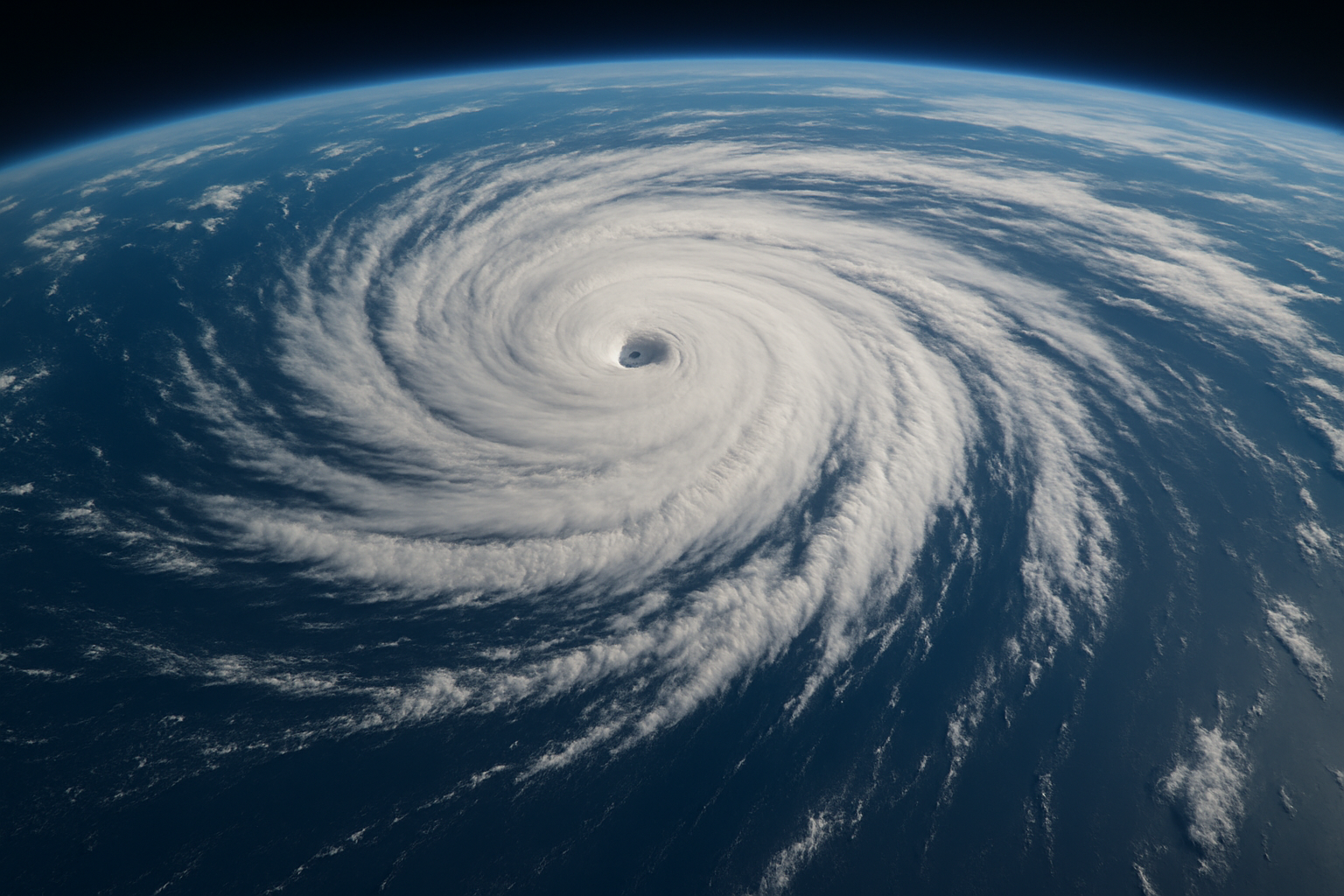
A rapidly intensifying Tropical Cyclone Vaianu is bearing down on New Zealand as a Category 3 storm with dangerous winds and torrential rain, while simultaneously, extreme weather events across Bolivia, Tonga, and the broader Pacific region are creating a multi-continental crisis that emergency officials describe as unprecedented in its scope and intensity.
MetService, New Zealand's national weather agency, issued urgent warnings as Cyclone Vaianu continued to gain "speed and power" while tracking southward from waters east of Vanuatu. The storm system is forecast to bring potentially destructive winds, heavy rainfall exceeding 130mm in some areas, and dangerous coastal swells to New Zealand's North Island, with particular concern for the already flood-saturated Northland region.
Cyclone Vaianu: A Growing Pacific Threat
The cyclone has meteorologists deeply concerned due to its rapid intensification and unpredictable track. Multiple New Zealand weather services are maintaining "a very close eye" on the system, which could deliver severe flooding conditions to areas still recovering from previous extreme weather events.
"The exact path and intensity are still unknown, but it could bring heavy rain and strong winds," MetService warned in its latest advisory. The agency noted that the cyclone is forecast to move southwards with the potential for strong winds, heavy rain, and large swells affecting multiple parts of the country on Sunday.
In the immediate vicinity, Tonga has already felt Vaianu's wrath. The Fuaʻamotu Tropical Cyclone Warning Centre issued warnings for Tongatapu, ʻEua, Tele-ki-Tonga, and Tele-ki-Tokelau as the severe tropical cyclone brought Category 3 conditions with strong winds, heavy rainfall, and dangerous seas to parts of the kingdom.
Bolivia's Climate Catastrophe
Meanwhile, in South America, Bolivia's Cochabamba department has been devastated by what officials describe as extreme climate whiplash during the first quarter of 2026. The regional government reported that the area has been "severely battered by climate extremes," alternating between severe droughts, intense rainfall, and destructive hailstorms.
Oscar Zelada, secretary of the Departmental Secretariat of Environment and Water Resources, detailed the catastrophic sequence of events that unfolded between January and March. In January, intense hailstorms affected approximately 1,500 hectares across various regions of the department, excluding the tropical zones. February brought extreme droughts, particularly affecting the Alto Valley and the Southern Cone regions, where 16,000 hectares faced significant risk due to lack of precipitation.
"This climate variation in such a short period reflects the impacts of climate change."
— Oscar Zelada, Departmental Secretary of Environment and Water Resources
The report highlighted how this rapid climate variation within a brief timeframe demonstrates the accelerating impacts of global climate change on regional weather patterns. Dozens of families have been left homeless due to flooding, while agricultural communities have suffered devastating crop and livestock losses.
Global Context: A Climate System in Crisis
These regional disasters are occurring within the context of an unprecedented global climate crisis. According to climate data accessed by Planet News, the world has now experienced 23 consecutive months of global temperatures exceeding 1.5°C above pre-industrial levels—the longest sustained extreme warming period in recorded human history.
January 2026 remains the hottest month ever recorded, while the World Meteorological Organization has indicated a 50-60% probability of El Niño development during the July-September period, which could drive global temperatures to unprecedented levels by combining baseline warming with natural cycle amplification.
This sustained warming has created what scientists term a "climate volatility paradox," where global warming enables both record-breaking heat and devastating regional extreme weather events through disrupted atmospheric circulation and altered polar vortex patterns.
Emergency Response Systems Under Strain
The simultaneous nature of these extreme weather events is exposing critical weaknesses in global emergency response systems, which were designed to handle sequential regional disasters rather than concurrent multi-continental crises. Traditional mutual aid mechanisms are proving inadequate when multiple regions face disasters simultaneously.
Emergency services across the Pacific region are operating at or beyond capacity limits. In New Zealand, MetService has been working around the clock to provide accurate forecasting and warnings. The Joint Typhoon Warning Centre has been tracking Cyclone Vaianu's latest trajectory, providing critical data to regional emergency management agencies.
In Bolivia, the response has required coordination between multiple government departments to address the varied impacts of droughts, floods, and hailstorms affecting different regions simultaneously.
Infrastructure Vulnerabilities Exposed
The current crisis is highlighting how infrastructure systems designed for historical climate patterns are failing under current extreme weather conditions that exceed their operational parameters. Transportation networks, power grids, and communication systems are repeatedly experiencing failures as extreme weather pushes them beyond their design specifications.
This has led to cascading failures that compound the primary impacts of severe weather events. In Bolivia, the alternating extreme conditions have overwhelmed traditional flood defenses and drought management systems that were designed for more predictable seasonal patterns.
The Human Cost
Beyond the immediate physical damage, these extreme weather events are taking a severe toll on communities. Agricultural sectors are experiencing mounting losses as extreme weather destroys crops and disrupts supply chains during critical growing seasons. Tourism industries face extended cancellations and infrastructure damage during what should be peak revenue periods.
Mental health services are reporting increased demand as communities struggle with climate anxiety and repeated trauma from successive extreme weather events. Families are losing generational properties, while small businesses face extinction threats from recurring disasters.
Looking Ahead: A Critical Moment for Adaptation
Climate adaptation experts describe the current situation as a watershed moment that is forcing a choice between reactive crisis management and transformative infrastructure adaptation. The concept of "building back better" has evolved from an optional enhancement to what many consider an essential survival strategy.
Current conditions are being described as a preview of what may become routine in the 2030s without significant climate adaptation investment. Traditional seasonal patterns that have guided infrastructure design, agricultural planning, and emergency preparedness for centuries are becoming increasingly unreliable as frameworks for future planning.
The window for effective climate action continues to narrow as ecological systems approach critical thresholds that could trigger irreversible changes affecting global food security, climate stability, and human settlements worldwide.
International Cooperation Essential
Environmental challenges are transcending political boundaries as atmospheric systems and ocean currents transport climate effects globally, making unilateral adaptation efforts insufficient for comprehensive resilience. The current crisis demonstrates that success requires unprecedented international cooperation, enhanced multi-sector coordination, and sustained financial commitments recognizing environmental protection as essential infrastructure.
As additional weather systems develop in both the Atlantic and Pacific regions, the persistence of these crisis conditions may be establishing a "new normal" characterized by extreme weather frequency and intensity that permanently challenges traditional emergency response frameworks.
The question facing the global community is no longer whether transformative climate action is needed, but whether humanity can organize and implement solutions rapidly enough to maintain planetary habitability during what many scientists describe as the most environmentally challenging period in recorded human history.
With Cyclone Vaianu continuing its approach toward New Zealand and extreme weather patterns persisting across multiple continents, the coming days and weeks may prove decisive for global climate resilience strategies that will affect emergency response approaches and climate adaptation efforts for generations to come.