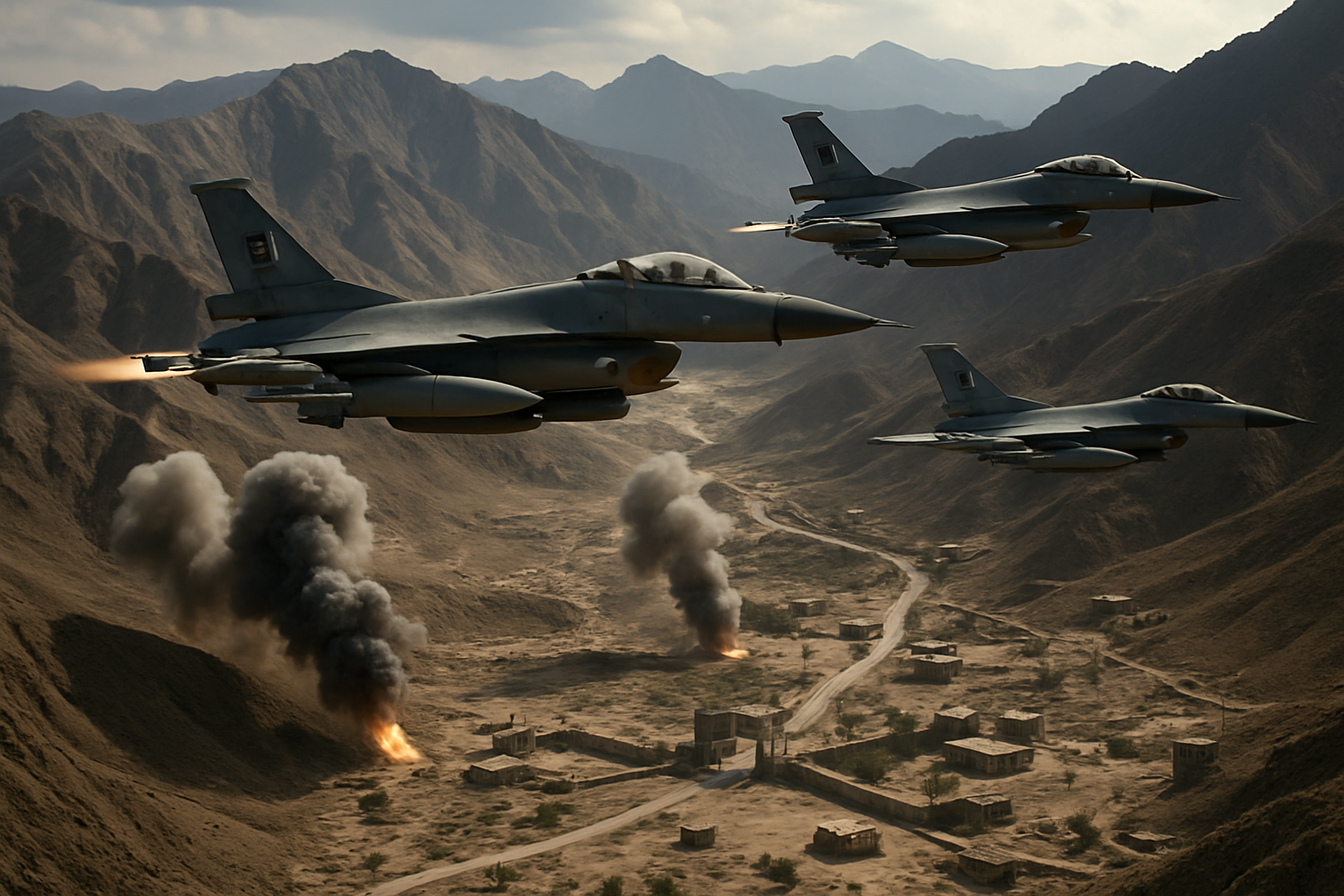
Pakistan conducted airstrikes targeting militant hideouts along the Afghanistan border early Sunday, with Taliban authorities reporting dozens of civilians killed and wounded in what represents the most significant cross-border military escalation in recent months.
The strikes targeted areas in Afghanistan's eastern provinces of Nangarhar and Paktika, according to multiple sources. Pakistan's Ministry of Information announced it had carried out "intelligence-based selective targeting of seven terrorist camps and hideouts," claiming the operations targeted militants belonging to the Pakistani Taliban (TTP), also known as Tehrik-e-Taliban Pakistan.
Immediate Diplomatic Fallout
Afghanistan's Ministry of Foreign Affairs summoned Pakistan's ambassador in Kabul on Sunday to deliver a formal protest over what Taliban officials described as violations of Afghan airspace and bombing of civilian areas. An official protest note was handed to the Pakistani ambassador, marking a sharp diplomatic escalation between the neighboring countries.
Taliban spokesman Zabihullah Mujahid condemned the strikes, stating: "Last night, they bombed our civilian compatriots in Nangarhar and Paktika provinces, martyring and wounding dozens of people, including women and children." The Taliban's Defense Ministry described the attacks as targeting "various civilian areas" including a religious madrasa and multiple civilian homes.
"The ministry strongly condemned what it described as repeated violations of Afghanistan's airspace and the bombing of civilian areas, calling the actions a clear breach of Afghanistan's territorial integrity and a provocative move."
— Afghanistan Ministry of Foreign Affairs Statement
Casualty Reports and Scale of Operations
Casualty figures varied across different sources, with the Afghan Red Crescent Society reporting more than a dozen people killed. Some Pakistani sources claimed the operations resulted in over 80 deaths, while Afghan officials spoke of "dozens of civilians killed and wounded." The discrepancy in numbers reflects the remote locations of many targeted sites and ongoing rescue operations.
Local Afghan sources reported that Nangarhar province's Behsud district was particularly devastated, with Taliban police spokesman Sayed Tayeb Hamad confirming multiple civilian casualties. Residents gathered at strike sites amid scenes of destruction, with images showing damaged buildings and rescue operations in progress.
Pakistan's Deputy Interior Minister claimed the military operations killed at least 70 militants, though these figures could not be independently verified. The strikes occurred around 1:00 AM local time on February 22, targeting what Pakistan described as camps providing sanctuary to militants planning attacks against Pakistani forces and civilians.
Context of Recent Violence
The airstrikes came in response to a series of recent terrorist attacks inside Pakistan that killed dozens of Pakistani security personnel and civilians. The most significant was a February 16 attack in Bajaur district that killed 11 Pakistani soldiers when TTP militants used a vehicle-borne improvised explosive device against a joint security checkpost.
Earlier this month, Pakistan also responded to the devastating February 6 Islamabad mosque bombing that killed 31 people and wounded 169 others. The Islamic State Khorasan Province (ISIS-K) claimed responsibility for that attack, which specifically targeted Shia Muslims during Friday prayers.
Pakistan has been conducting intensive counter-terrorism operations, with officials claiming to have eliminated over 400 militants in February 2026 operations in Balochistan province alone. Defense Minister Khawaja Asif had previously threatened airstrikes against Afghanistan if cross-border attacks continued, following unsuccessful diplomatic attempts to address the issue.
Strategic and Political Implications
The strikes occurred despite recent diplomatic efforts to improve Pakistan-Afghanistan relations. Just days before the airstrikes, Afghanistan had released three Pakistani soldiers captured during October 2025 border clashes, in a prisoner exchange facilitated by Saudi Arabian mediation as a Ramadan goodwill gesture.
The timing of the strikes during the holy month of Ramadan carries additional significance, as recent terrorist attacks in Pakistan have deliberately targeted religious gatherings and prayer times to maximize psychological impact.
Taliban officials warned of a "measured and appropriate response at suitable time," describing the protection of sovereignty and population as "religious obligations and national duties." This represents a significant escalation in rhetoric following previous diplomatic efforts to maintain neighborly relations.
International Concerns and Regional Security
The cross-border strikes highlight broader regional security challenges that have persisted since the Taliban's return to power in August 2021. Chinese officials have warned the UN Security Council about the continued presence of ISIS-K, al-Qaeda, and other terrorist groups in Afghanistan, contradicting Taliban claims of having "defeated terrorism."
Pakistan maintains that TTP leadership operates "with impunity from Afghan soil" despite repeated Taliban assurances. The sophisticated nature of recent attacks, including coordinated assaults and vehicle-borne explosive devices, demonstrates that militant groups retain significant operational capabilities despite sustained military pressure.
Regional powers including China and Russia have expressed concerns about spillover effects from Afghanistan's security challenges. Pakistan's acknowledgment of diminishing regional influence compared to wealthier powers like Turkey, UAE, Qatar, Saudi Arabia, and China has complicated traditional diplomatic approaches to resolving border security issues.
Humanitarian Impact
The strikes on civilian areas raise serious questions under international humanitarian law regarding the protection of non-combatants. Medical facilities in the affected areas reportedly struggled to treat the wounded, while rescue operations continued for civilians trapped under rubble from destroyed buildings.
The targeting of a religious madrasa and civilian homes has drawn particular criticism from Taliban officials, who described the actions as violations of Islamic principles as well as international law. The border regions already struggle with poverty and limited public services, compounding the challenges faced by affected communities.
Future Implications
The success or failure of Pakistan's military approach to addressing cross-border terrorism will significantly influence future policy decisions and regional security architectures. The strikes represent a critical test of the Taliban's capability and willingness to control militant groups operating from Afghan territory versus Pakistan's resolve to use military action for border security.
International observers view this crisis as potentially setting precedents for how territorial sovereignty intersects with transnational terrorism concerns in 21st-century conflict management. The resolution may provide a template for addressing similar regional challenges where legitimate security concerns must be balanced with respect for sovereignty and protection of civilians.
The international community faces pressure to develop more effective mechanisms for addressing terrorism that respect sovereignty while protecting civilians, requiring sustained diplomatic engagement that addresses both immediate security needs and underlying causes of regional instability.