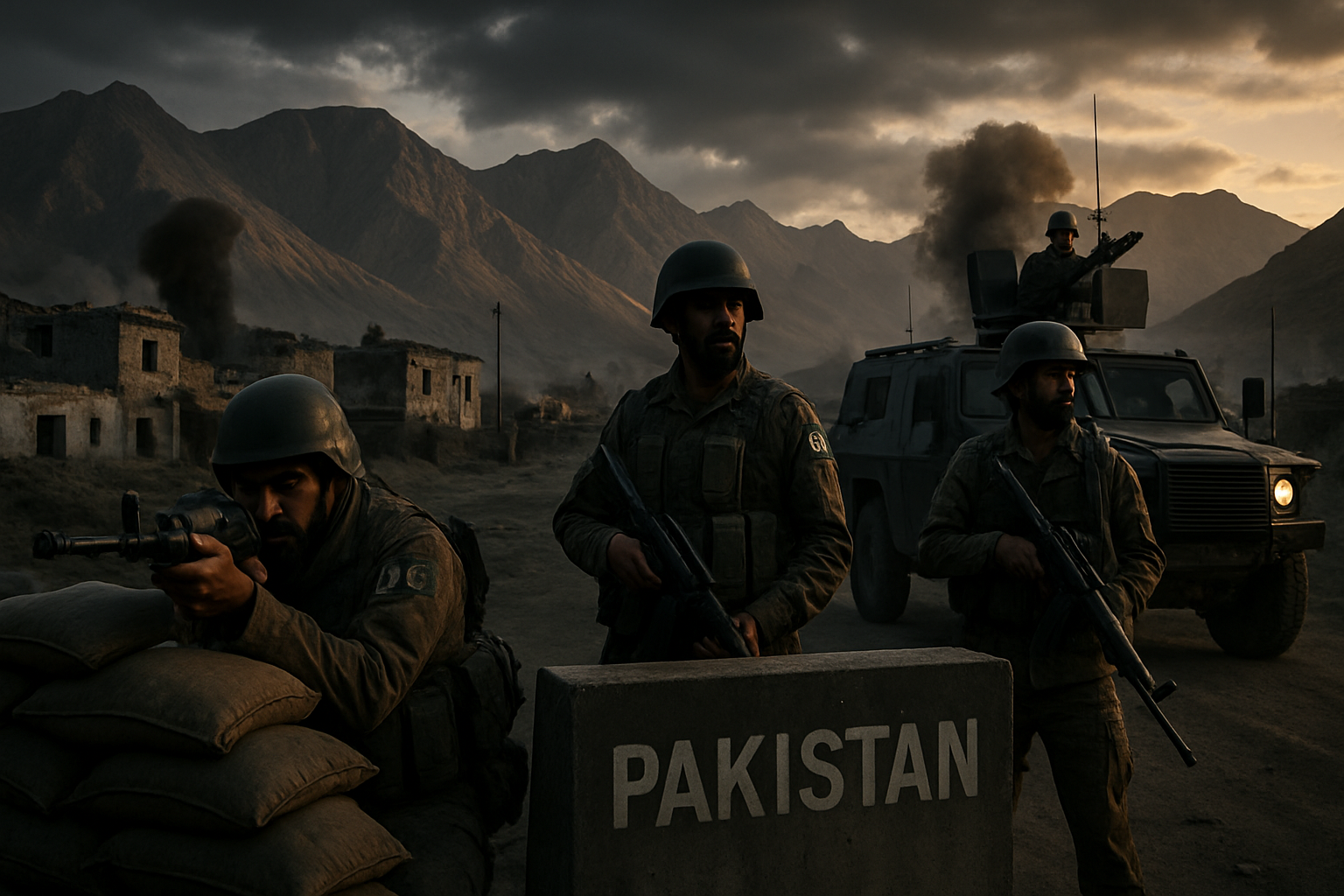
Pakistani military forces conducted artillery and mortar attacks overnight that killed four Afghan civilians, including two children, in the eastern province of Khost, Taliban officials confirmed Thursday, marking the latest escalation in a dangerous border crisis that has claimed hundreds of lives since February.
The deadly strikes occurred around 4:00 a.m. in the Alisher-Trezi district of Khost province, targeting members of a nomadic family, according to Hamdullah Fetrat, Deputy Spokesperson for the Islamic Emirate. The victims included a man, a woman, and two children, while three additional children were wounded in the bombardment.
Simultaneous Pakistani military operations in Kunar province damaged several homes and private properties, though no casualties were reported there. The attacks represent a continuation of the most serious military confrontation between the neighboring countries since the Taliban's return to power in August 2021.
Crisis Timeline and Escalation
The current border crisis began with a February 16 attack in Pakistan's Bajaur district, where Tehreek-e-Taliban Pakistan (TTP) militants killed 11 Pakistani soldiers using a vehicle-borne improvised explosive device. Pakistan responded on February 22 with coordinated airstrikes on seven alleged terrorist camps in Afghanistan's Nangarhar and Paktika provinces, claiming to have killed over 80 militants but causing civilian casualties including eight schoolchildren.
The situation dramatically escalated on February 27 when Pakistani Defense Minister Khawaja Asif formally declared "open war" against Afghanistan's Taliban government, marking an unprecedented diplomatic and military confrontation. Since then, both sides have engaged in sustained cross-border operations, with fighting reported in multiple provinces along the disputed 2,640-kilometer Durand Line.
"Four civilians were killed overnight in Khost province during artillery and mortar shelling by the Pakistani military. The attacks occurred around 4:00 a.m. in Alisher-Trezi district."
— Hamdullah Fetrat, Deputy Spokesperson, Islamic Emirate
International Mediation Efforts
China has emerged as the latest international actor calling for de-escalation, with Foreign Minister Wang Yi holding discussions with Pakistani Deputy Prime Minister Mohammad Ishaq Dar about the crisis. During their telephone conversation, Wang emphasized that diplomatic efforts are essential to prevent further escalation in regional tensions.
The Chinese intervention adds to ongoing mediation attempts by multiple countries, including Turkey, Iran, Russia, and Saudi Arabia. However, these diplomatic initiatives have so far failed to halt the military confrontation, which has now entered its fourth week.
Turkey's Foreign Minister Hakan Fidan has been particularly active, conducting shuttle diplomacy between Pakistani and Afghan officials while coordinating with Qatar and Saudi Arabia on potential ceasefire arrangements. Iran has also offered mediation services, warning that continued escalation could destabilize the broader region.
Humanitarian Crisis Deepens
The UN Assistance Mission in Afghanistan (UNAMA) has documented at least 185 civilian casualties, including 56 deaths and 129 injuries, between February 26 and March 5 alone. The majority of victims have been women and children, caught in the crossfire of artillery exchanges and airstrikes along the border regions.
The World Health Organization has been forced to deliver emergency medical oxygen to just 23 hospitals across Afghanistan as the healthcare system struggles to cope with the influx of wounded civilians. Hundreds of health centers have been forced to close due to funding cuts and security concerns.
The crisis has also devastated bilateral trade, with commercial exchanges collapsing by 59% over seven months. Pakistani exports to Afghanistan have plummeted from $550 million to $228 million, severely affecting border communities dependent on cross-border commerce. Traditional trade routes through Chaman-Spin Boldak and Torkham have faced repeated closures, compounding Afghanistan's existing humanitarian emergency.
The Durand Line Dispute
At the heart of the current crisis lies the contested Durand Line, a 2,640-kilometer border established by British colonial authorities in 1893. The boundary has never been formally recognized by any Afghan government, which views it as an artificial division of Pashtun tribal territories.
Pakistan maintains that TTP and other militant groups operate "with impunity from Afghan soil," using the porous mountainous terrain as sanctuaries for launching attacks. The Taliban government categorically denies providing sanctuary to militant groups, insisting that no armed organizations operate from Afghan territory against neighboring countries.
The dispute is complicated by the challenging geography along the border, where rugged mountains and limited government presence on both sides create conditions that militants can exploit. Pakistan has acknowledged that its traditional influence in Afghanistan has diminished compared to wealthier regional powers like Turkey, the UAE, Qatar, Saudi Arabia, and China, potentially increasing its reliance on military solutions.
Regional Security Implications
The ongoing confrontation represents the most serious test of South Asian security architecture since the Taliban's return to power. With Pakistan being a nuclear-armed state, the international community has expressed grave concern about the potential for further escalation.
Chinese warnings to the UN Security Council about the presence of ISIS-K, al-Qaeda, and the East Turkestan Islamic Movement (ETIM) in Afghanistan contradict Taliban claims of having defeated terrorism. These concerns add complexity to the crisis, as they involve not just bilateral Pakistan-Afghanistan tensions but broader international counter-terrorism considerations.
The conflict has also exposed the limitations of current diplomatic frameworks in managing disputes where territorial sovereignty intersects with transnational terrorism challenges. The success or failure of mediation efforts could establish important precedents for 21st-century conflict resolution mechanisms.
Economic Consequences
Beyond the immediate human cost, the border crisis is exacerbating Afghanistan's worst humanitarian emergency in 25 years. UN data shows that 88% of female-headed households in Afghanistan cannot meet minimum living requirements, a situation worsened by the disruption of cross-border trade and aid deliveries.
The economic dimension of the crisis extends beyond Afghanistan's borders, affecting Pakistani border communities that have historically depended on cross-border commerce for their livelihoods. The closure of traditional trade routes has disrupted supply chains for essential goods, contributing to price increases and shortages in border regions.
Path Forward Uncertain
As international mediators work to establish dialogue between the two sides, the fundamental issues driving the conflict remain unresolved. Pakistan's demand for "concrete and verifiable measures" against militant groups operating from Afghan soil contrasts with the Taliban's insistence that no such groups exist under their control.
The Taliban leadership has emphasized that "the path of talks remains open" and has expressed willingness to resolve differences through "mutual understanding and respect." However, with Pakistani military operations continuing and civilian casualties mounting, the window for diplomatic solutions may be narrowing.
The international community faces the challenge of developing effective conflict prevention mechanisms that can address legitimate security concerns while respecting territorial sovereignty and protecting civilian populations. The outcome of this crisis will likely influence how similar regional disputes are managed in the future, making it a critical test case for modern diplomatic frameworks.
As the situation continues to unfold, the immediate priority remains protecting civilian lives and preventing further escalation that could destabilize the broader region. With multiple mediation tracks active but military operations ongoing, the coming days will be crucial in determining whether diplomatic engagement can overcome the cycle of violence that has gripped the Pakistan-Afghanistan border for weeks.