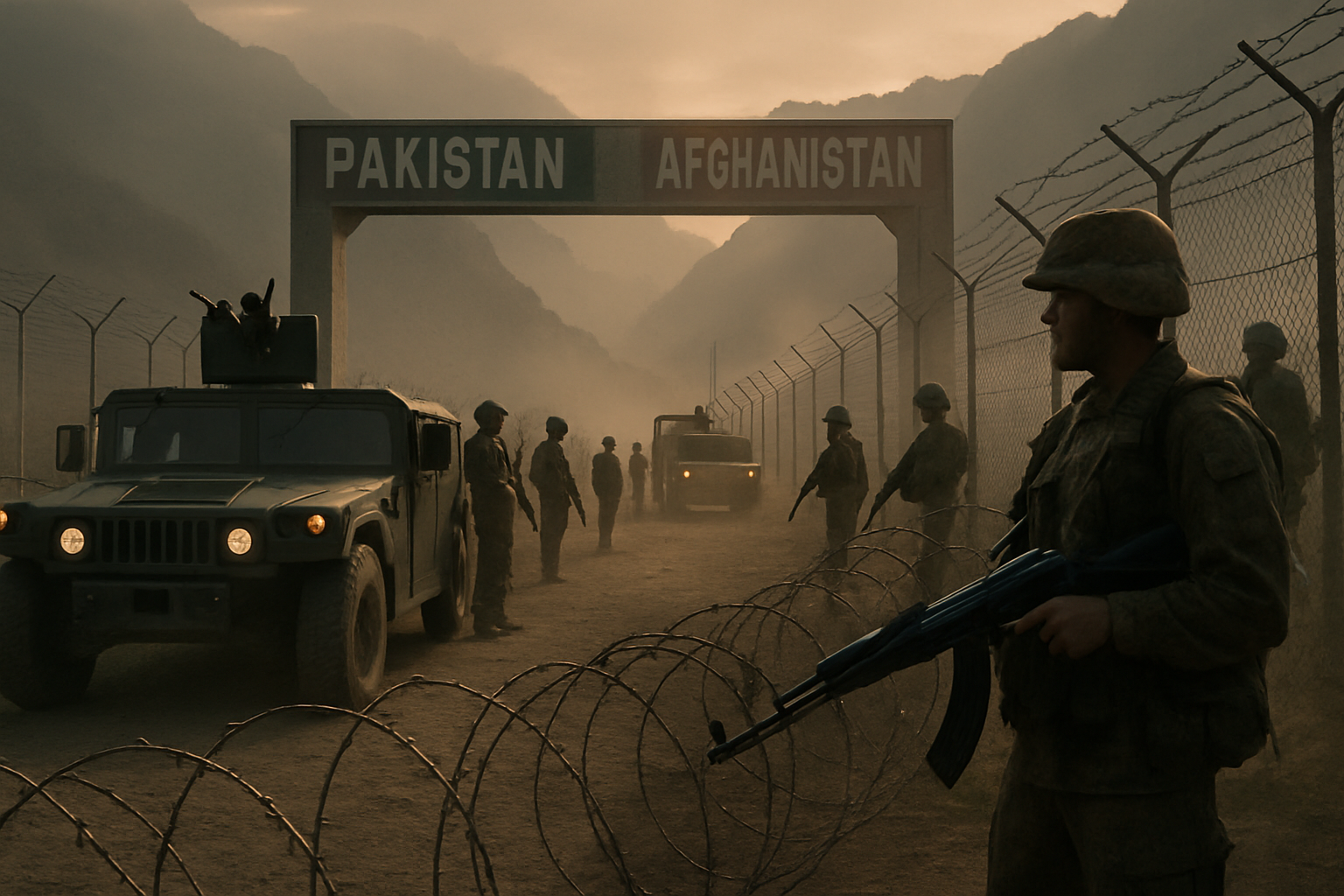
Pakistani missile strikes have killed at least three people and injured 45 others in Afghanistan's Kunar province Monday, as the devastating border conflict between Pakistan and the Taliban government enters its third month with no resolution in sight.
The latest violence comes despite Pakistan's categorical denial of targeting civilian areas, with Islamabad's Information Ministry dismissing reports of attacks on a university and residential areas as "blatant lies" designed to cover Taliban support for what Pakistan terms "Fitna al-Khawarij" (TTP militants).
Three Months of Escalating Warfare
The current crisis began February 16, 2026, when Tehrik-e-Taliban Pakistan (TTP) militants killed 11 Pakistani soldiers in a devastating attack in Bajaur district. What started as cross-border terrorism has evolved into the most serious military confrontation between Pakistan and Afghanistan since the Taliban's return to power in August 2021.
Pakistani Defense Minister Khawaja Asif's historic "open war" declaration on February 27 marked an unprecedented escalation, launching Operation Ghazab-ul-Haq - a sustained military campaign targeting what Pakistan claims are terrorist sanctuaries on Afghan soil.
The conflict reached a particularly bloody phase in recent days, with separate incidents in Kandahar province reporting deadly clashes between Pakistani forces and Taliban fighters along the disputed Durand Line border.
Disputed Accounts and Information Warfare
Monday's violence in Kunar province highlights the increasingly complex information battle accompanying the physical confrontation. While Afghan sources reported Pakistani missile strikes killing three and wounding 45, Pakistan's Information Ministry vehemently denied targeting civilian infrastructure.
The ministry specifically rejected claims by Afghan news outlet Tolo News that Pakistan had attacked Sayed Jamaluddin Afghani University and residential areas, calling such reports attempts "to gain sympathy to cover up support provided by Afghan Taliban to Fitna al-Khawarij."
Simultaneously, Taliban sources claim six Pakistani soldiers were killed during overnight clashes in Spin Boldak district along the Kandahar border, though Pakistan has not confirmed these casualties. The conflicting narratives reflect the propaganda dimension of what has become a comprehensive confrontation.
Humanitarian Catastrophe Mounting
The three-month conflict has created a massive humanitarian crisis across Afghanistan's border provinces. UN documentation shows devastating civilian casualties: 289 people killed or wounded (76 dead, 213 injured) with the majority being women and children.
The UN Office for the Coordination of Humanitarian Affairs (OCHA) reports 16,370 families have been displaced across 10 Afghan provinces - Paktia (7,000), Kunar (3,500), Khost and Nangarhar (2,500 each). The World Health Organization has been forced to deliver emergency medical oxygen to only 23 hospitals, while hundreds of health centers have closed due to security and funding concerns.
"The situation in Kunar and other border provinces has become critical. Families are fleeing their homes with nothing but the clothes on their backs."
— UN humanitarian official speaking on condition of anonymity
Economic Warfare Devastates Border Communities
Beyond the immediate violence, the conflict has triggered economic devastation through what amounts to economic warfare. Bilateral trade between Pakistan and Afghanistan has collapsed by 59%, with Pakistani exports plummeting from $550 million to just $228 million over seven months.
Traditional trade routes through Chaman-Spin Boldak and Torkham face repeated closures, affecting millions of people dependent on cross-border commerce. Remote communities in mountainous provinces like Nuristan have appealed to Taliban officials to intervene and reopen roads blocked by Pakistan, facing critical shortages of essential goods and medical supplies.
The economic impact compounds Afghanistan's existing humanitarian crisis, where 88% of female-headed households are unable to meet minimum living requirements according to UN data.
The Durand Line: A Colonial Legacy Fueling Modern Conflict
At the heart of this crisis lies the disputed 2,640-kilometer Durand Line, the colonial-era border established by the British in 1893 that has never been recognized by any Afghan government. The porous, mountainous frontier runs through traditional Pashtun tribal areas, creating a complex web of ethnic, territorial, and security challenges.
Pakistan maintains that TTP militants operate "with impunity from Afghan soil," using the difficult terrain and limited government control to launch attacks across the border. The Taliban categorically denies providing sanctuary to militants or allowing Afghan territory to be used for attacks against Pakistan.
This fundamental disagreement over territorial sovereignty versus counter-terrorism responsibilities has proven impossible to resolve through traditional diplomatic channels, despite sustained international mediation efforts.
Failed Diplomatic Efforts
Multiple international powers have attempted to broker peace between the nuclear-armed neighbors, with mixed results at best. Saudi Arabia, Qatar, and Turkey achieved a temporary ceasefire during Eid al-Fitr in March through faith-based diplomacy, but the truce was immediately violated.
China's Foreign Minister Wang Yi has conducted intensive shuttle diplomacy, while Iran, Russia, and Turkey have all offered mediation services. Religious scholars, including 22 prominent clerics, have issued joint appeals for peace, while Islamic scholar Ali al-Qaradaghi issued fatwas calling for ceasefires during Ramadan.
Even a Saudi-mediated prisoner exchange in February 2026 that saw three Pakistani soldiers released from Taliban custody proved insufficient to address the underlying security challenges driving the conflict.
Nuclear Implications and Regional Security
The involvement of nuclear-armed Pakistan adds a dangerous dimension to what might otherwise be considered a regional border dispute. This represents the most serious military confrontation involving Pakistan since the Taliban's return to power, testing the post-2021 South Asian security architecture.
China's warnings at the UN Security Council about the continued presence of ISIS-K, al-Qaeda, and the East Turkestan Islamic Movement (ETIM) operating from Afghan territory directly contradict Taliban claims of having defeated terrorism within Afghanistan's borders.
Pakistan acknowledges it has lost much of its traditional influence in Afghanistan to wealthier powers including Turkey, the UAE, Qatar, Saudi Arabia, and China. This diminished leverage has contributed to Islamabad's increased reliance on military solutions rather than diplomatic engagement.
A Template for 21st Century Conflict?
The Pakistan-Afghanistan crisis has broader implications beyond South Asia, potentially serving as a template for how territorial sovereignty intersects with transnational terrorism in the modern era. The success or failure of diplomatic efforts to contain this conflict will influence global approaches to similar challenges.
Defense Minister Asif has indicated Pakistan has "no rush" to end military operations until concrete anti-militant measures are implemented by the Taliban. Meanwhile, Taliban officials maintain that the "path of talks remains open" while seeking "mutual understanding and respect."
The stakes extend far beyond bilateral relations, affecting regional stability mechanisms and international conflict resolution approaches worldwide. As this confrontation between nuclear-armed neighbors continues into its third month, the international community faces mounting pressure to develop innovative diplomatic frameworks that balance legitimate security concerns with territorial integrity, civilian protection, and international law compliance.
The Path Forward
With underlying issues including cross-border terrorism, disputed borders, and competing sovereignty claims remaining fundamentally unresolved, the conflict shows little sign of abating. The pattern of temporary ceasefires followed by immediate violations demonstrates the fragility of current diplomatic approaches.
As violence continues to claim civilian lives and displace thousands of families, the need for sustained, comprehensive engagement addressing root causes becomes ever more urgent. The alternative - prolonged warfare between nuclear-armed neighbors - carries implications that extend far beyond the mountainous frontier where this conflict rages.
The coming days and weeks will prove critical in determining whether innovative diplomatic frameworks can succeed where traditional mediation has failed, or whether this conflict will continue to serve as a sobering example of the challenges facing international peace efforts in the 21st century.