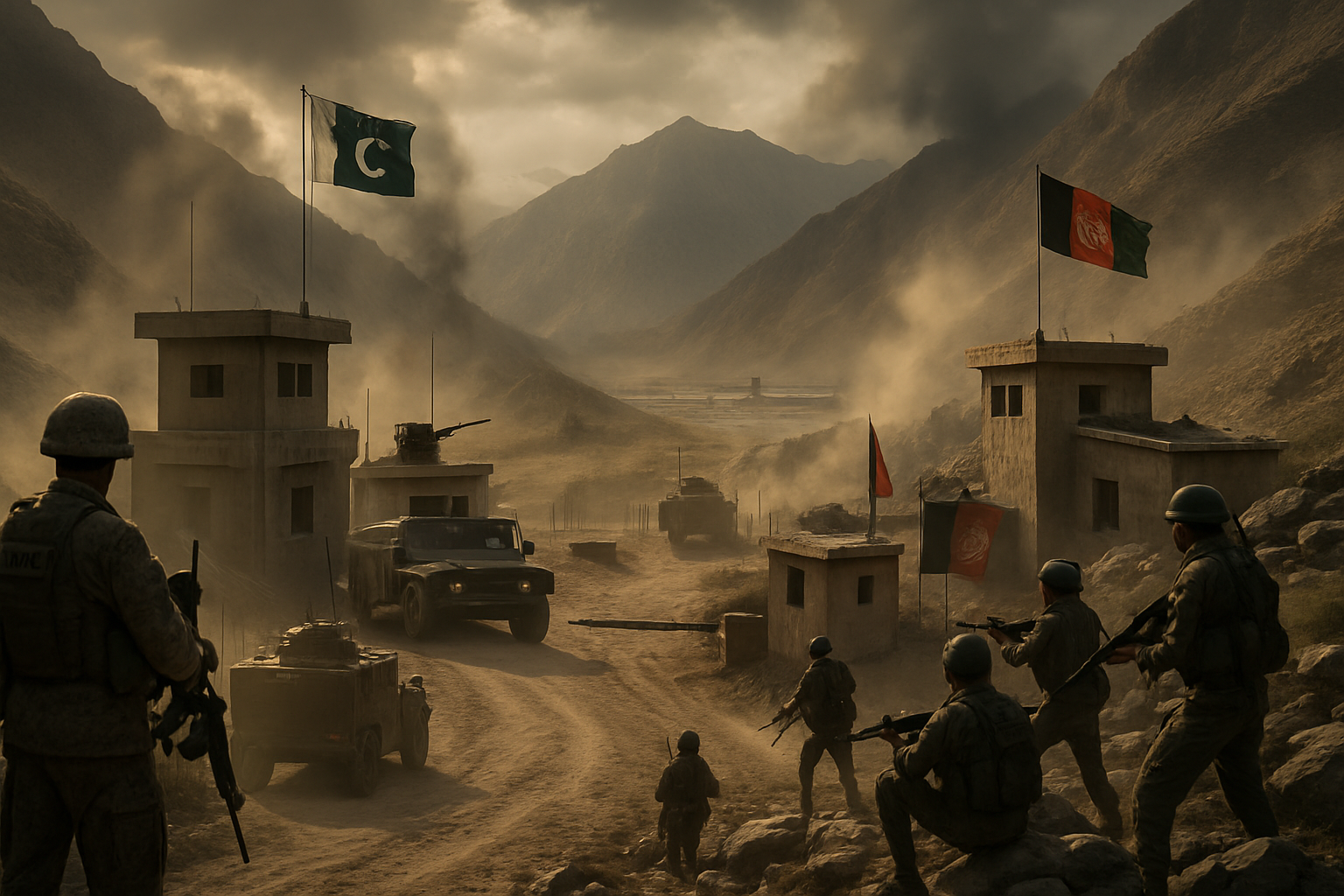
Pakistan-Afghanistan border tensions have erupted into the most serious military confrontation since the Taliban's 2021 return to power, with both nations engaging in unprecedented cross-border strikes that threaten to destabilize the entire region.
The crisis reached a critical juncture with Pakistani fighter jets reportedly targeting the strategic Bagram Airfield in Afghanistan's Parwan province during overnight operations, while Afghan forces responded with gunfire at Pakistani aircraft over Kabul, marking an alarming escalation in the months-long conflict.
Bagram Airfield Under Attack
Local sources in Parwan province confirmed that Pakistani fighter jets struck the strategic Bagram Airfield in a late-night operation, with several powerful explosions heard across the region. The base, historically regarded as a key military installation, was reportedly hit during the coordinated assault, representing the most significant targeting of Afghan military infrastructure in recent months.
The attack on Bagram comes as part of what Pakistani officials describe as "Operation Ghazab-ul-Haq," a comprehensive military campaign launched in response to what Pakistan claims are continued terrorist attacks originating from Afghan soil.
Kabul Under Fire
In a dramatic escalation, explosions and gunfire rocked central Kabul on Sunday as Taliban forces opened fire at Pakistani aircraft flying over the capital. The unprecedented scenes in Afghanistan's political center demonstrate how rapidly the conflict has expanded beyond border regions into the heart of both nations.
Taliban spokesman Zabihullah Mujahid confirmed that Afghan forces were responding to "new incursions by Pakistani aircraft," marking the first time in recent memory that military action has reached Afghanistan's capital in such a direct confrontation with a neighboring country.
The Path to Open Conflict
The current crisis has its roots in a deadly February 16 attack in Pakistan's Bajaur district that killed 11 Pakistani soldiers. The attack, carried out by the banned Tehreek-e-Taliban Pakistan (TTP) using a vehicle-borne improvised explosive device, prompted Pakistani Defense Minister Khawaja Asif to declare what he termed "open war" against Afghanistan's Taliban government.
Pakistan's subsequent airstrikes on February 22 targeted seven terrorist camps in Afghanistan's Nangarhar and Paktika provinces, with Pakistani sources claiming over 80 militants were eliminated. However, the strikes also resulted in significant civilian casualties, including the deaths of eight schoolchildren in Behsud district, further inflaming tensions.
"We will not hesitate to take all necessary measures to protect our sovereignty and our people from these unprovoked attacks."
— Taliban spokesman, describing Afghanistan's response
International Mediation Efforts Fall Short
Despite intensive diplomatic efforts, including Saudi-mediated prisoner exchanges and Iranian offers of mediation, the conflict has continued to escalate. In February 2026, Saudi Arabia successfully facilitated the release of three Pakistani soldiers from Taliban custody, captured during October 2025 border clashes. However, these confidence-building measures proved insufficient to address the underlying security challenges.
Turkey's Foreign Minister Hakan Fidan has launched a mediation initiative, contacting both Pakistani Foreign Minister Ishaq Dar and Afghan Foreign Minister Amir Khan Muttaqi, along with officials from Qatar and Saudi Arabia. Iran has also offered mediation services, warning of broader regional destabilization risks.
Economic Devastation
The military escalation has had devastating economic consequences for both nations. Bilateral trade between Pakistan and Afghanistan has collapsed by 59%, with Pakistani exports dropping from over $550 million to just $228 million in the first seven months of the current fiscal year.
This economic deterioration particularly affects border communities dependent on cross-border commerce and compounds Afghanistan's existing humanitarian crisis, where 88% of female-headed households are unable to meet minimum living requirements according to UN data.
The Durand Line Dispute
At the heart of the conflict lies the disputed 2,640-kilometer Durand Line, the colonial-era border established in 1893 that has never been formally recognized by Afghan governments. The porous, mountainous terrain provides sanctuaries for militant groups and complicates bilateral relations between the two neighbors.
Pakistan maintains that TTP militants operate "with impunity from Afghan soil," while the Taliban government denies providing sanctuary to terrorist groups and accuses Pakistan of violating Afghan sovereignty with its military operations.
Regional and Global Implications
The crisis represents the most serious test of the post-2021 South Asian security architecture since the Taliban's return to power. Pakistan acknowledges having diminished regional influence over Afghanistan compared to wealthier powers including Turkey, the UAE, Qatar, Saudi Arabia, and China, forcing greater reliance on military solutions.
Chinese warnings to the UN Security Council about the presence of ISIS-K, al-Qaeda, and ETIM in Afghanistan contradict Taliban claims of having "defeated terrorism," adding another layer of complexity to the regional security situation.
The international community faces mounting pressure to develop effective conflict prevention mechanisms before the situation spirals into a broader regional confrontation with potentially nuclear implications, given Pakistan's atomic weapons capabilities.
Humanitarian Concerns Mount
The targeting of civilian areas, including religious institutions, during the holy month of Ramadan has raised serious international humanitarian law concerns. Medical facilities in border regions are overwhelmed with casualties, and rescue operations continue for civilians trapped under rubble from airstrikes.
The UN has called for immediate de-escalation and adherence to international law principles of distinction, proportionality, and precaution in military operations. However, systematic violations continue to undermine confidence in negotiated solutions.
Looking Ahead
The success or failure of current diplomatic containment efforts will significantly influence how territorial sovereignty versus transnational terrorism challenges are managed in the 21st century. The conflict has already set dangerous precedents for cross-border military action and threatens to undermine international law enforcement credibility.
With both nations maintaining firm positions on core issues—Pakistan demanding concrete action against militant groups and Afghanistan insisting on sovereignty respect—the coming days will be critical in determining whether diplomatic mechanisms can prevent further escalation or if the region faces prolonged military confrontation.
The Pakistan-Afghanistan border crisis has evolved from isolated incidents into what experts describe as a comprehensive challenge to regional stability, requiring innovative diplomatic frameworks that balance legitimate security concerns with territorial integrity, civilian protection, and international law compliance.