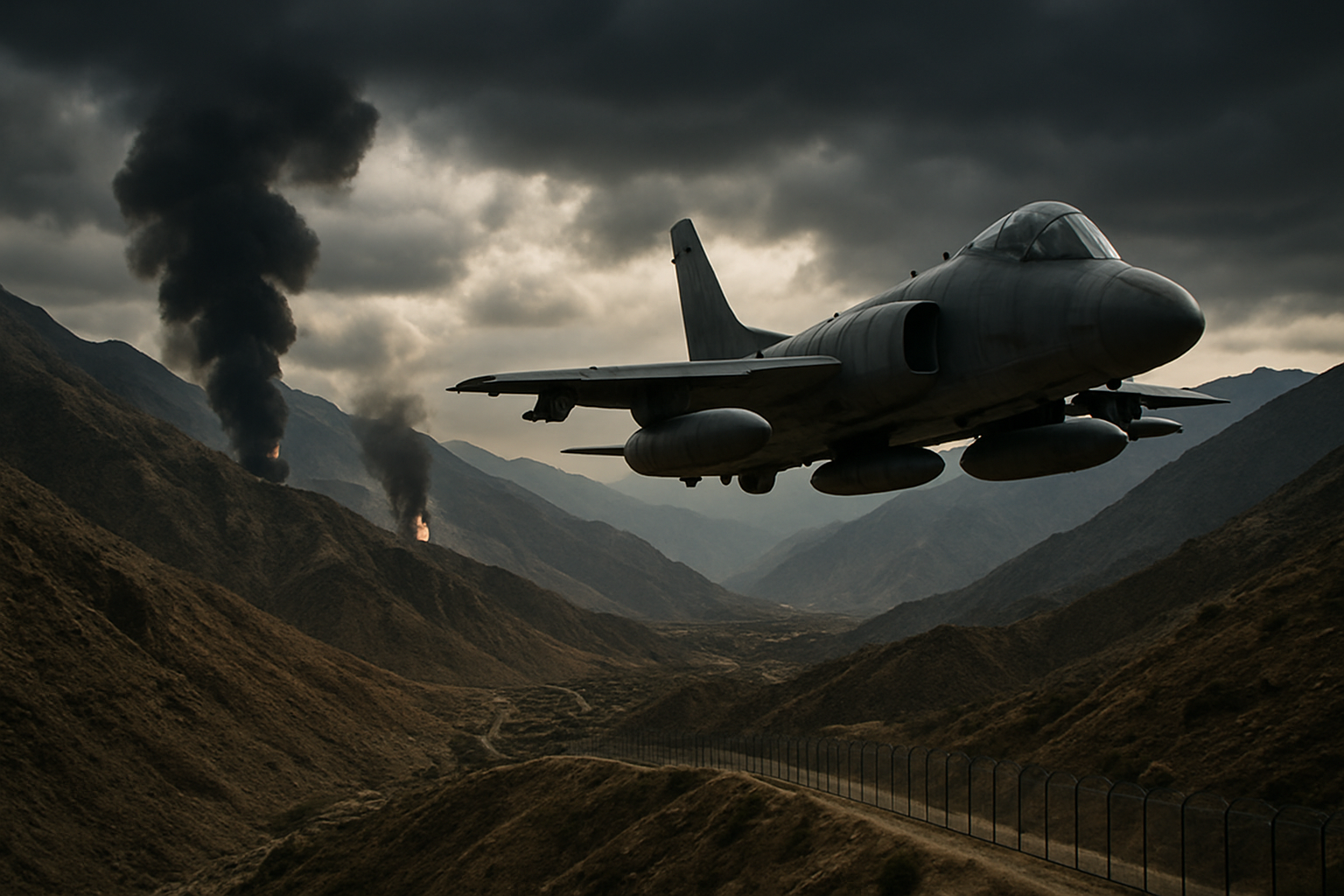
Pakistan conducted fresh overnight airstrikes in Afghanistan's Kabul and border provinces on March 13, 2026, killing civilians including women and children according to Afghan authorities, as the cross-border military crisis enters its fourth consecutive week with no diplomatic resolution in sight.
The latest strikes represent a continuation of the most serious military confrontation between Pakistan and Afghanistan since the Taliban's return to power in August 2021. Pakistani security officials confirmed the operations specifically targeted positions of the banned Tehrik-e-Taliban Pakistan (TTP), while Afghan officials reported civilian casualties in residential areas.
Escalating Crisis Timeline
The current crisis began on February 16, 2026, when TTP militants launched a coordinated attack on a Pakistani security checkpost in Bajaur district, killing 11 Pakistani soldiers using a vehicle-borne improvised explosive device. The attack prompted Pakistan's Defense Minister Khawaja Asif to declare "open war" against Afghanistan's Taliban government on February 27, marking an unprecedented diplomatic escalation.
Pakistan's February 22 retaliation involved airstrikes on seven alleged terrorist camps in Afghanistan's Nangarhar and Paktika provinces. While Pakistani sources claimed over 80 militants were killed, the strikes resulted in significant civilian casualties, including eight schoolchildren aged 5-15 years in Behsud district, according to the UN Assistance Mission in Afghanistan (UNAMA).
The Taliban government condemned these strikes as violations of Afghan sovereignty and warned of a "measured and appropriate response," describing the protection of sovereignty as "religious obligations and national duties."
Humanitarian Crisis Deepens
UNAMA has documented 185 civilian casualties (56 killed, 129 wounded) between February 26 and March 5, with the majority being women and children. The organization reports that 16,370 families have been newly displaced across 10 provinces due to the ongoing fighting.
The World Health Organization has delivered emergency medical oxygen to only 23 hospitals, as Afghanistan's healthcare system remains overwhelmed. Hundreds of health centers have been forced to close due to funding cuts and security concerns, creating a healthcare vacuum in affected regions.
The crisis compounds Afghanistan's existing humanitarian emergency, where 88% of female-headed households are unable to meet minimum living requirements according to UN data.
Economic Devastation
The military confrontation has precipitated a severe economic collapse in bilateral trade. Pakistan's exports to Afghanistan have plummeted by 59% over seven months, dropping from $550 million to $228 million according to State Bank of Pakistan data.
Traditional trade routes through Chaman-Spin Boldak and Torkham crossings have faced repeated closures, severely affecting border communities dependent on cross-border commerce. This economic disruption adds another layer to Afghanistan's multifaceted crisis.
Durand Line Disputes at Core
The fundamental disagreement centers on the 2,640-kilometer colonial-era border established in 1893, known as the Durand Line. No Afghan government has ever formally recognized this boundary, viewing it as an artificial division of Pashtun tribal territories.
Pakistan maintains that TTP militants operate "with impunity from Afghan soil" despite repeated Taliban assurances that they prevent the use of Afghan territory for attacks against neighboring countries. The Taliban government categorically denies providing sanctuary to militant groups.
The porous mountainous terrain along this disputed border has historically provided sanctuary for various militant groups, complicating bilateral relations and border control efforts by both governments.
International Mediation Efforts Fall Short
Multiple international mediation attempts have failed to halt the escalating violence. Saudi Arabia facilitated a prisoner exchange in February 2026, releasing three Pakistani soldiers captured during October 2025 border clashes, but this confidence-building measure proved insufficient to address underlying security challenges.
Turkish Foreign Minister Hakan Fidan has launched comprehensive mediation initiatives, contacting both Pakistani and Afghan foreign ministers as well as Qatari and Saudi counterparts. Iran has offered mediation services while warning of broader regional destabilization risks. Russia's Special Envoy Zamir Kabulov has also engaged with Afghan officials in Moscow, emphasizing the need for diplomatic solutions.
Despite these efforts, Pakistan acknowledges having diminished regional influence over Afghanistan compared to wealthier powers such as Turkey, the UAE, Qatar, Saudi Arabia, and China, forcing increased reliance on military solutions.
Nuclear Dimension Raises Stakes
The involvement of nuclear-armed Pakistan adds a critical dimension to the crisis, requiring careful international monitoring to prevent escalation beyond conventional military operations. Chinese warnings to the UN Security Council about the presence of ISIS-K, al-Qaeda, and ETIM militants in Afghanistan contradict Taliban claims of having defeated terrorism.
The confrontation represents the most serious test of the post-2021 South Asian security architecture, with implications extending far beyond the bilateral relationship to regional stability and global conflict resolution mechanisms.
Taliban's Military Response
Afghanistan's Defense Ministry has claimed significant military successes in what it calls "Radd-ul-Zulm" (Response to Oppression) operations. Taliban spokesperson Enayatullah Khwarazmi announced that Afghan forces had killed 327 Pakistani soldiers and captured multiple military installations, though these figures remain disputed.
The Taliban has conducted what it describes as "coordinated retaliatory operations" against Pakistani military positions along the disputed border, involving multiple Afghan military corps using "advanced military equipment including laser-guided systems."
Regional Security Implications
The crisis represents a template-setting challenge for 21st-century conflict resolution, particularly regarding the intersection of territorial sovereignty and transnational terrorism. The success or failure of diplomatic containment will influence how similar regional challenges are addressed globally.
Pakistan has eliminated over 400 militants in Balochistan operations during February 2026 alone, demonstrating the broader counter-terrorism context within which these cross-border strikes are occurring. The sophisticated tactics employed by TTP, including coordinated assaults and vehicle-borne improvised explosive devices, demonstrate retained operational capabilities despite sustained military pressure.
Religious and Diplomatic Appeals
Prominent Islamic scholar Ali al-Qaradaghi, president of the International Union of Muslim Scholars, has issued a fatwa calling for an immediate ceasefire during Ramadan, stating that fighting between Muslim nations contradicts Islamic teachings. This religious intervention provides a potential face-saving opportunity for both sides to de-escalate.
The Taliban maintains that the "path of talks remains open" and seeks resolution through "mutual understanding and respect," contrasting with Pakistan's more limited public readiness for negotiations while cross-border terrorism continues.
Looking Forward
The coming days are critical in determining whether sustained diplomatic engagement can overcome the cycle of military escalation. The crisis serves as a comprehensive test of innovative diplomatic frameworks required to balance legitimate security concerns with territorial integrity respect, civilian protection, and international law compliance.
With both nuclear implications and regional stability at stake, the international community faces mounting pressure to develop effective conflict prevention mechanisms before the confrontation escalates into broader regional warfare. The template established by this crisis will likely influence how territorial sovereignty and transnational terrorism challenges are managed in the contemporary international system.