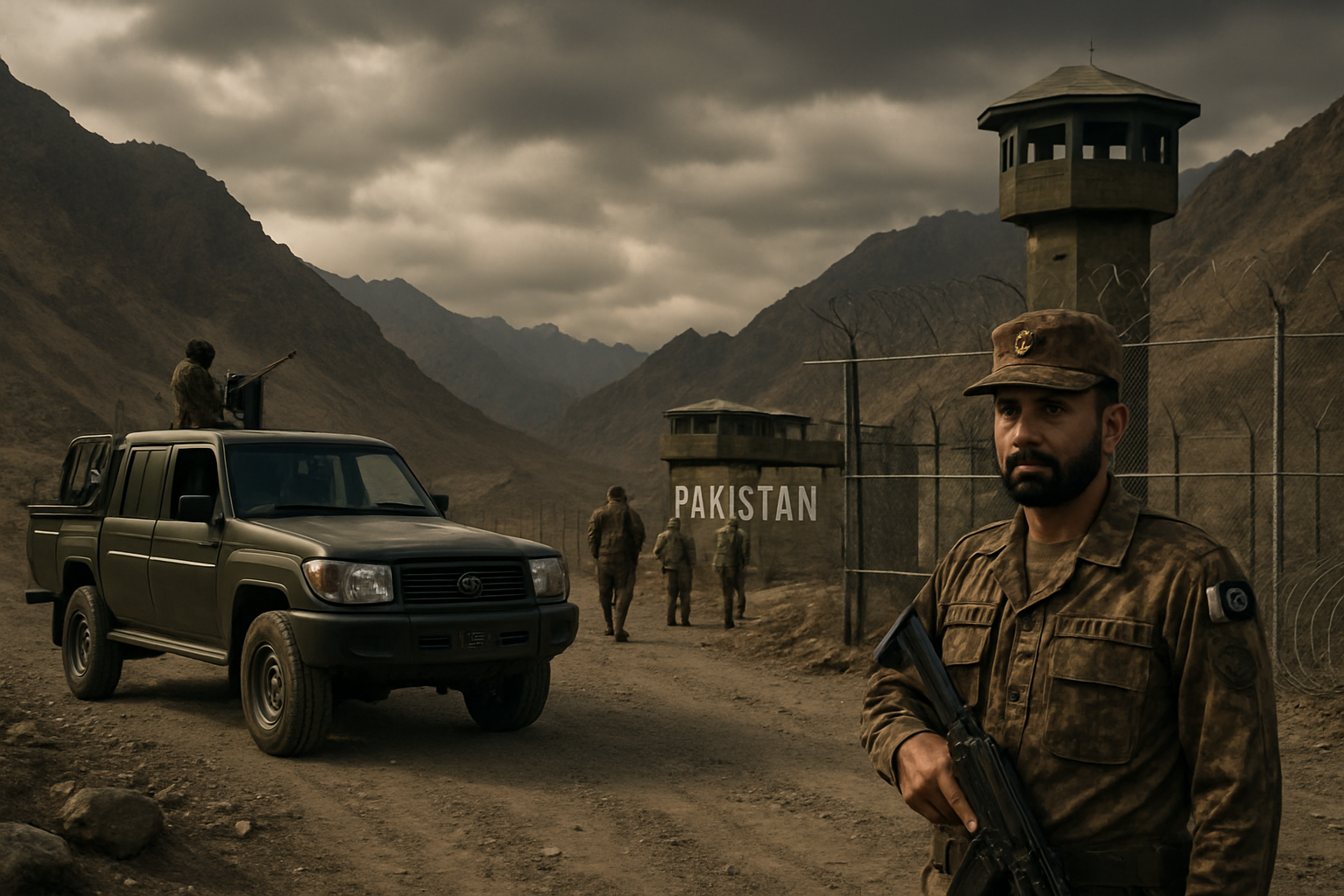
Pakistan has renewed threats of launching airstrikes inside Afghanistan if militant groups continue operating freely from Taliban-controlled territory, as tensions surge following the February 16 terrorist attack in Bajaur that killed 11 Pakistani soldiers and exposed the persistent security challenges along the porous border.
Defense Minister Khawaja Asif delivered the stark warning during an interview with France 24, declaring that Pakistan would not hesitate to take military action if it deems such operations necessary. The minister's comments come just days after the Taliban government in Kabul released three Pakistani soldiers captured in October 2025 border clashes, a goodwill gesture facilitated by Saudi Arabian mediation that now appears overshadowed by escalating cross-border violence.
Deadly Bajaur Attack Triggers Diplomatic Crisis
The immediate trigger for Pakistan's renewed military threats was the February 16 coordinated assault on a joint security checkpost in Bajaur district, Khyber Pakhtunkhwa province. The attack, claimed by the banned Tehreek-i-Taliban Pakistan (TTP), resulted in the martyrdom of 11 Pakistani soldiers and highlighted the sophisticated tactics employed by militants operating from Afghan soil.
According to military sources, TTP militants attempted to breach the checkpost's security perimeter before resorting to a vehicle-borne improvised explosive device (VBIED) that collapsed the infrastructure and caused the majority of casualties. The blast's force was so severe that it damaged civilian residential buildings in the surrounding area, demonstrating the indiscriminate nature of the attack.
"Pakistan condemned in the strongest possible terms the vehicle borne suicide terrorist attack followed by a fire raid on Pakistan Military and Law Enforcement Agencies' post in Bajaur carried out by Fitna al Khwarij / TTP."
— Tahir Hussain Andrabi, Foreign Office Spokesperson
Diplomatic Demarche and Taliban Response
In response to the Bajaur attack, Pakistan's Foreign Office summoned the Afghan Deputy Head of Mission and delivered a strong demarche to the Taliban regime. The ministry conveyed serious concerns that TTP leadership, based entirely in Afghanistan, operates with impunity from Afghan soil despite repeated assurances from the Taliban authorities.
The timing of Pakistan's military threats is particularly striking given that they coincide with what appeared to be improving diplomatic relations. Just days before Defense Minister Asif's warnings, the Taliban government had released three Pakistani soldiers who had been detained since October 2025 border clashes. This prisoner release, facilitated by a Saudi Arabian delegation, was presented as a Ramadan diplomatic gesture aimed at maintaining positive bilateral relations.
Taliban spokesman Zabihullah Mujahid had announced the release as part of the Islamic Emirate's policy of maintaining positive relations with neighboring countries. However, the goodwill appears to have been quickly overshadowed by Pakistan's accusations of continued Taliban inaction against TTP militants.
Complex Web of Regional Allegations
Defense Minister Asif's allegations extend beyond simple border security concerns, encompassing broader regional dynamics. In his France 24 interview, Asif claimed that recent attacks within Pakistan were part of what he described as a "proxy conflict" involving Afghan authorities and India. These accusations suggest Pakistan views the cross-border militant threat through the lens of broader regional geopolitical competition.
The minister also referenced continuing friction with India, cautioning that the risk of confrontation between the two nuclear-armed neighbors persists amid strained relations. This multifaceted threat assessment complicates Pakistan's security calculus and may influence its willingness to pursue unilateral military action.
Pattern of Cross-Border Terrorism
The Bajaur attack represents part of a disturbing pattern of cross-border terrorism that has plagued Pakistan-Afghanistan relations since the Taliban's return to power in August 2021. Recent incidents documented in security reports show that Pakistani forces have been conducting intensive counter-terrorism operations, with over 400 militants reportedly eliminated in February 2026 alone during operations in Balochistan province.
The sophistication of the Bajaur attack, involving coordinated assault tactics and VBIED deployment, demonstrates that militant groups retain significant operational capabilities despite sustained Pakistani military pressure. Intelligence assessments suggest these groups benefit from sanctuary in Afghanistan's mountainous border regions, where complex terrain and limited government control provide operational space.
Historical Context of Military Threats
Pakistan's threats of airstrikes inside Afghanistan are not without precedent. The country has previously conducted cross-border military operations when it deemed such action necessary for national security. However, the current threats carry additional weight given the broader regional security context, including ongoing global conflicts and Pakistan's own internal security challenges.
The military option becomes more complex when viewed against the backdrop of Pakistan's broader relationship with the Taliban government. While Pakistan has not formally recognized the Taliban administration, it has maintained working diplomatic relations and has been involved in various mediation efforts, including recent prisoner exchanges.
Saudi Mediation Efforts
The recent prisoner release facilitated by Saudi Arabia highlights the Kingdom's growing role as a regional mediator. The Saudi delegation that arrived in Kabul specifically to negotiate the release of the three Pakistani soldiers demonstrates Riyadh's investment in regional stability and its ability to maintain functional relationships with both Pakistan and the Taliban.
This mediation success, occurring during the holy month of Ramadan, was intended as a confidence-building measure that could pave the way for broader diplomatic engagement. However, the immediate aftermath of increased tensions suggests that such goodwill gestures may be insufficient to address the underlying security challenges that drive bilateral tensions.
Strategic Implications
Pakistan's renewed threats of military action carry significant strategic implications for regional stability. Any unilateral Pakistani military operation inside Afghanistan would risk escalating tensions not only bilaterally but could also complicate broader international efforts to engage constructively with the Taliban government.
The threats also occur against the backdrop of Pakistan's own internal challenges, including economic pressures and domestic security concerns. The government faces the dual challenge of maintaining border security while managing international diplomatic relationships and domestic political considerations.
"Pakistan has repeatedly received assurances from the Afghan Taliban regime, but, regrettably, with no visible or concrete actions."
— Pakistan Foreign Office Statement
International Monitoring
The escalating Pakistan-Afghanistan tensions are being closely monitored by the international community, particularly given the broader implications for regional stability. Recent diplomatic activities, including discussions between Pakistani officials and international partners about Afghanistan-related security concerns, demonstrate the global dimension of these bilateral challenges.
The situation also intersects with broader international concerns about terrorist threats emanating from Afghanistan, with various countries expressing concern about the potential for spillover effects from Afghan-based militant groups.
Looking Forward
As tensions continue to escalate, the path forward remains uncertain. Pakistan's demands for "immediate, concrete and verifiable measures against all terror groups operating from Afghan soil" represent a clear ultimatum to the Taliban authorities. The Taliban's response to these demands, and their ability to effectively control militant groups operating from their territory, will likely determine whether diplomatic solutions can prevail or whether Pakistan will follow through on its military threats.
The situation represents a critical test of the Taliban's governance capabilities and their commitment to preventing Afghan territory from being used as a base for attacks against neighboring countries. It also tests Pakistan's resolve in balancing diplomatic engagement with security imperatives, particularly in the face of continued attacks against its security forces.
The coming weeks will be crucial in determining whether the recent prisoner exchange and other confidence-building measures can provide a foundation for addressing the underlying security challenges, or whether the cycle of violence and retaliatory threats will continue to dominate Pakistan-Afghanistan relations.